

In Canada, a custom order is usually final unless the item arrives defective or the seller breaks the terms of the sale. No general law gives you a right to return something just because you changed your mind, and personalized items are where sellers are strictest, since a bag with your child’s name on it cannot be sold to anyone else. This guide explains what the law does and does not say, what a fair custom order policy looks like, and how to order personalized goods without a nasty surprise.
TL;DR
- Canadian law does not give shoppers a general right to return non-defective goods. Sellers set their own return policies, and defective items are the main exception.
- Personalized items are the hardest to return, because they have almost no resale value once a name, patch or colour scheme is added.
- Online buyers have cancellation rights when a seller fails to disclose required information or fails to deliver on time. Those rights do not cover a change of mind.
- Get the policy in writing before you pay, and check every name, spelling and colour at the approval stage.
- If something arrives wrong or damaged, document it right away and contact the seller in writing.
Table of Contents
- Why custom orders are treated differently
- What Canadian law actually says
- What a fair custom order policy looks like
- How to order custom items without needing a return
- If your custom order arrives wrong
- Our perspective
- Choosing a seller you can trust
- Planning an order with us
- Quick reference: custom order versus regular order
- FAQ
- Sources
Why custom orders are treated differently
A standard retail return is simple: the shop takes the item back, puts it on the shelf and sells it again. A custom order breaks that chain. Once a seller has printed, stitched or patched an item for one customer, it is worth very little to anyone else.
That is the reason return policies for custom goods are usually more restrictive, and why change-of-mind returns are almost never accepted on personalized orders. It is not a trick. It is a cost the seller cannot recover.
The flip side is that the order process matters more than the return process. For custom goods, the real protection is a clear specification: the exact spelling, the exact colours, the exact quantity, agreed before production starts.
What Canadian law actually says
Many shoppers assume a 30-day window exists by law. It does not.
No general right to return
The federal Office of Consumer Affairs states that businesses are not obligated to accept returns unless an item is defective, though many do so to keep customers happy. Ontario’s government says the same: the Consumer Protection Act sets out refund requirements for some types of agreements, but it does not provide a general right to return or exchange goods.
A federal research database goes further and calls the belief in unconditional returns a myth, since no provincial law grants that general right. Quebec’s consumer protection office is consistent too: if the item is not defective, the law does not oblige merchants to accept your request.
So for a personalized order, the seller’s written policy is the rulebook. That is why it matters to read it first.
Defects are the exception
When a product is defective, the picture changes. If you receive a tote with a flaw in the stitching, a print that peels on first use, or a name that does not match what you approved, you are no longer asking for a favour. For defects, the right to a repair or replacement typically takes precedence over a simple refund.
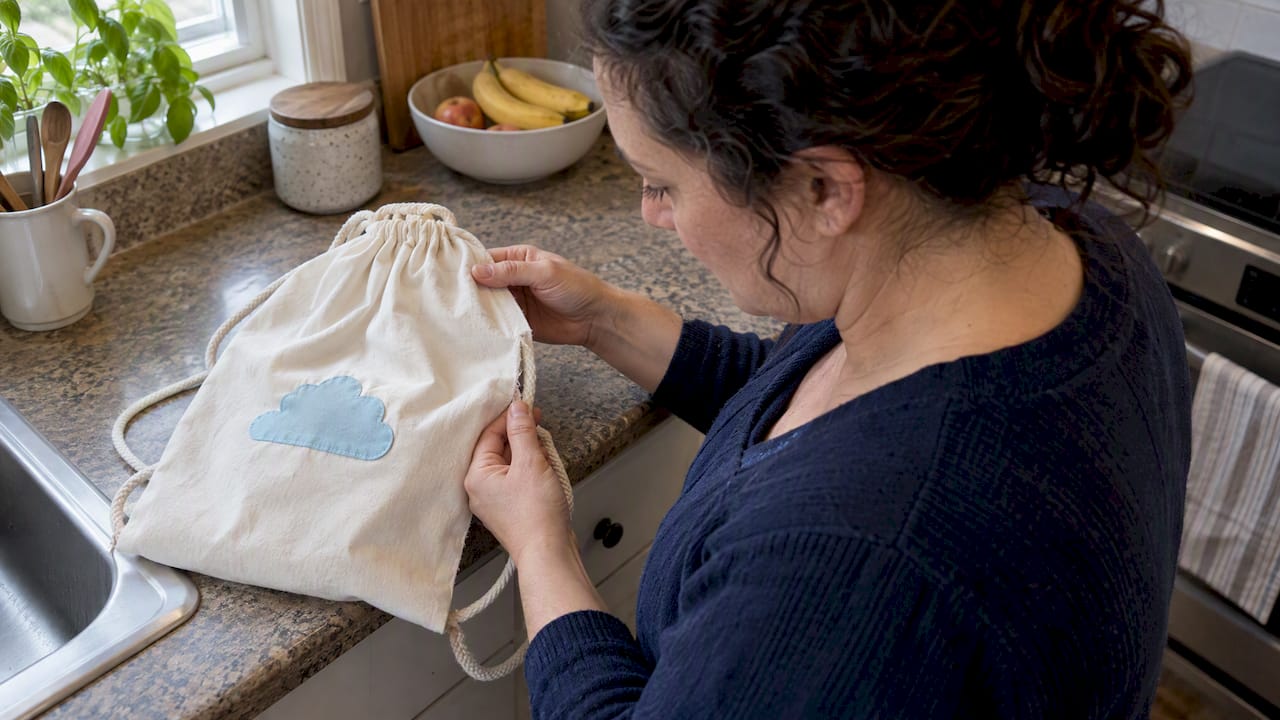
Other retailers explain the same principle for their own products, for example in this overview of when Canadian law may entitle a customer to a refund or exchange for a defective item. The logic carries over to personalized goods: a defect is the seller’s problem, a typo you approved is usually yours.
That last point deserves attention. If you signed off on a proof that read “Maddison” and the child’s name is “Madison”, the seller can reasonably say the order was made as specified. If you approved “Madison” and received “Maddison”, the error is the seller’s.
Online cancellation rights
Buying online makes it a distance contract, and some provinces give you extra cancellation rights. These rights depend on what the seller did wrong, not on how you feel about the product.
In Ontario, for example, cancellation rights turn on the seller’s disclosure failures, not on changing your mind. Ontario also requires that when you order a product costing more than $50 online, the business must give you a contract you can print or save.
Non-delivery is the other big one. In British Columbia, if you never agreed to a different delivery method and the item has not arrived within 30 days of purchase or of the estimated delivery date, you may be able to cancel. Merchants then have 15 days to refund. If they do not, you can ask your credit card provider for a chargeback, and written proof of your cancellation request helps that claim. Quebec describes the same 15-day refund rule in its guide to cancelling an online purchase.
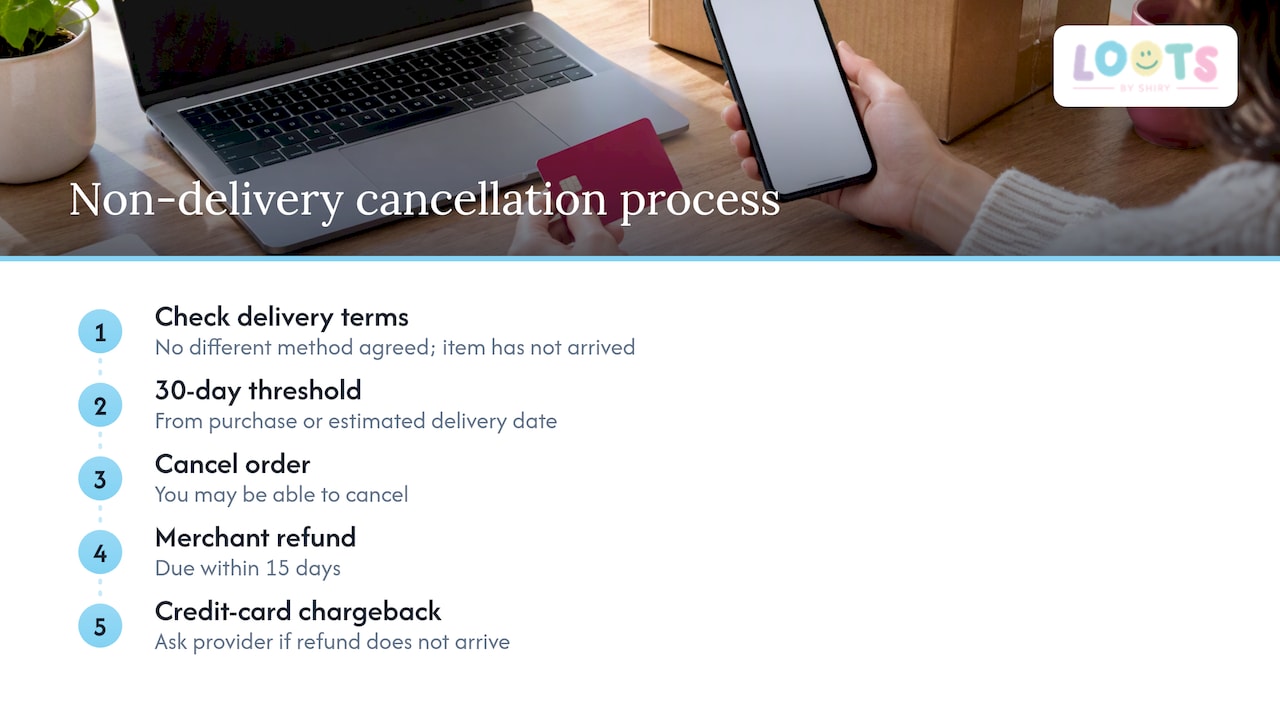
Rules differ by province, so check your own provincial consumer protection office before relying on any of these timelines.
What a fair custom order policy looks like
Since the law leaves the details to the seller, you should judge sellers by how clearly and fairly they set them out. A good custom order policy usually covers these points.
| What to look for | Why it matters |
|---|---|
| Stated plainly that custom items are made to order | You know up front that change-of-mind returns are unlikely |
| An approval step before production | Spelling and colour errors get caught while they are still fixable |
| What counts as a defect or seller error | Separates a wrong name from a name you misspelled yourself |
| A time window to report problems | Tells you how fast to inspect the delivery |
| What the remedy is: reprint, replacement, credit or refund | Sets expectations before you pay |
| Clear contact details | Competition Bureau guidance lists missing contact information as a red flag for dodgy sites |
| Delivery timing and fees | Late delivery is one of the few situations where you may have cancellation rights |
If a shop has no policy at all, or hides it somewhere you only find after paying, treat that as information. Consumer protection agencies repeat the same advice: ask before you buy and get the policy in writing.
How to order custom items without needing a return
Most custom order disputes are avoidable. Here is the sequence we would follow if we were ordering favours for our own event.
- Read the policy before adding anything to your cart. Look for the words “custom”, “personalized” and “final sale”. Screenshot or save the page, since policies can change.
- Ask about anything unclear. Email the seller and keep the reply. A written answer is worth more than a verbal one.
- Collect your details in one place. Write out every name exactly as it should appear, with capitals, accents and hyphens. Copy and paste rather than retyping.
- Choose colours with care. Screens vary. If a colour matters, ask how it will look in real life, and avoid shades that depend on lighting.
- Confirm quantity and variations. For a group of guests, double check the count of each name or design.
- Approve the proof, if one is offered. Read it slowly, then have a second person read it too.
- Order with time to spare. Rushed timelines leave no room to fix errors. Our guide to custom favour turnaround times shows how lead time works, and the last safe dates for holiday delivery are worth checking if your event falls in peak season.
- Inspect on arrival. Open the box the day it arrives, count the items and check every name against your list.
Large group orders
Bulk orders multiply the risk. One wrong name in 30 bags is a small problem. A systematic error across 30 bags is a large one. If you are an event planner, build a simple spreadsheet of names against items, and read our notes on keeping names consistent across bulk personalization before you submit.
If your custom order arrives wrong
Stay calm and move in order.
- Take photos straight away. Show the item, the packaging and, if relevant, the shipping label.
- Compare against your approved order. Keep your order confirmation and any proof side by side with what arrived.
- Write to the seller. Describe the problem, attach photos and say what you would like: a replacement, a reprint or a refund. Written messages create a record.
- Follow the seller’s process and timeline. Many policies set a reporting window, so do not wait.
- Escalate if needed. If the seller does not respond, contact your provincial consumer protection office. If you paid by credit card, a chargeback may be available in cases such as non-delivery, and your records will support it.
If the problem is that the seller followed your instructions, but you made a mistake, expect little sympathy. That is the trade-off with personalization.
Our own write-up, Canada personalized returns: what buyers and sellers should know, goes deeper on how defects are handled.
Our perspective
We make personalized loot bags and related items where the customer’s choices drive the design: names, patches, colours and themes. That is the whole point of what we do, and it is also exactly why returns work differently for us than for a shop selling off-the-shelf stock.
When a bag has been built around your child’s name and your party colours, it is the most useful thing in the world to you and nearly worthless to anyone else. Any honest personalization business has to deal with that, and we would rather say so plainly than bury it in fine print.
So our advice to every customer is simple. Treat the order stage as the place where you protect yourself. Be precise about names and colours, ask questions before you pay, and read the terms on our returns and refunds page so there are no surprises on either side. If something goes wrong with an order, tell us promptly and with photos, and we will work through it with you.
We would also say this to buyers of any custom product, from any seller: a clear policy and a responsive seller are worth more than a small saving on price.
— Shiry
Choosing a seller you can trust
A few checks take five minutes and save a lot of stress.
- Is it made in Canada, or shipped from abroad? Cross-border orders can bring customs charges, longer delays and harder returns. Our note on ordering Canadian-made personalized favours explains what to watch for.
- Is there a real way to reach the seller? An email address, a response to your question and a visible business name all count.
- Are the prices believable? The Competition Bureau cautions about deals that look too good to be true, especially from sellers you cannot verify.
- Do they explain delivery costs and timing before checkout? Surprises at the final step are a warning sign.
- Does the product page show what is customizable? Clear options mean fewer misunderstandings.
If you are comparing options for a larger event, our guide to swag bag vendors in Canada lists what organisers should ask any supplier.
Planning an order with us
If you want personalized favours with the details agreed before anything is made, take a look at the range in our shop. Published prices include cotton tote bags at $12.00, pastel pouches at $12.00 and colour changing tumblers at $10.00. Our loot bags page covers custom loot bags, with wrapping at $0.50 per bag and delivery at $10.
Not sure how to personalize a particular item? Our guides to tote bag personalization methods and tumbler personalization options can help you decide before you order.
Quick reference: custom order versus regular order
| Regular retail item | Custom or personalized item | |
|---|---|---|
| Legal right to return if you change your mind | None in Canada by general law | None in Canada by general law |
| Typical seller policy | Often a return window | Often final sale |
| Can the seller resell it? | Yes | Rarely |
| Defective or wrong item | Repair, replacement or refund | Repair, replacement or refund |
| Your best protection | Receipt and policy | Written specification, approved proof and policy |
| Online non-delivery | Cancellation rights may apply | Cancellation rights may apply |
FAQ
Can I return a personalized item in Canada if I change my mind?
Only if the seller’s policy allows it. Canadian businesses are not obliged to accept returns of non-defective goods, and personalized items are the category sellers most often make final sale. Always read the policy before you pay.
What if the name or colour is wrong on my custom order?
Compare the item to your approved order. If the seller made an error or the item is defective, you should be able to ask for a fix. If the item matches what you approved, the seller is generally not at fault. Photos and written messages make either case easier to settle.
Do I have a cooling-off period when I order online?
Not as a general rule. Online cancellation rights in provinces such as Ontario and Quebec apply in specific cases, such as a seller failing to give required information or failing to deliver. Ontario’s rules rest on those disclosure failures, not on a change of heart. Check your own province’s consumer protection office for exact timelines.
What can I do if my custom order never arrives?
Contact the seller in writing first. In BC, a missing item after 30 days may allow cancellation, and the merchant then has 15 days to refund. If they do not, ask your credit card provider about a chargeback and share your proof of cancellation.
Sources
- Refund and exchange, Office of Consumer Affairs
- Returns, exchanges and warranties in Ontario, ontario.ca
- Advice on shopping online or over the phone, ontario.ca
- The Truth behind the Obligation to Take back Returned Items, Consumer Policy Research Database
- Échange et remboursement d’un bien non défectueux, Office de la protection du consommateur
- Démarche pour annuler un achat en ligne, Office de la protection du consommateur
- Online shopping fails: your options if you don’t like your product, Consumer Protection BC
- Online orders: who is responsible when you don’t get your package?, Consumer Protection BC
- The scoop on refunds, returns and exchanges, Consumer Protection BC
- Ontario Online Shopping and Returns Laws, Commoner Law
- Purchase merchandise scams, Competition Bureau Canada