

For Canadian event organisers who want personalised, memorable loot bags rather than generic bulk giveaways, LootsByShiry is a strong first call. The brand lets buyers choose names, patches, colours, and themes for each bag, which means every recipient gets something that feels made for them rather than pulled from a warehouse shelf. Before you contact any swag bag vendor in Canada, have three things ready:
- A request for a physical or digital sample
- A request for a digital proof showing your logo or name placement
- A written, itemised quote covering MOQ, unit price, setup fees, and lead time
That last point matters more than most buyers realise. Setup fees and artwork charges can add a small additional cost per unit on small runs, and knowing the full landed cost in CAD before you commit prevents budget surprises at the worst possible moment.
Key takeaways
Choosing the right swag bag vendor in Canada comes down to personalisation quality, transparent pricing, and a confirmed Canadian fulfilment path before you commit to any order.
| Point | Details |
|---|---|
| Define goal and budget first | Decide on tiering (general vs. VIP) and total budget in CAD before requesting any quotes. |
| Always request a sample | Never approve a production run over 100 units without holding a physical sample first. |
| Confirm imprint method in writing | Get Pantone-matched proof approval and clarify correction policies before production starts. |
| Verify MOQs and lead times | Get production and shipping timelines confirmed by email; build in at least one week of buffer. |
| Check certifications | Request actual documentation for GOTS, GRS, OEKO-TEX, or FSC, not just a checkbox claim. |
| LootsByShiry for personalised orders | Offers name, patch, and colour customisation per unit, with an e-commerce ordering process and a range covering totes, pouches, tumblers, and duffle bags. |
Prioritise Canadian fulfilment to avoid cross-border duties, brokerage fees, and unpredictable customs delays when your event date is fixed.
Table of Contents
- What do swag bag vendors in Canada actually sell?
- What customisation options should you request from vendors?
- How do quoting, pricing, MOQs, and lead times work in Canada?
- Which eco-friendly certifications should Canadian buyers request?
- How do you pick the right Canadian swag bag vendor?
- Why LootsByShiry is a strong fit for Canadian events
- What the shift to personalised swag actually means for your budget
- How to get a custom quote from LootsByShiry
- Sources
- FAQ
What do swag bag vendors in Canada actually sell?
A conference swag bag is a curated collection of promotional items given to attendees, typically including branded pens, notebooks, water bottles, and small gifts designed to improve the attendee experience. Canadian promo bag suppliers have expanded well beyond that original formula.
The most common product categories you will see from event swag providers in Canada include:
- Tote bags and cotton shoppers (the most requested item at conferences and trade shows)
- Drawstring bags (lightweight, low-cost, popular for fitness or outdoor events)
- Convention bags and padfolio sets (suited to professional or corporate audiences)
- Lunch totes and insulated bags (premium tier, high perceived value)
- Curated gift sets and themed loot bags (pre-assembled kits around a theme: wellness, tech, snack, or branded lifestyle)
- Tumblers and drinkware (strong daily-use value)
- Pouches and cosmetic bags (popular for beauty, wellness, and youth events)
- Duffle bags (premium corporate gifting or team onboarding kits)
- Apparel and accessories (beanies, socks, branded patches)
Curated kits deserve a separate mention. Many Canadian vendors now sell ready-made themed bundles alongside individual items, which saves planners the sourcing and assembly work. The shift toward curated kits reflects a broader move away from generic mass giveaways toward personalised experiences that recipients actually keep and use.
Items decorated or fulfilled in Canada avoid cross-border duties and brokerage fees, which matters when your event date is fixed and a customs delay would be catastrophic.
What customisation options should you request from vendors?
The imprint method determines print quality, colour accuracy, and how long the decoration lasts. Ask every vendor to specify which methods they offer and what constraints each one carries.
Common imprint methods:
- Single-colour screen print: low cost, sharp lines, limited to one Pantone colour per location
- Full-colour digital print (DTG or sublimation): reproduces photography and gradients; requires a high-resolution file (300 dpi minimum, vector preferred)
- Embroidery: durable, premium feel; artwork must be digitised; works best on structured fabrics
- Debossing/embossing: pressed into leather, faux-leather, or thick fabric; no ink, so colour is not a variable
- Heat transfer: flexible for complex artwork on soft goods; longevity depends on wash care
- Laser engraving: precise on metal, wood, or hard goods; permanent
- Name personalisation: individual names printed or embroidered per unit; requires a name list file and adds per-unit time
For artwork, always supply an AI, EPS, or high-resolution PDF. JPEG files cause pixelation at scale, and vendors who accept only JPEG are a yellow flag.
Pro Tip: For corporate events where the goal is daily use rather than immediate brand recognition, quiet branding techniques such as tone-on-tone embroidery, debossed logos, or interior branding outperform large billboard prints. Subtle decoration increases perceived quality and encourages recipients to carry the item in public, which extends your brand’s reach far longer than a loud logo ever would. Save the full-colour billboard print for trade shows where visibility at distance is the actual goal.
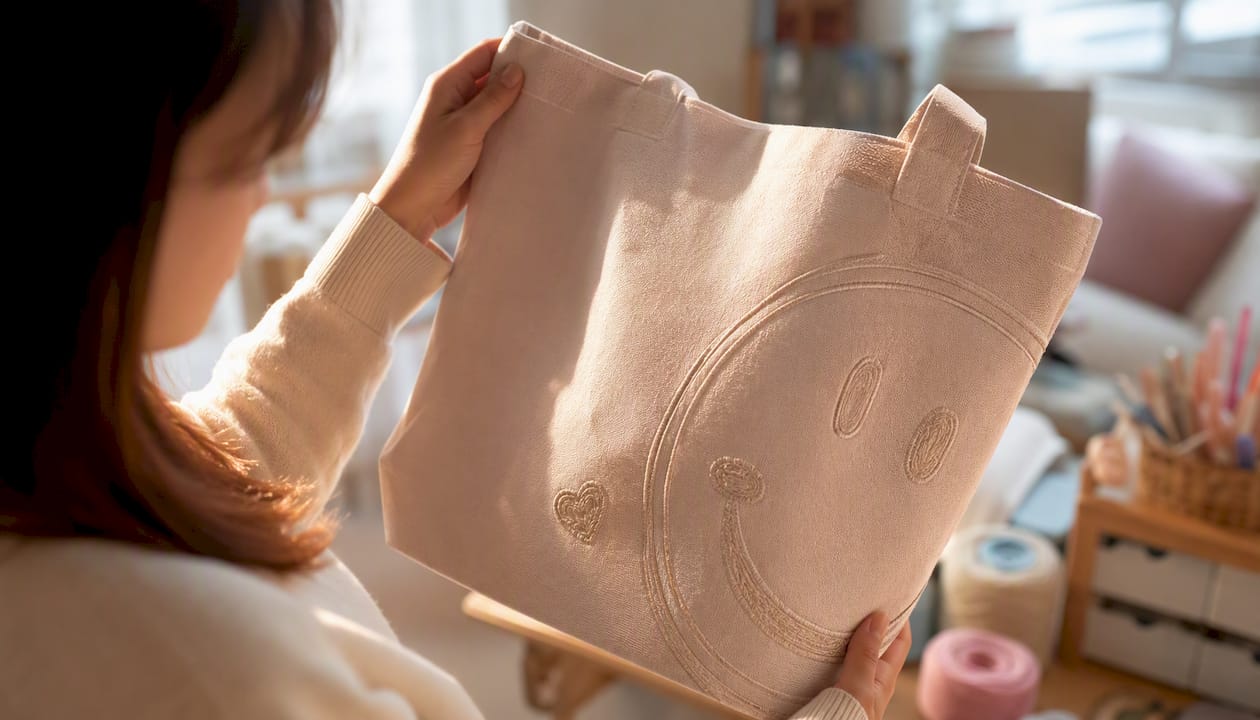
You can also explore custom ink alternatives if standard screen printing does not match your brand’s aesthetic or sustainability requirements.
How do quoting, pricing, MOQs, and lead times work in Canada?
Pricing for custom swag bags in Canada has several components that buyers often underestimate until the invoice arrives.
| Cost component | What to clarify |
|---|---|
| Unit price | Tiered by quantity; drops at common breaks (e.g., 50, 100 units) |
| Setup / artwork fee | One-time charge per colour or location; typically $40 per colour |
| Sample fee | Usually $15–$50 per sample; sometimes credited toward the final order |
| Packaging and assembly | Per-unit charge if items are pre-stuffed or individually wrapped |
| Shipping within Canada | Flat-rate or weight-based; confirm whether it includes brokerage |
MOQs vary by product and decoration method. Some Canadian suppliers now offer minimums starting around 30 units for premium items like custom backpacks or gift boxes, which gives planners more flexibility to run smaller, higher-quality orders rather than committing to hundreds of units they do not need.
A typical timeline from first inquiry to delivery in Canada looks like this:
- Inquiry and quote: 1–3 business days
- Sample request and approval: 5–10 business days
- Digital proof approval: 2–5 business days after artwork submission
- Production: 10–20 business days (standard); 5–10 business days (rush, at a premium)
- Shipping across Canada: 2–7 business days depending on carrier and destination
Build in a buffer of at least one week beyond your production estimate. Carrier delays, especially to remote postal codes, are common and rarely the vendor’s fault.
One budgeting principle worth keeping: a higher-quality item that recipients actually use costs less per impression than a cheap giveaway that goes straight into the recycling bin. Industry guidance from StandOut Canada recommends a tiered approach, allocating a lower-cost item for wide reach and a premium item for high-value prospects, which stretches the same budget further.
Which eco-friendly certifications should Canadian buyers request?
Sustainability claims from branded bag vendors are easy to make and hard to verify without documentation. Ask for the actual certificate, not just a checkbox on a product page.
The certifications that matter most for Canadian buyers sourcing custom swag bags:
- GOTS (Global Organic Textile Standard): covers organic fibre content and processing; the gold standard for cotton bags
- GRS (Global Recycled Standard): verifies recycled content claims in materials like rPET
- OEKO-TEX Standard 100: tests for harmful substances in finished textiles; relevant for items worn or carried against skin
- FSC (Forest Stewardship Council): covers paper, cardboard, and wood-based packaging components
- Fair Trade Certified: addresses labour conditions and fair wages in the supply chain
- SA8000: a social accountability standard covering labour rights, health, and safety
Verifying supplier audits and certifications for SA8000, OEKO-TEX, GOTS, GRS, Fair Trade, and FSC, and sharing that documentation with clients, is considered best practice in the Canadian promotional products industry.
Sustainability signal: Buyers who can show certified eco-credentials in their event materials report stronger attendee perception of their brand’s values. Certification documentation is the difference between a genuine claim and greenwashing.
“Made or decorated in Canada” is a separate consideration. It does not automatically mean the raw materials are sustainable, but it does mean shorter shipping distances, no cross-border duties, and faster turnaround when your deadline is tight.
How do you pick the right Canadian swag bag vendor?
Work through this checklist before you sign off on any order.
- Define your objective and tiering. Are you giving one item to every attendee, or a premium kit to VIPs and a lighter bag to general admission? Decide before you request quotes.
- Request at least one physical sample. A product that looks great in a photo can feel cheap in hand. Never skip this step for orders over 100 units.
- Confirm the imprint method and colour matching. Ask for a Pantone-matched proof and confirm whether the vendor charges for colour corrections after approval.
- Verify MOQs and lead times in writing. Get the production and shipping timeline confirmed by email, not just stated verbally.
- Calculate total landed cost in CAD. Add unit price + setup fees + sample fees + packaging + shipping. That number is your real per-unit cost.
- Ask for references or photos of past work. A reputable vendor will have a portfolio. If they cannot show you a finished product similar to yours, that is a problem.
Questions to ask during the quote process: What file format do you need for artwork? Do you provide a digital proof before production starts? What is your policy on damaged or misprinted units? Do you offer warehousing or fulfilment if we need phased delivery?
Red flags to watch for: opaque pricing with no itemised breakdown; no sample images of completed orders; certifications claimed but no documentation available; no Canadian fulfilment option when your event is time-sensitive; slow or vague responses to direct questions about lead times.
Working with an experienced distributor who can advise on materials, deadlines, and product alternatives is consistently recommended across the Canadian promotional products industry.
Why LootsByShiry is a strong fit for Canadian events
LootsByShiry is built around one idea that most wholesale swag bag vendors in Canada do not offer: the buyer drives the design. Customers choose names, patches, colours, and themes for each bag, so a corporate order of 75 loot bags can have every recipient’s name on their own bag rather than a generic company logo on all of them.
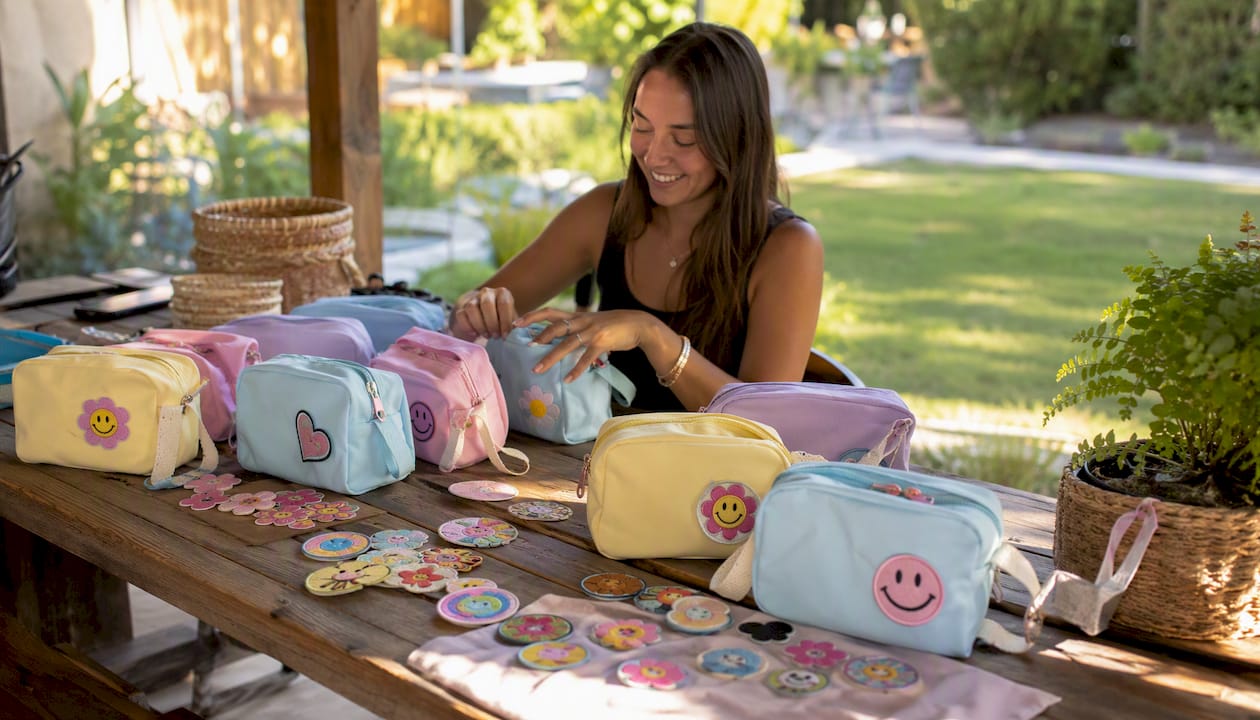
The product range covers the most-requested categories: personalised loot bags, cotton tote bags, pastel pouches, duffle bags, colour-changing tumblers, and beanies. For planners who want to see custom tote bag ideas before committing to a style, the site has visual examples across multiple themes and colour palettes.
A typical corporate order with LootsByShiry follows a straightforward path: the buyer submits their headcount, preferred items, name list or patch design, and target delivery date. LootsByShiry confirms the quote, provides a digital proof for approval, then moves to production. The e-commerce model means buyers can browse SKUs, check product details, and initiate an order without waiting for a sales call.
For events where the Canadian market’s preference for branded event giveaways that recipients actually keep is the priority, the personalisation model consistently outperforms generic bulk options.
What the shift to personalised swag actually means for your budget
Generic bulk swag had its moment, and that moment has passed. The events I see generating real post-event buzz are not the ones with the biggest bags or the most items. They are the ones where someone picked up their loot bag and immediately noticed their own name on it.
The practical takeaway for budget allocation is straightforward: buy fewer items, make them better, and personalise where you can. Fifty well-chosen, name-printed tote bags with a quality tumbler inside will outperform two hundred drawstring bags stuffed with pens that nobody keeps. The cost per impression on the item that gets used daily is a fraction of the cost per impression on the item that gets thrown out at the venue.
*— Shiry
How to get a custom quote from LootsByShiry
Before you reach out, pull together: final headcount, desired product(s), preferred imprint method, brand files (vector format preferred), delivery postal codes, and your target event date. Having those details ready cuts the back-and-forth in half.
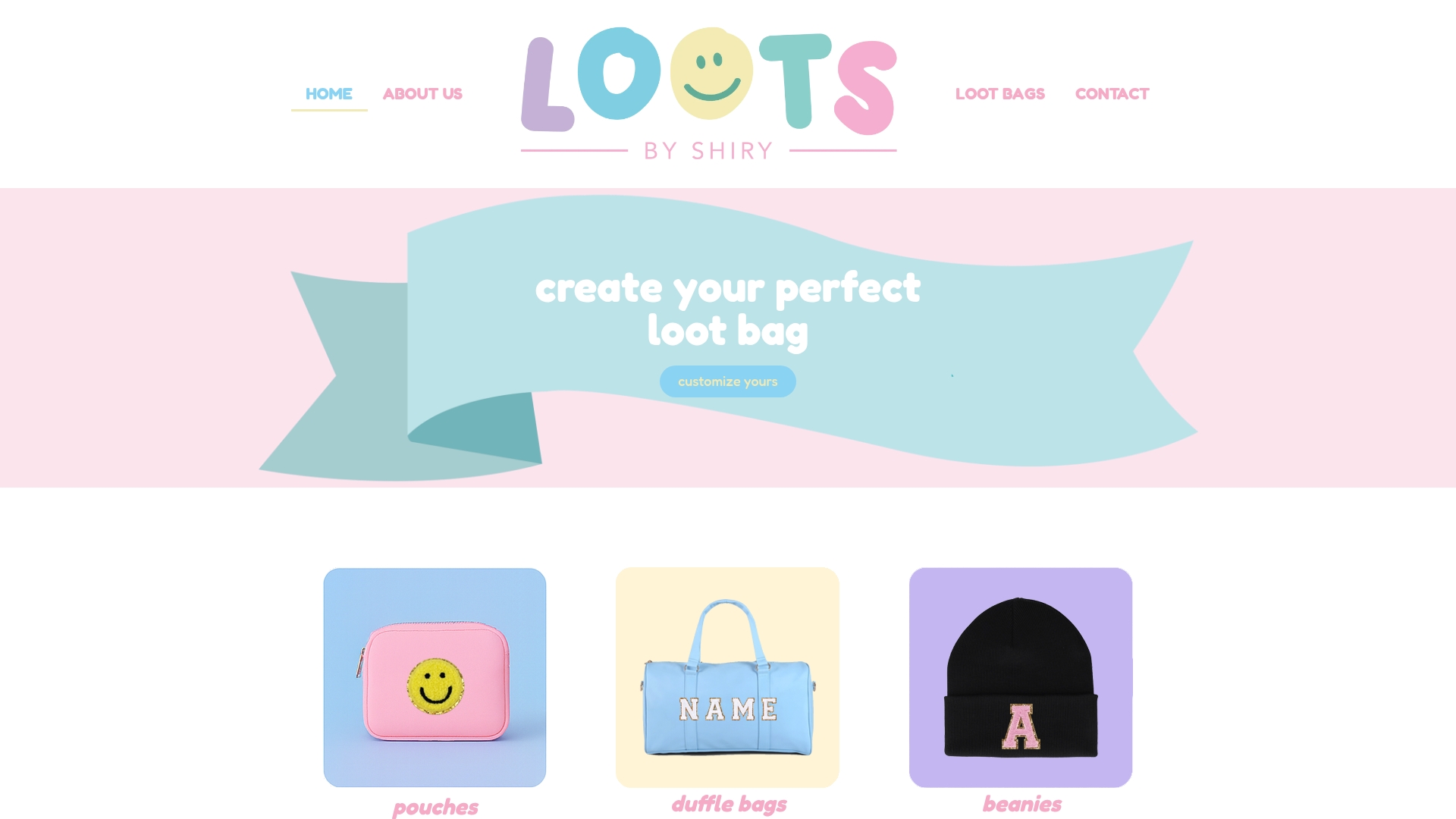
Browse the full range and start your order directly on the LootsByShiry shop, or visit the personalised party favours page to submit a custom inquiry. If you need a rush order or want a sample before committing, note that in your inquiry message and LootsByShiry will confirm availability and any applicable rush timeline. The e-commerce storefront lets you review product options, colour choices, and pricing before you make contact, so you can arrive at the conversation already knowing what you want.
Sources
The following sources were used for definitions, certification guidance, and market context in this article. Use them to verify certification names and confirm vendor claims.
To verify certifications directly: GOTS at global-standard.org, GRS and Fair Trade at textileexchange.org, OEKO-TEX at oeko-tex.com, FSC at fsc.org, and SA8000 at sa-intl.org.
FAQ
What is the typical MOQ for custom swag bags in Canada?
MOQs vary by product and decoration method. Some Canadian suppliers offer minimums starting around 30 units for premium items like custom backpacks or gift boxes, while standard tote bags and drawstring bags often start at 50–100 units.
How long does a custom swag bag order take from inquiry to delivery in Canada?
A standard order typically takes 15–30 business days from inquiry to delivery, covering quoting, proof approval, production, and shipping. Rush production is available from most vendors but increases the unit cost.
What certifications should I ask a Canadian swag vendor to provide?
Request documentation for GOTS (organic textiles), GRS (recycled content), OEKO-TEX Standard 100 (harmful substances), FSC (paper and packaging), Fair Trade, and SA8000 (labour standards) depending on the materials involved.
Can LootsByShiry handle personalised corporate swag orders in Canada?
Yes. LootsByShiry specialises in per-unit personalisation, including individual names, patches, and custom colour choices, across a product range that includes tote bags, pouches, tumblers, and duffle bags, with e-commerce ordering available directly through the site.
What are the biggest red flags when choosing a swag bag vendor?
Watch for opaque pricing with no itemised breakdown, no sample images of completed orders, sustainability certifications claimed without supporting documentation, and no confirmed Canadian fulfilment option when your event timeline is tight.