

Wash a custom bag by hand in cold water with a mild, pH-neutral liquid detergent, turn it inside out, skip bleach and the dryer, and let it air-dry in the shade. That routine suits most printed, painted, patched or embroidered cotton and canvas bags. Machine washing can work for sturdy ones on a gentle cycle, but only after you have checked the fabric, the decoration and any care label.
This guide walks through how to read your bag, treat stains, choose between hand and machine washing, dry it, and store it so the name, patch or colour you picked stays sharp.
TL;DR
- Check the care label first. If there isn’t one, assume the gentlest method: cold water, mild detergent, hand wash.
- Treat each part of the bag separately. The print, patch, trim, zipper and handles may not tolerate the same treatment.
- Turn the bag inside out, skip bleach and fabric softener, and never scrub the decorated side.
- Air-dry flat or hanging, out of direct sun, and reshape while damp.
- Bags that carry food, such as lunch totes or party-favour bags with treats, should be washed more often than bags that only carry toys or clothes.
Table of Contents
- Start by reading what your bag is made of
- Treat stains before you wash
- Hand wash or machine wash?
- Caring for specific decorations
- Perspective: why we choose cotton and keep designs simple
- Drying and storing your bag
- How often should you wash a custom bag?
- Washing after an event: a quick routine for hosts
- Common mistakes to avoid
- Bags made to be washed and reused
- FAQ
- Sources
Start by reading what your bag is made of
Before any water touches the bag, work out what you are washing. A custom bag is usually two things at once: a base fabric and a decoration. The cotton tote and the name printed on it can need different handling.
Check for a care label
Look inside a side seam or along the bottom edge. If there is a label, the symbols tell you what to do. Canada’s Office of Consumer Affairs explains that five basic symbols cover washing, bleaching, drying, ironing and professional cleaning, with dots showing temperature and bars showing how gentle the treatment should be. One dot means cool, and a line under the wash tub means a gentler cycle.
Don’t be surprised if there is no label at all. In Canada, care labelling is voluntary, and handbags, luggage and carrying cases are exempt from the textile-labelling rules altogether. When a label is present, the Competition Bureau says the care information must not be false or misleading. So a missing label on a tote or pouch is normal, not a warning sign.
Inspect the bag zone by zone
A bag can have a body, handles, a base, a lining, trim, closures and a decorative finish, and these may be different materials needing different care. Walk around the bag and ask:
- Body: cotton, canvas, polyester, a blend? Cotton and canvas tolerate water well. Synthetics tend to dry faster.
- Handles and straps: woven cotton webbing can shed dye when wet, so test before soaking.
- Decoration: is it printed, painted, heat-pressed, embroidered, or a sewn or ironed-on patch?
- Hardware: zippers, snaps, metal eyelets and drawstring ends can rust or snag if left wet.
- Lining: coated or insulated linings should be wiped, not soaked.
This quick audit decides everything that follows. A plain cotton tote with a printed name is a very different job from a drawstring pouch with stitched patches and a metal zipper.
Do a colour test
Bright and pastel colours, and deeply dyed fabrics, can bleed on first wash. Dab a damp white cloth on an inconspicuous spot, such as inside a seam. If colour transfers, wash that bag on its own, in cold water, and do not soak it for long.
Treat stains before you wash
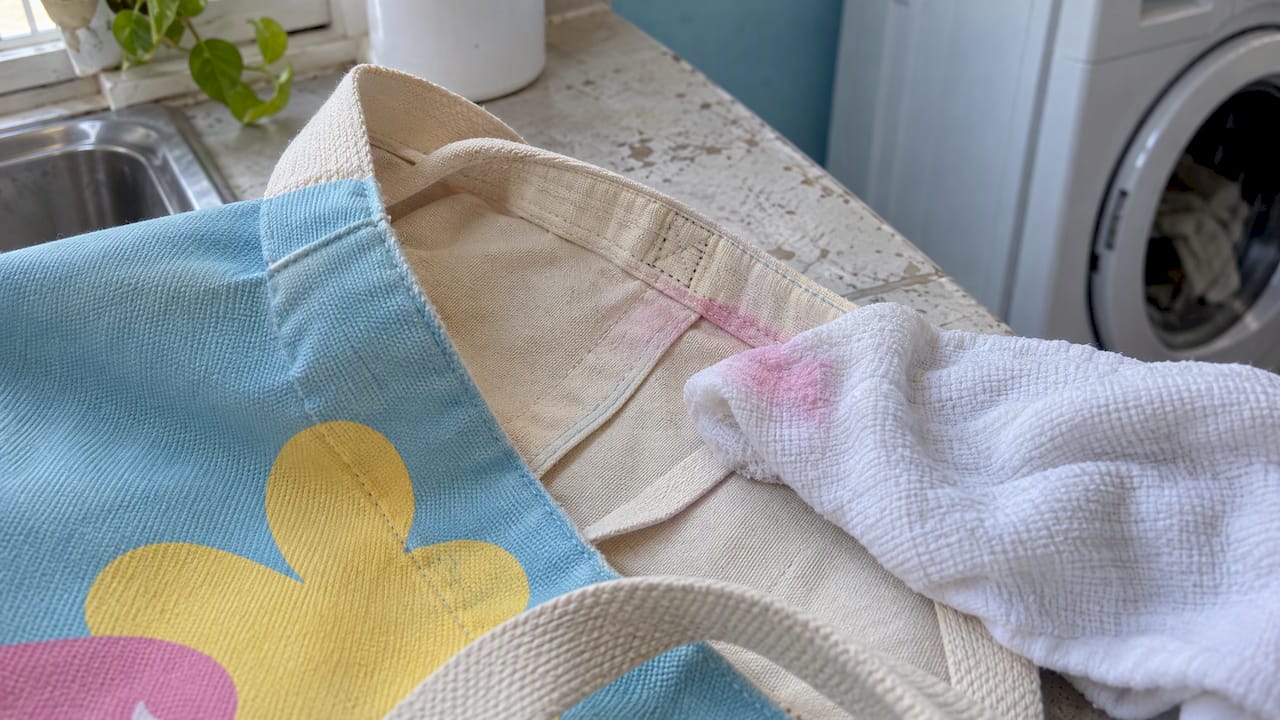
Washing a stain you haven’t dealt with can set it. A few minutes of prep makes a real difference.
- Empty the bag completely. Shake out crumbs, shake out the corners, and check inside pockets.
- Blot, never rub. Rubbing pushes the stain deeper and can wear away a printed design. Press a clean, damp cloth on the mark and lift.
- Use a drop of mild liquid detergent. Work it gently into the stain with your fingertip or a soft cloth, from the back of the fabric where you can.
- Let it sit for 10 to 15 minutes, then rinse with cold water.
- Stay off the decoration. If the stain sits right on a printed name or patch, dab around it first and work inward, using as little pressure as you can.
For greasy marks, a small amount of dish soap is usually enough. For sticky candy or icing, which party bags see a lot of, soften the residue with a cool damp cloth before you apply any soap. Avoid chlorine bleach on coloured or printed bags. It can strip dye and weaken cotton fibres.
Hand wash or machine wash?
Hand washing is the safer default for anything decorated. Machine washing is fine for some bags, and it is the faster option when you have many to clean after an event. Here is how the two compare.
| Hand wash | Machine wash | |
|---|---|---|
| Best for | Printed, painted, patched or embroidered bags; pastel colours; bags with trim or hardware | Plain, sturdy cotton or canvas bags; bags the label says are machine-washable |
| Water | Cold to lukewarm | Cold, or the temperature on the label |
| Detergent | Small amount of mild liquid | Mild liquid, less than a full dose |
| Cycle | Swish gently, no scrubbing | Gentle or delicate, low spin |
| Risk | Slower, uneven rinsing if you rush | Print cracking, patches lifting, handles stretching |
| Drying | Air-dry | Air-dry |
How to hand-wash a custom bag
- Fill a clean basin or sink with cold to lukewarm water.
- Add a small amount of mild liquid detergent. Maiwa, a Canadian textile maker, recommends a pH-neutral liquid detergent, no higher than pH 7, to protect natural dyes. It is a sensible choice for any coloured or hand-decorated fabric.
- Turn the bag inside out and submerge it. Swish it gently for a few minutes.
- Leave the decorated side alone: no brushing, no scrubbing, no wringing.
- Drain, rinse with clean cold water until no suds remain, and repeat if needed. Leftover soap can leave stiff patches and dull colour.
- Press the water out by squeezing gently or rolling the bag in a clean towel. Don’t twist it.
How to machine-wash a custom bag
If the label allows it, or if you have a simple canvas tote with a well-set print:
- Turn the bag inside out. This reduces rubbing between the printed side and the drum.
- Place it in a mesh laundry bag or a pillowcase tied shut. This protects patches, handles and zippers from snagging.
- Wash with similar colours, on a gentle cycle in cold water, with a low spin.
- Skip fabric softener, which can coat fibres and leave residue around prints.
- Take the bag out promptly when the cycle ends. Sitting wet in a drum invites creases and colour transfer.
Don’t wash a bag with hard objects, such as towels with zippers or jeans with metal rivets, since friction wears down the print.
What not to machine-wash
Keep these out of the machine unless the label says otherwise:
- Bags with iron-on or stitched patches that are loose at the edges
- Hand-painted designs
- Bags with coated, foil or insulated linings
- Bags with metal hardware that can rust
- Anything with glued-on embellishments
Caring for specific decorations
Different decoration methods respond to water in different ways. Here is a quick guide.
Printed names and designs
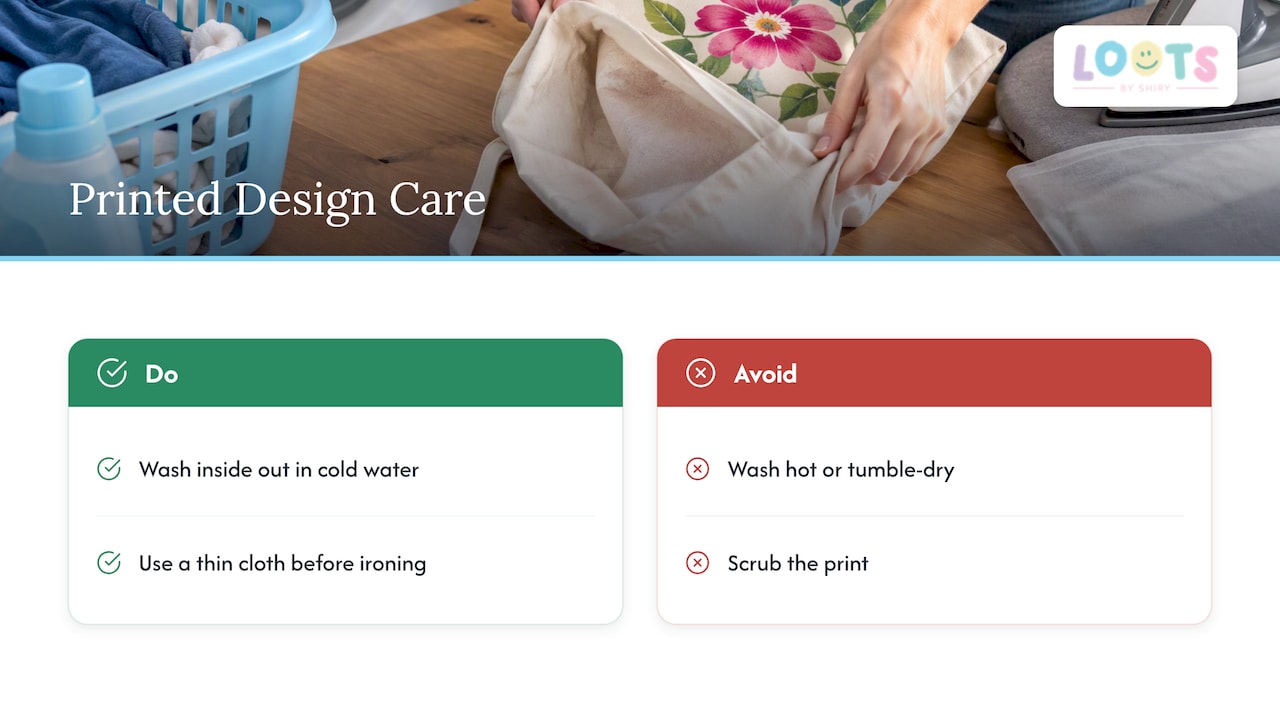
Printed designs, especially heat-pressed vinyl and screen prints, can crack or lift if they are scrubbed, washed hot or tumble-dried. Wash inside out in cold water. If you need to iron, turn the bag inside out and place a thin cloth between the iron and the print, or avoid ironing the print entirely.
Painted bags
Fabric paint needs time to cure. If the bag is new or hand-painted, hold off washing it for the first few days, and if it needs a clean, hand-wash it in cold water without soaking longer than a few minutes. Never scrub painted areas. Spot-clean the plain fabric around the design with a damp cloth when you can instead of washing the whole bag.
Patches and embroidery
Stitched patches are sturdier than iron-on ones, but both can fray or loosen. Hand-wash, and check the edges first: if a corner is already curling, re-secure it before washing. Dry the bag with the patch side facing up or lying flat so the weight doesn’t pull the stitching. If threads have stray ends, snip them with small scissors rather than pulling.
Colour-changing materials
Some items, such as colour-changing tumblers, react to temperature, and their coating is not meant for long soaks. Wash them by hand with warm soapy water and a soft cloth, avoid abrasive pads, and skip the dishwasher unless the maker says it is safe.
Zippers, snaps and drawstrings
Close zippers before washing so the teeth don’t catch the fabric. Afterward, open them to dry fully. Pull drawstrings tight into the casing or knot the ends so they don’t tangle.
Perspective: why we choose cotton and keep designs simple
We build our bags to be used and washed, not just displayed. Every name, patch and colour choice a customer makes is meant to survive a birthday party, a school bag shuffle and a few trips through the laundry basket.
Our rule of thumb is simple: the gentler the wash, the longer the design lasts. Cold water, mild soap and air-drying keep a name sharp and a colour bright far longer than any hot cycle. We’d rather a customer take five extra minutes at the sink than lose a design they picked with care.
That is also why we like products with a second life. A cotton tote, a pastel pouch or a colour-changing tumbler can come home as a party favour and stay in a kid’s rotation for months, because it can be rinsed and used again. A bag that gets washed and reused is a favour that keeps being remembered.
Shiry
Drying and storing your bag
Drying is where many good bags go wrong.
- Air-dry, always. Heat from a dryer can shrink cotton, crack prints and loosen patches.
- Reshape while damp. Pull the corners square and smooth the base so the bag dries in its proper shape. Stuff a pouch or small tote with a clean towel or paper to hold the form.
- Dry in the shade. Strong sun can fade colour, particularly pastels and darks.
- Hang or lay flat. Hang a tote by its handles only if they are strong; otherwise lay it flat on a towel, patch side up.
- Check that it is fully dry. Damp fabric stored in a cupboard grows mildew and smells. Feel the seams and the base, which dry last.
- Iron only if needed. Use low heat on the reverse side, with a cloth over any print.
For storage, fold or roll the bag loosely, or hang it. Keep it somewhere dry, away from direct light. Avoid stacking heavy items on top of decorated surfaces, which can press patches and prints into the fabric, and slip a sheet of tissue between bags if the prints are touching.
How often should you wash a custom bag?
It depends on what the bag carries.
- Food and groceries: Health Canada advises that reusable bags can collect harmful bacteria from foods, and recommends machine-washing cloth bags frequently, especially after carrying fresh produce, meat, poultry or seafood. If a bag isn’t machine-washable, it suggests hand-washing it inside out with hot soapy water. Its guidance is written for grocery bags, so for a bag with a printed or painted design, check the label first and wash at the gentlest temperature the bag allows.
- Leaked juice: the same page says to wash thoroughly before using the bag again, and to wash thoroughly before groceries if the bag has carried non-food items.
- Toys, clothes, books, party favours: wash when the bag looks or smells dirty, or every few months with regular use.
- Gift or keepsake bags used occasionally: spot-clean as needed and wash only when you must.
A good habit: empty the bag after each use, shake it out, and let it air before putting it away. Wipe spills right away. The less often you do a full wash, the longer the decoration lasts, so this routine care matters more than any wash method.
Washing after an event: a quick routine for hosts
If you ordered bags for a party or a team and some come back dirty, a batch routine saves time.
- Sort by colour: light and pastel together, darker shades apart.
- Spot-treat visible stains first, then check labels or follow the hand-wash steps for decorated bags.
- Wash in small batches so the water stays clean and the rinse is thorough.
- Dry everything in one place, laid flat, with space between bags.
- Once dry, check patches and names before you store or hand the bags back.
When you are choosing bags for an event you know will be messy, such as a pool party or a baking birthday, pick a simple, sturdy design that tolerates a rinse. Our custom tote bag ideas page shows options that suit a lot of reuse.
Common mistakes to avoid
- Washing on hot because the bag looks very dirty. Heat is the main cause of fading, shrinking and cracked prints.
- Using bleach or stain removers with bleaching agents on coloured designs.
- Scrubbing the print with a brush.
- Overloading the machine, which creates friction.
- Putting a damp bag in a dark cupboard.
- Ignoring the label because it looks small or faded. If you can still read the symbols, follow them.
Bags made to be washed and reused
If you’re planning favours that will actually get used, think about how they’ll be cleaned. At Loots by Shiry, we make personalized loot bags and related items, where you choose names, patches and colours. Our Cotton Tote Bags and pastel pouches are $12.00 each, and Colour Changing Tumblers are $10.00, so you can pick a favour that suits washing and reuse. Loot bag orders add $0.50 per bag for wrapping and a $10 delivery fee; see the loot bag page for details.

If you’d like the favours to come home and keep being used, a washable cotton option is often the easiest choice. Browse the shop or ask us about a custom order.
FAQ
Can I put a custom printed tote in the washing machine?
Often yes, if the label allows it and the bag is a sturdy cotton or canvas one. Turn it inside out, put it in a mesh bag, and use a gentle cycle with cold water. Hand-wash it instead if the print is raised or hand-painted, or the bag has patches or trim.
Is it safe to use a dryer on a bag with a name or patch?
It is best avoided. Dryer heat can shrink cotton and crack or lift prints and patches. Air-drying in the shade, reshaped while damp, keeps the design intact for much longer.
What detergent should I use on a coloured or pastel bag?
Choose a mild liquid detergent, and use less than you would for a full load. A pH-neutral liquid, as recommended by Maiwa for natural dyes, is gentle on colour. Avoid bleach and fabric softener.
How do I remove a stain from a printed bag without damaging the design?
Blot the stain with a damp cloth, then dab a drop of mild detergent on the fabric around it, working from the outside in. Rinse with cold water and let it air-dry. Don’t rub the print, and if the mark sits directly on the design, repeat gently instead of scrubbing.
How often should I wash a reusable bag?
If it carries food, wash it often, and always after leaks or raw foods, as Health Canada advises. If it carries toys or clothes, wash when it looks or smells dirty. Spot-clean in between to protect the decoration.
Sources
- Guide to Apparel and Textile Care Symbols, Office of Consumer Affairs
- Textile labelling requirements, Competition Bureau Canada
- About Care, Maiwa
- Reusable grocery bags and bins, Health Canada