

Chenille patches are durable enough for jackets, bags and everyday gear, but they are not indestructible. The soft pile that makes them look great is also the part that wears first. How long a patch looks good depends on three things: how it is attached, how it is washed and dried, and how much friction the item sees. This guide covers all three, including what “shedding” is and what it isn’t.
TL;DR
- Chenille wears by flattening and losing pile, not by falling apart. Expect a softer, less fluffy look over time, whatever the quality.
- Sewing beats gluing. Iron-on patches typically hold for 20 to 30 washes, while well-sewn patches can last 10 to 20 years.
- Heat is the enemy: high-heat dryers loosen iron-on glue, and an iron pressed directly onto the pile can crush it.
- Wash inside out, in cold water, with no bleach, and air-dry.
- For loot bags and party favours, chenille is a keepsake finish for gentle use, not a backpack-in-the-dirt finish.
Table of Contents
- What makes a chenille patch wear the way it does
- Is chenille patch shedding normal?
- How you attach it matters more than the patch
- Washing and drying a chenille patch
- Matching the patch to the use
- Our perspective: set expectations, then choose the right base
- Choosing personalized bags with patches from us
- How to make a chenille patch last: a checklist
- FAQ
- Sources
What makes a chenille patch wear the way it does
Chenille yarn has a twisted core with short cut fibres, the pile, standing out from it. That construction gives the patch its plush, raised look. It also explains its weak point.
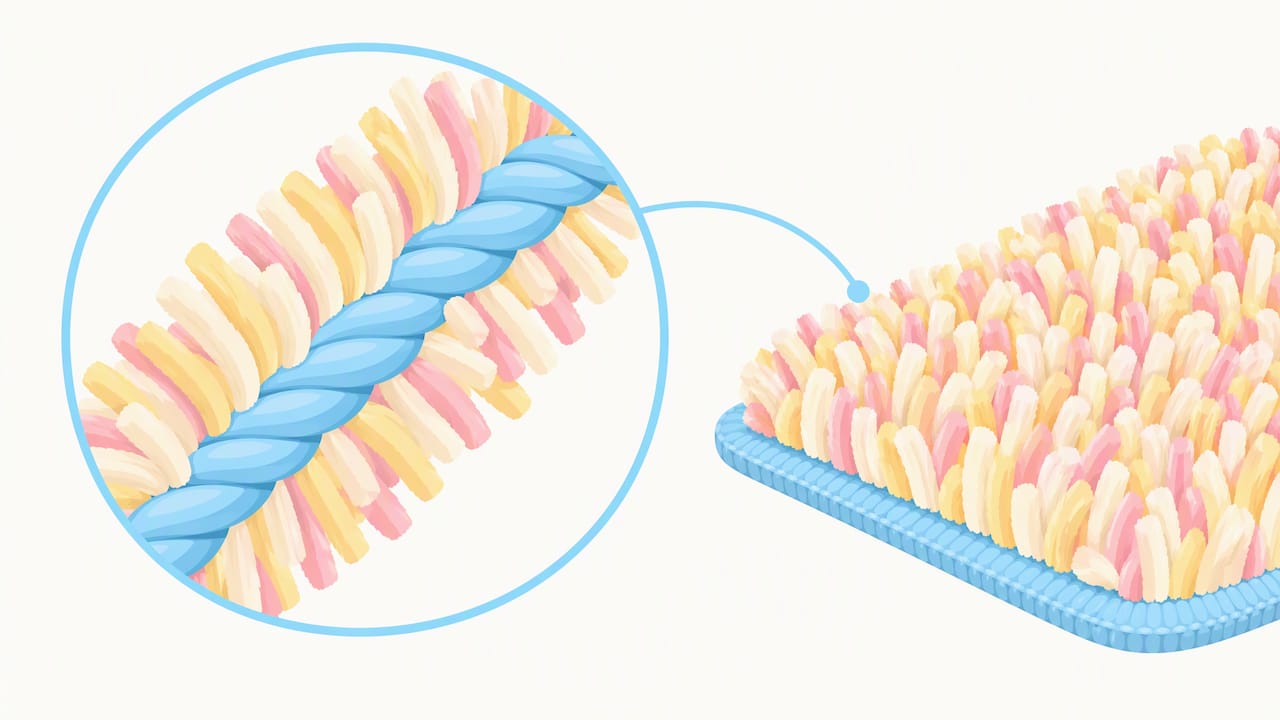
Textile research from Istanbul Technical University on chenille yarn properties and abrasion resistance looks at how the pile and core interact. In that work, abrasion resistance improves with a higher yarn twist and with natural fibres in the pile. The same material is more vulnerable to surface pile loss than a standard flat embroidered patch.
A separate study of chenille yarn properties and manufacture compared forty-eight chenille yarns made with different materials, twists and gauges. The practical takeaway for buyers: a denser pile holds up better, and even a good patch will flatten and lose its brand-new look with use.
So when someone asks whether chenille is durable, the honest answer is “yes, as a patch, and no, as a plush surface”. The stitching and backing can last for years. The fluff is what changes first.
Is chenille patch shedding normal?
Some loose fibres in the first days or first wash are common with any pile fabric. A few strands on your hand or in the lint trap is not a sign the patch is failing.
What is not normal is bald spots appearing quickly, or the patch edge lifting. Those point to a cause you can usually identify:
| What you see | Likely cause | What to do |
|---|---|---|
| Fluff on your hands or in the dryer | Loose cut pile fibres, normal at first | Brush gently, wash inside out |
| Flat, shiny or matted areas | Crushing from friction, moisture or heat | Avoid ironing on the pile, reduce rubbing |
| Edges lifting | Adhesive softened by heat or stressed by a stretchy base | Re-attach with stitching |
| Thinning pile in one zone | Repeated rubbing against straps, seats, other items | Move the patch or choose a denser pile next time |
The Canadian Conservation Institute points out that all textiles are organic and deteriorate naturally, faster with environmental exposure. Daily wear, friction and moisture are exactly what a bag goes through, so some crushing or flattening over time is expected.
How you attach it matters more than the patch
Two identical chenille patches can age very differently, depending on how they were applied.
Sew-on
Stitching physically anchors the patch. According to Custom Patch Makers, a well-sewn patch can endure 10 to 20 years, often outlasting the garment. It is also the safer option for fabrics that can’t take heat.
Iron-on (heat-seal)
Iron-on is quick and clean, and it is fine for light-duty items. The same source puts the typical life at 20 to 30 washes before edges begin to lift.
There is a second problem. When a rigid patch sits on a thin, stretchy fabric like a T-shirt, the base fabric moves and the patch does not. That mismatch puts stress on the edges and can cause the glue to fail early, regardless of how strong the adhesive was.
Heat is a limit too. BC Parks Foundation’s application guide recommends an iron at roughly 140 to 150°C, and iron-on application is generally a poor fit for nylon, polyester, spandex and structured items like caps, where heat can melt or deform the base. For chenille, never press the iron directly onto the pile. Heat and pressure can permanently crush the pile structure. Use a pressing cloth and press from the back of the fabric.
Hybrid: heat-seal, then stitch
For the longest life, the hybrid approach works well. Heat-seal the patch to hold its position, then add a simple running or whip stitch around the border. Even if the adhesive breaks down after many washes or in extreme cold, the patch stays attached. In a Canadian winter, where a bag may go from a warm hallway to minus temperatures, that is a real consideration.
If you are still deciding between a patch and stitched lettering, our guide to patches versus embroidery walks through the trade-offs. For the heat and material side, see which materials help patches stay on.
Washing and drying a chenille patch
Most patch failures are blamed on the washing machine. The real culprit is often the dryer.
Eagle Patches reports that high-heat tumble drying is the main cause of iron-on failure, because it re-softens the glue and lets edges lift. Here is a routine that protects both glue and pile:
- Wait before the first wash. If the patch was heat-applied, give the adhesive time to cure. Follow the instructions that came with the item.
- Turn the item inside out. This reduces friction between the pile and the drum or other laundry.
- Use cold water and a gentle cycle. Skip bleach, which can damage thread integrity and fade colours.
- Air-dry. If you must use a machine, choose the lowest heat for the shortest time.
- Reshape the pile. While damp, gently fluff it with your fingertips or a soft brush. Don’t scrub.
For things that aren’t garments, like a tote or a pouch, spot cleaning is gentler than a full wash. Dab with a damp cloth and mild soap, then let it dry flat.
Matching the patch to the use
Not every item needs a patch built for a decade. Think about how it will be used.
| Use | Friction | Best approach |
|---|---|---|
| Party favour bag, shelf keepsake | Low | Sewn or heat-sealed chenille, spot clean |
| Kids’ school bag | Medium to high | Sew it on, choose a dense pile, expect flattening |
| Jacket or hoodie worn daily | Medium | Hybrid attachment, wash inside out, air-dry |
| Backpack, gym or duffle bag | High | Sewn only, place away from straps and the ground |
| Cap or synthetic sportswear | Varies | Sew-on; avoid iron-on heat |
For high-friction items, chenille’s soft pile is a liability, so pick a denser pile and accept that it will flatten. If the item will be dragged along sidewalks or thrown in a hockey bag, consider a flat embroidered patch instead, because it resists surface pile loss better.
For ideas on where patches sit well on bags, browse patch ideas for bags. If initials are the plan, chenille letter patches are a common choice.
Our perspective: set expectations, then choose the right base
We make personalized loot bags, so we see how patches are actually used: by kids, by hosts, by event planners who need many items to look good on the same day.
Our view is simple. A patch should match the life of the item it sits on. A loot bag that a child carries to school and then keeps for their toys is going to be handled. A pouch kept on a dresser will barely be touched. Chenille suits both, but you should know that the pile will soften with handling, and that is the nature of the material, not a defect.
When we talk with customers about names, patches and colours, we steer them to think about three things:
- Where the patch sits. Away from straps and bottom corners lasts longer.
- What the bag is made of. A sturdy cotton base is a better partner for a plush patch than a thin, stretchy one.
- How it will be cleaned. Gentle spot cleaning keeps the pile looking fuller.
If a patch will see heavy daily wear, tell us. It is better to choose a different finish than to promise a plush look that won’t survive a school year.
— Shiry
Choosing personalized bags with patches from us
If you want a personalized bag or favour where the name, colour and patch are your choice, start with our loot bags. The loot bag page lists wrapping at $0.50 per bag and delivery at $10. Prices for the loot bags themselves aren’t published, so ask us about your quantity.
For other bases you can personalize, our shop lists cotton tote bags at $12.00, pastel pouches at $12.00 and colour changing tumblers at $10.00. We’re in Vaughan and Richmond Hill and serve customers across Canada.
How to make a chenille patch last: a checklist
- Choose a denser pile and, where possible, natural fibres, which the ITU research ties to better abrasion resistance.
- Sew it or hybrid it for anything that will be used often.
- Keep the iron off the pile. Press from behind with a cloth, at the temperature the base fabric can take.
- Wash inside out in cold water, no bleach, and air-dry.
- Don’t put a rigid iron-on patch on a thin T-shirt fabric that stretches.
- Store bags and garments flat or hung, not crushed under heavy items, because creasing that is held for a long time can become permanent.
- Re-stitch the edges at the first sign of lifting rather than waiting for the patch to drop off.
FAQ
Can you wash chenille patches?
Yes, in most cases. Turn the item inside out, use cold water on a gentle cycle, avoid bleach, and air-dry. High-heat drying is the main risk to iron-on patches, so keep the dryer on low or skip it.
Is it better to sew or iron on a chenille patch?
Sewing lasts longer. Iron-on patches typically hold for 20 to 30 washes, while sewn ones can last 10 to 20 years. Iron-on also isn’t suitable for nylon, polyester, spandex or caps. For the best result, heat-seal for placement and then stitch the border.
Why is my chenille patch losing fluff?
Some loose fibres are normal, especially early on. Ongoing loss usually comes from friction, crushing or heat. Wash inside out, keep the patch away from rubbing points, and never iron directly on the pile.
Are chenille patches as durable as embroidered patches?
They hold up well on jackets and bags, but the pile is more vulnerable to surface loss than flat embroidery. If the item faces heavy abrasion, flat embroidery is the sturdier look. For favours and light daily use, chenille is a good choice.
Sources
- Sew-On vs Iron-On Patches: Which Lasts Longer?
- Patch Application, BC Parks Foundation
- How to Wash Patched Garments Without Patches Falling Off
- The effect of chenille yarn properties on the performance of chenille upholstery fabrics, Istanbul Technical University
- Properties and Manufacture of Chenille Yarns
- Caring for textiles and costumes, Canadian Conservation Institute