For a durable varsity look, order custom chenille letters with a sew-on backing. For fast, inexpensive decor, ready-made iron-on kits from mass retailers do the job. Marketplace sellers sit in between, offering flexible colours for one-off gifts. Pick your route based on fabric, quantity, and how long you need the letters to last.
TL;DR:
- Mass retail packs are the cheapest and fastest option but offer inconsistent quality and are best for short-term use or small DIY projects.
- Custom manufacturers provide the most durable and consistent patches with double-felt backing, ideal for long-lasting varsity jackets or team gear, but require larger minimum orders.
- For optimal longevity, sew-on chenille patches last longer than iron-on because stitching withstands repeated washing without adhesive breakdown.
- Chenille patches are best for large, bold letters above 2 inches in size; fine detail and small text are generally not suitable due to yarn loop limitations.
- Applying patches with a heat press and sewing when necessary provides the best durability, while placing importance on backing type and loft specifications over color choices.
Table of Contents
- Where to buy chenille letter patches: retail packs, marketplaces, or custom manufacturers
- How to pick the right chenille patch: materials, loft, backing, and size
- How do you attach chenille letters without ruining them?
- How long do chenille patches last, and how do you care for them?
- What are the design limits of chenille letters?
- What should you ask suppliers before ordering chenille patches?
- Using chenille letters on personalised event items
- What conventional patch advice gets wrong
- A ready-made alternative if you’d rather skip the DIY steps
- Sources
- FAQ
Where to buy chenille letter patches: retail packs, marketplaces, or custom manufacturers
Every buyer of chenille letter patches ends up choosing between three channels, and each one trades speed for quality in a different way.
Mass retail packs, the kind you find scrolling Amazon, are built for volume and speed. These come pre-cut, usually with iron-on or self-adhesive backing, and they ship fast. The trade-off is consistency: loft (how dense and plush the yarn looks) and backing quality vary from batch to batch, since these are mass-produced kits rather than custom runs. They work well for a quick craft project, a kid’s backpack, or décor that will not see fifty wash cycles.
Etsy Canada sits at the handmade end of the spectrum. Independent sellers offer flexible colour matching and will often make single custom letters instead of forcing you into a preset alphabet pack. That flexibility is real, but so is the variability: lead times swing from a few days to a few weeks depending on the seller’s queue, and quality depends entirely on who you’re buying from. This channel suits one-off gifts, personalised keepsakes, or small craft additions where you want a specific colour nobody else stocks.
Custom manufacturers, such as EmbroideredPatches.ca, serve a different buyer entirely: someone ordering letterman jackets, team gear, or bulk quantities where consistency across every piece actually matters. These suppliers typically build with higher loft and double-felt backing, and they run proofing and quality checks so that colour and structure stay consistent across an order of fifty or five hundred patches. Better Emblem’s manufacturing guidance notes that production runs often use a “golden sample” reference and periodic quality checks roughly every 100 units to keep large orders uniform.
| Buying route | Backing options | Typical price range | Best for | Turnaround |
|---|---|---|---|---|
| Mass retail packs | Iron-on, self-adhesive | Low, sold in multi-letter packs | Décor, small DIY projects, quick gifts | Ships in days |
| Marketplace sellers (Etsy) | Iron-on or sew-on, varies by seller | Mid-range, priced per letter | One-off gifts, custom colours, single pieces | Days to a few weeks |
| Custom manufacturers | Sew-on, double-felt, hook-and-loop on request | Scales with order size and specs | Varsity jackets, team orders, bulk branding | Weeks, longer for large runs |
A few practical rules of thumb make the decision faster:
- If you need one letter in an unusual colour for a single gift, a marketplace seller beats waiting on a manufacturer’s minimum order.
- If you’re outfitting a whole team or a jacket that needs to survive years of wear, go custom and ask for double-felt backing up front.
- If you just need cheap trim for a costume or craft night, a retail multipack from Amazon.ca gets it done without ceremony.
How to pick the right chenille patch: materials, loft, backing, and size
Loft is the single word that separates a patch that looks premium from one that looks flat within a month. It refers to the density and height of the looped yarn: denser stitching per square inch gives a fuller, plusher letter, while thin loft looks patchy and wears down faster under friction. EmbroideredPatches.ca points to loft and double-felt backing as the two specs that actually separate quality suppliers from bargain-bin ones, and it’s worth asking about both by name rather than trusting a listing’s marketing copy.
Backing construction matters just as much as the yarn on top. A single-felt base is thinner and cheaper, but it curls at the edges over time, especially after repeated washing or bending. Double-felt backing sandwiches the chenille between two layers, which keeps the letter rigid and prevents the corners from lifting away from the garment. Edge finishing adds another layer of durability: a merrowed border (a tight overlock stitch around the perimeter) resists fraying far better than a laser-cut edge left raw, which can start shedding threads after enough wear.
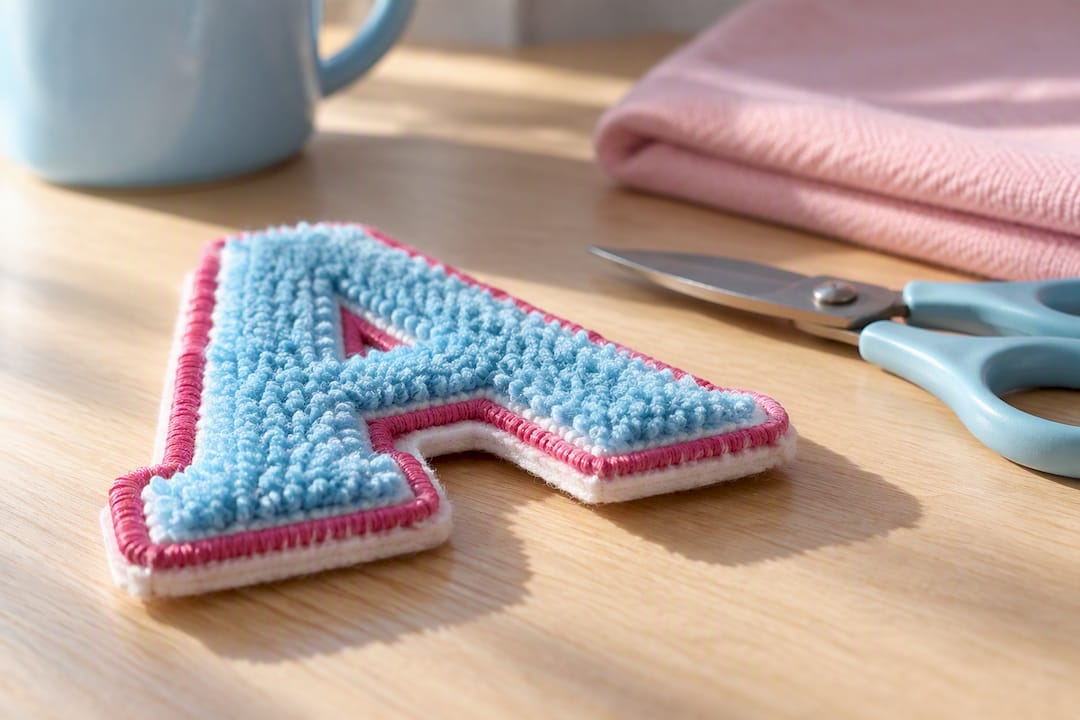
Size has a hard floor with chenille that most first-time buyers don’t expect. Because the looped yarn construction can’t render fine detail, letters smaller than roughly 2 inches (50 mm) tend to blur into illegible shapes. That 2-inch minimum works fine for chest placements and jacket backs, but sleeve patches need extra care: keep the letters as large as the sleeve width allows, or switch to embroidery for anything smaller.
Yarn blend and colour-fastness deserve a direct question to your supplier, not an assumption. Ask specifically what the yarn is made from (acrylic blends are common and hold colour well; cheaper polyester blends can fade faster) and whether the batch has been tested against an industry colour-fastness standard such as AATCC. A supplier who can answer that without hesitation is usually the one worth ordering from.
Price moves with four levers, and understanding them helps you read a quote instead of just reacting to the number at the bottom:
- Yarn density — higher loft costs more per patch because it uses more material and takes longer to stitch.
- Backing type — double-felt costs more than single-felt, but it’s the difference that shows up after twenty washes.
- Edge finish — a merrowed border adds a small premium over a raw laser-cut edge, and it’s usually worth it.
- Custom colours and volume — matching a specific Pantone-style shade adds setup cost for small runs, but that cost drops fast per unit once you order in bulk.
Pro Tip: Ask any supplier for a physical sample before committing to a bulk order. A five-minute look at the actual loft and backing in your hand tells you more than any product photo, and a supplier confident in their work will usually send one without pushback.
How do you attach chenille letters without ruining them?
Two methods dominate: iron-on and sew-on. Which one you use depends on the fabric, how long you need the patch to last, and whether you’re doing one jacket or fifty.
For iron-on application, follow these steps in order:
- Preheat your iron to about 320°F (160°C) and turn off the steam function completely. Steam introduces moisture that can weaken the adhesive bond before it sets.
- Position the patch on the garment exactly where you want it, checking placement twice since chenille adhesive sets fast once heat is applied.
- Lay a protective cloth (a Teflon sheet or plain parchment paper works) over the patch to shield the yarn from direct iron contact.
- Press from the front for about 15 seconds, applying firm, even pressure rather than sliding the iron back and forth.
- Turn the garment inside out and press from behind for another 15 seconds, which activates the adhesive from the fabric side and helps it bond more evenly.
- Let it cool flat for a few minutes before picking up or wearing the garment, since the adhesive is still setting.
This exact sequence comes from PatchesMania’s application guidance, and skipping the steam-off step is the most common reason iron-on patches fail within weeks.
A heat press machine, if you have access to one, outperforms a household iron for one simple reason: it applies uniform temperature and pressure across the entire patch surface at once, instead of the uneven, hand-guided pressure of an iron. Monterey Company’s guide to iron-on chenille notes that a heat press reduces the most common iron-on failures, which matters if you’re outfitting a whole team and can’t afford one patch peeling off in week two. Anyone applying patches to more than a handful of garments should seriously consider borrowing or renting one.
Fabric compatibility changes the calculation entirely. Cotton, denim, and heavier polyester blends accept heat well and bond reliably. Nylon and leather do not: both are heat-sensitive, and leather in particular should never be exposed to iron-on adhesive, since the heat needed to activate it can warp or discolour the material permanently. For leather jackets, letterman gear that will see heavy wear, or anything you want to last for years, sewing is the safer call. A simple whipstitch or a tighter blanket stitch around the merrowed edge holds a chenille letter securely without risking the yarn or the garment underneath.
If you’re not ready to commit to either method, hook-and-loop backing, safety pins, or fabric glue all work as temporary options, good for costumes, seasonal displays, or trying a placement before making it permanent.
How long do chenille patches last, and how do you care for them?
High-quality chenille, applied and cared for correctly, is designed to withstand at least 50 domestic wash cycles, according to Stahls Canada’s chenille patch guidance. That number assumes reasonable care, not neglect, so the washing routine you follow matters as much as the patch quality itself.
Stick to these habits and a sew-on chenille letter can outlast the garment it’s attached to:
- Machine wash cold, turned inside out, so the loops face away from friction with other clothing.
- Use a mild detergent; harsh stain removers can strip colour from the yarn faster than normal washing.
- Air dry whenever possible rather than tumble drying on high heat, which flattens the loft over repeated cycles.
- Skip steam entirely if you ever need to iron the garment near the patch, for the same adhesive and fibre reasons that apply during initial application.
- For leather jackets or letterman pieces with mixed materials, spot clean and take the item to a professional dry cleaner instead of machine washing.
Sew-on attachment consistently outlasts iron-on for one structural reason: there’s no adhesive layer to break down. Heat, repeated washing, and time all degrade adhesive bonds eventually, while stitching holds mechanically regardless of how many wash cycles pass. If you’re buying letters for a jacket you expect to wear for four years of high school, that difference alone is worth the extra effort of sewing instead of pressing.
Denim jackets carry their own care quirks worth knowing before you commit to a placement. The Precious Lamb’s denim care guide recommends waiting through the first several wears before washing at all, which is worth factoring in if you’re planning to add chenille letters to a brand-new jacket rather than a broken-in one.
What are the design limits of chenille letters?
Chenille does one thing better than almost any other patch style: bold, simple statements in large letters. It does not do fine detail well, and buyers who expect crisp small text or intricate logos in chenille usually end up disappointed.
The looped yarn construction that gives chenille its plush, retro texture is also what limits it. Loops can’t render sharp corners or thin lines the way flat embroidery thread can, which is why chenille and embroidery are often combined on the same patch: chenille fills the main letter or number, and embroidery handles any outline, small text, or fine detail around it. A varsity letter “M” in thick chenille with an embroidered year or team name stitched beneath it is a common hybrid, and it gives you both the texture and the legibility in one patch.
Edge finish is a design choice as much as a durability one. A merrowed border gives a rounded, finished look that reads as classic varsity styling, while a laser-cut edge sits flatter and can look more modern, though it’s more prone to fraying without careful sealing.
Sizing by placement keeps expectations realistic:
- Chest patches work well at 4 to 6 inches, giving chenille room to show its texture without crowding.
- Jacket-back letters can go larger still, since there’s more surface area to work with.
- Sleeve patches need caution: keep letters as large as the sleeve width comfortably allows, and remember the 2-inch legibility floor before shrinking anything further.
What should you ask suppliers before ordering chenille patches?
A short checklist separates a smooth order from a frustrating one, especially when you’re comparing quotes from several sellers at once.
- Confirm the backing type — iron-on, sew-on, hook-and-loop, or self-adhesive, and whether it’s single-felt or double-felt.
- Ask for the loft specification in plain terms: how dense is the yarn, and can they show a sample rather than just describe it?
- Request the edge finish — merrowed border or laser-cut — and ask which one they recommend for your specific use case.
- Ask about their sample policy: will they send a physical sample before you commit to a full order?
- Get a firm turnaround time in writing, not a vague “a few weeks” estimate.
- Confirm shipping details, including whether they ship to Canada directly and what that adds to total cost.
- Ask about yarn blend and colour-fastness testing, and whether they can reference a standard like AATCC.
Cutting through marketing language means asking specific, closed-ended questions rather than open ones. Instead of “tell me about your quality,” ask “what’s your loft density and is your backing single or double felt?” Suppliers who know their own specs answer instantly; the ones who stall are usually the ones to avoid.
Pro Tip: If a supplier can’t or won’t send a sample before a bulk order, treat that as a red flag rather than a minor inconvenience. A confident manufacturer, per Better Emblem’s own guidance on quality control, builds sampling and proofing into their process precisely because it protects both sides from a bad batch.
Other red flags worth walking away from: vague backing descriptions that never specify single or double felt, no stated lead time, and pricing that seems too low for the volume promised. Chenille production takes real time and material; a quote that undercuts everyone else by half usually means a corner is being cut somewhere you won’t see until the patch arrives.
Using chenille letters on personalised event items
LootsByShiry works with chenille letters the same way a lot of buyers eventually want to: not just on jackets, but on softer, smaller pieces built for a specific event or gift. Pastel pouches, cotton tote bags, and colour-changing tumblers all take a personalised letter well, provided the backing choice matches the material.
Lighter cotton fabric, like the totes, handles iron-on chenille without issue, since cotton accepts heat evenly. Smaller items like pastel pouches need a gentler touch: less rigid backing and careful placement so the patch doesn’t overwhelm a compact surface. A single bold initial tends to read better on a small pouch than a full name in chenille, simply because of the 2-inch legibility floor that applies no matter what the item is.
The goal with any personalised loot bag or gift item is the same one that applies to jackets: pick the backing and letter size that suits the fabric first, then let the design follow.
What conventional patch advice gets wrong
Most guides treat chenille letters as a single product category, as if the buying decision were only about colour and size. It isn’t. The real decision is about mismatch risk: buying the wrong backing for your fabric, or the wrong channel for your quantity, causes far more disappointment than picking an unflattering colour ever does.
The advice to “just buy iron-on, it’s easier” is where most first-time buyers go wrong. Convenience and permanence are different goals, and conflating them leads to letters peeling off a leather jacket within a season. The research on this is consistent: sewing costs more effort upfront but saves money and disappointment over years of wear, especially on anything meant to be worn hard.
If you order chenille letters this year, prioritize the backing decision before the colour decision. Ask your supplier about loft and double-felt construction before you ask about pricing. The specs you can’t see in a product photo are the ones that determine whether your patch looks the same in year three as it did on day one.
— Shiry
A ready-made alternative if you’d rather skip the DIY steps
If sourcing your own chenille letters, checking backing specs, and running a heat press sounds like more than you want to manage for a single event, LootsByShiry builds that personalisation into finished products instead of leaving it as a separate project. The shop offers Cotton Tote Bags and pastel pouches at $12.00 each, plus Colour Changing Tumblers at $10.00, all built around the same customer-driven design process: you choose the item, the patch style, the placement, and the colours, and approve the final look before it ships.
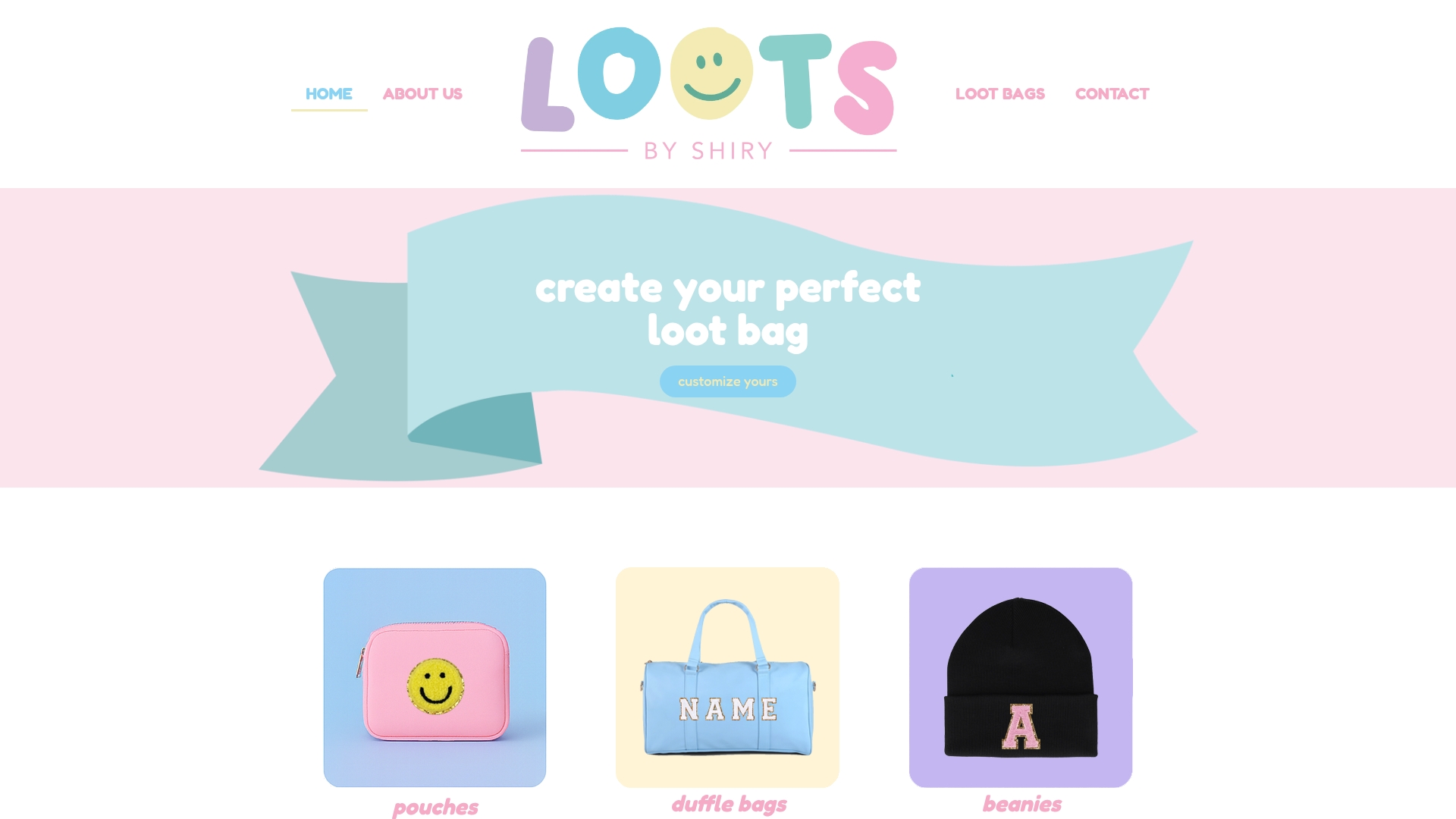
For event organisers who need a bundled solution rather than individual pieces, the loot bags page covers packaged options with optional wrapping at $0.50 per bag and delivery at $10. Instead of hunting down a chenille supplier, comparing loft specs, and applying patches yourself, you send over the names or initials you want and receive event-ready items. Browse the shop to see current options and start building your order.
Sources
For readers who want to go deeper on any single step covered above, a few sources are worth bookmarking directly.
PatchesMania’s step-by-step application guide covers the exact iron-on process, including temperature, timing, and the protective-cloth requirement in more detail than a summary can capture.
Stahls Canada’s chenille patch page is the reference point for durability expectations and washing care, and it’s written specifically for the Canadian market.
For understanding how chenille differs structurally from embroidery, including why fine detail doesn’t translate well into looped yarn, The Patchio’s explainer breaks down the construction difference clearly. Anyone comparing custom manufacturers for a bulk order should also read Better Emblem’s manufacturing guide, which explains the quality-control process behind consistent large orders.
- How to apply a chenille letter patch safely — PatchesMania
- Chenille patches for letterman jackets: a manufacturer’s guide to quality — Better Emblem
- Iron-On Chenille Patches: The Full Guide — Monterey Company
FAQ
What is the minimum letter size for chenille patches?
Chenille letters need to be at least about 2 inches (50 mm) tall to stay legible, since the looped yarn construction can’t render fine detail. Anything smaller tends to blur into an unreadable shape, so designers combine chenille with embroidery when small text is needed.
Should I choose iron-on or sew-on chenille patches?
Sew-on is more durable and is the only safe option for leather or high-wear athletic gear, while iron-on works fine on cotton and denim for everyday convenience. If you want a patch to survive years of wear, heat press or hand sewing outperforms a home iron over the long run.
How many wash cycles do chenille patches last?
High-quality chenille, properly applied and cared for, is designed to handle at least 50 domestic wash cycles. Cold water, inside-out washing, and mild detergent all help the patch reach or exceed that number.
Can I put chenille letters on a leather jacket?
Sewing is the recommended method for leather, since the heat required for iron-on adhesive can warp or discolour the material. For leather and other heat-sensitive fabrics, stick with stitching rather than a heat press or iron.
Does LootsByShiry offer chenille letter personalisation?
LootsByShiry builds letter and patch personalisation into finished products like pastel pouches, Cotton Tote Bags, and Colour Changing Tumblers rather than selling raw patches. Current pricing and options are listed on the shop page.