
Party favours are optional, not obligatory, and whether to give them depends mostly on the occasion, the guests’ ages, and how close you are to them. Kids’ birthday parties, baby showers, and weddings carry the strongest unwritten expectation, while casual adult gatherings rarely need one at all. Expectations soften as children get older and drop further for grown-up events. The sections below cover concrete ideas, budgets, safety checks, and how to handle guests who show up without a favour waiting for them.
TL;DR:
- Favours are more expected at milestone events like weddings, birthdays for under 8s, or baby showers, but optional for casual adult gatherings or large groups.
- Personalization and usefulness greatly increase the likelihood that guests will keep the favour, especially with items like totes, pouches, or custom tumblers.
- Budgeting typically falls into economy (a few dollars per guest), mid-range, or keepsake levels, with bulk purchases and favor bars helping control costs.
- Safety checks for small parts and allergen labeling are essential for avoiding hazards, especially at events with young children or mixed-age groups.
- Buffering your order by about 10% and ordering custom favours two to three weeks in advance prevents last-minute shortages and keeps costs predictable.
Table of Contents
- When do guests actually expect a favour?
- Practical favour ideas by audience and goal
- How much should you budget, and when should you order?
- Safety and allergy checks before you assemble favours
- Presenting favours so they read as thanks, not obligation
- Low-cost, low-waste ways to say thanks
- What about plus-ones, latecomers, or uninvited extras?
- Why a personalized keepsake often beats a generic favour
- If you want customisable keepsakes: how Loots by Shiry helps hosts
- Official and helpful resources to check
- Sources
- FAQ
When do guests actually expect a favour?
Some events carry a stronger unwritten expectation than others. Children’s birthday parties, baby showers, and weddings are the three occasions where a favour (or a small keepsake in the case of weddings) is closest to a norm, mostly because the parents or couple are thanking guests for celebrating a milestone with them. A casual barbecue, a coworker’s retirement lunch, or a low-key adult dinner party carries almost no such expectation.
Closeness to the guest matters more than the type of event. A close friend’s child’s birthday might call for a small keepsake, while a classroom-wide invite list makes a modest, consistent favour easier to justify across the board. For coworkers or casual acquaintances, skipping favours entirely reads as normal rather than stingy.
Age is the biggest lever. Favours are optional at any age and there’s no fixed cutoff, but many parents scale back or stop giving them around ages 8 to 10 as kids care less about goodie bags and more about the party itself. Parents in that same source report that children often don’t notice the absence of a favour at all, which is worth remembering before overspending on a gesture nobody expected.
A short checklist helps decide:
- Is this a milestone event (first birthday, christening, wedding) where a keepsake reads as tradition rather than obligation?
- Are most guests children under 8, where a small favour still lands well?
- Do you know the guests well enough that a thoughtful gesture will register, or is the group large and mixed?
- Does your budget allow a favour without cutting into food, venue, or activities?
If the answers lean toward “no,” skipping favours entirely is a legitimate, common choice.
Practical favour ideas by audience and goal
Favours generally fall into five categories: consumable, practical, keepsake, activity-based, and experience tokens. Sorting by category makes it easier to match a favour to both the guest list and the budget, an approach event-planning guides use to keep favour choices theme-appropriate rather than generic.
For toddlers (ages 1 to 4), favours should skip anything with small parts:
- Board books or soft cloth books.
- Bubbles in a spill-resistant bottle.
- Chunky crayons with a small colouring sheet.
- Soft plush characters tied to the party theme.
- Reusable snack cups or sippy cups.
- Stickers on a themed sheet, not loose.
For school-age kids (ages 5 to 10), there’s more room for activity and keepsake items:
- A personalized loot bag with the child’s name.
- Slime or putty in a sealed container.
- Mini notebooks or themed pencils.
- Temporary tattoos matched to the party theme.
- Small craft kits (beading, friendship bracelets).
- A “make your own” hat or visor station.
- Glow sticks for evening parties.
For teens, novelty and social currency matter more than volume:
- Themed enamel pins or patches.
- Photo booth prints from the party itself.
- Novelty socks or small costume-adjacent accessories, the kind found in themed costume collections for a specific party theme.
- A small gift card bundle.
- Reusable water bottles with a custom design.
For adults, favours work best as either edible or genuinely useful:
- Mini bottles of hot sauce, honey, or coffee, similar to curated gift box options built for small, edible gifting.
- Seed packets for a spring or garden-themed event.
- Candles or soap bars tied to the event’s colour palette.
- A small custom tote or pouch that doubles as packaging.
- A single artisan treat wrapped individually.
Packaging often does more work than the contents. A plain paper bag reads as an afterthought, while a small custom tote, pastel pouch, or labelled tin signals effort without adding much cost. Neutral, reusable containers also tend to get kept rather than tossed, according to party-supply retailers who track what guests actually reuse after the event.
How much should you budget, and when should you order?
Favour budgets vary widely, but three rough bands help frame the decision:
- Economy (roughly a couple of dollars per guest): stickers, temporary tattoos, or a single wrapped treat.
- Mid-range (a modest per-guest spend): a small toy, a themed craft kit, or a branded item like a tumbler or pouch.
- Keepsake (the top end of most party budgets): a personalized item the guest is likely to use again, such as a custom tote or engraved trinket.
For large guest lists, cost creep is the real risk, not the per-unit price. Buying in bulk and standardizing one favour per age bracket, rather than customizing individually, keeps the total predictable. A favour bar where guests pick two or three small items from a shared table is another way to control cost while giving guests some choice, an approach several party bloggers recommend specifically to avoid one-size-fits-all junk.
On timing, premade favours can usually be bought within a week of the event. Custom or personalized favours need more lead time: order at least two to three weeks ahead, and always order slightly more than your guest count to cover last-minute additions, since reordering a small custom batch close to the date is rarely fast or cheap.
Safety and allergy checks before you assemble favours
Before filling a single bag, run through the basics that keep favours safe across a mixed-age group. For any event with toddlers or young children, check every item against small-parts risk: loose beads, tiny toy pieces, and anything that detaches easily are choking hazards and should be left out entirely.
Health Canada’s guidance for children’s toys and related products sets out age-labelling and small-parts recommendations that hosts assembling mixed-age favour bags should follow, including testing basics and warning label expectations for products intended for young children. Following that guidance is the difference between a favour that’s fun and one that’s a hazard.
For edible favours, label ingredients clearly, especially common allergens like nuts, dairy, and gluten. Loose treats without labels are risky in any mixed-age group, since you rarely know every guest’s allergy status in advance. Individually wrapped, labelled items solve this with almost no added cost, and a dedicated allergy guide can help you plan a fully allergy-conscious bag from the start. If the party is at a rented venue, check whether food or packaging rules apply there too.
Presenting favours so they read as thanks, not obligation
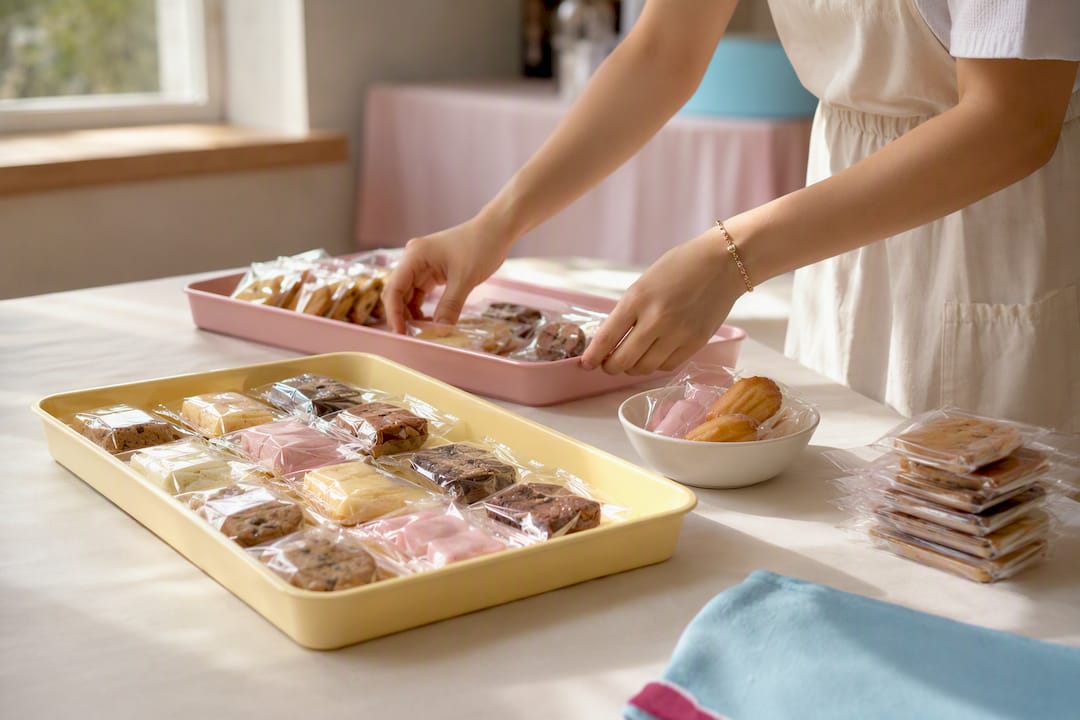
Where and when you hand out favours changes how they’re received. Placing them by the exit, on a designated table, or at each place setting for a seated event all work, but handing them out mid-party can interrupt the flow and make the gesture feel transactional.
Tone matters in the wording too:
- Casual: “Thanks for celebrating with us! Grab a treat on your way out.”
- Thoughtful: “A little something to remember today by, thank you for being here.”
- Formal: “With gratitude for sharing this day with us.”
If a host’s invitation says “no gifts,” that phrasing is often a polite cushion rather than a strict rule. Etiquette guidance suggests close guests can still bring a small, thoughtful token, or simply offer to help clean up, as an acceptable way to acknowledge the host’s effort without ignoring the request outright.
For keepsake-style favours, a small handwritten tag with the guest’s name adds more perceived value than a printed one, and it turns a generic item into something worth keeping.
Low-cost, low-waste ways to say thanks
Physical favours aren’t the only way to show appreciation. A few alternatives avoid the waste and cost of traditional loot bags entirely:
- Experience vouchers: a coupon for a follow-up outing (mini-golf, ice cream) instead of a physical item.
- A communal treat or candy bar: guests fill a small bag themselves, which cuts down on unwanted extras.
- Acts of service: offering to help the host clean up is a genuinely appreciated substitute for a physical token.
- A small donation made in guests’ names, particularly for milestone events like a wedding or a big birthday.
On invitations, a simple line like “no favours this time, just come celebrate with us” sets expectations early and avoids any awkwardness at pickup time. For young kids’ parties especially, an edible treat eaten on-site (cupcakes, a candy station) often beats a take-home item, since it avoids the safety and allergy labelling that off-site treats require.
Pro Tip: A favour bar where guests choose their own two or three items usually gets a better reaction than a pre-packed bag nobody asked for.
What about plus-ones, latecomers, or uninvited extras?
Favours are typically planned around the RSVP count, which means anyone outside that count, a plus-one, a sibling who tagged along, or a guest who arrives late, may find there isn’t one waiting for them. This is a logistics problem, not an etiquette failure, and there are a few ways to handle it gracefully.
The simplest fix is ordering a small buffer above the confirmed guest count, generally around 10%, which covers most last-minute additions without meaningfully increasing cost. If the buffer runs out, a quiet workaround, like offering the extra guest a treat from the dessert table or a small item from the favour bar, avoids an awkward moment without singling anyone out.
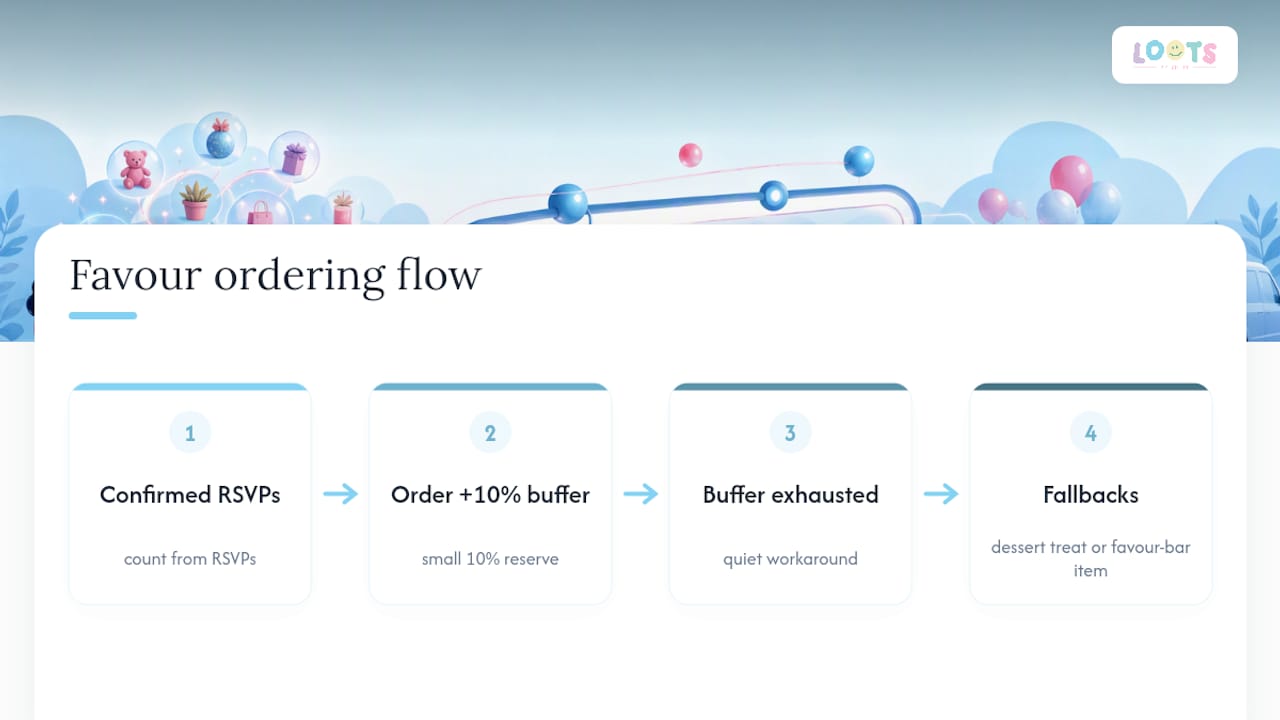
For plus-ones specifically, it helps to ask guests to confirm additional attendees when they RSVP, so the count going into the order reflects reality. Latecomers rarely expect a favour if the party has clearly moved past that stage of the event, so there’s no need to interrupt things to make sure they get one.
If a favour is genuinely central to the event, such as a wedding favour tied to the couple’s story, it’s worth keeping a handful in reserve specifically for these situations rather than scrambling to reorder. Otherwise, treating a missed favour as a minor, forgettable gap, rather than a slight, keeps the etiquette simple: nobody is owed a favour, and a gracious host handles the occasional shortfall without drawing attention to it.
Why a personalized keepsake often beats a generic favour
Working with customizable loot bags day to day, the pattern that stands out is simple: a name, a patch, or a colour choice turns a forgettable item into something a guest actually keeps. High-volume, cheap trinkets get discarded quickly, while one meaningful, personalized item tends to get used long after the party ends.
The logistics matter as much as the design. Hosts planning around a custom order should confirm minimums and lead times early, order a small buffer above the guest count, and settle on personalization details (names, colours, patches) before the final week. That small amount of planning is usually what separates a favour that gets kept from one that ends up in the trash.
— Shiry
If you want customisable keepsakes: how Loots by Shiry helps hosts
If you’ve decided a favour is worth giving, the easiest way to make it memorable is to personalize it rather than default to generic party-store items. Loots by Shiry builds loot bags, Cotton Tote Bags, pastel pouches, and Colour Changing Tumblers where you choose the name, patch, and colour for each one, which turns a standard favour into something a guest is more likely to hold onto.
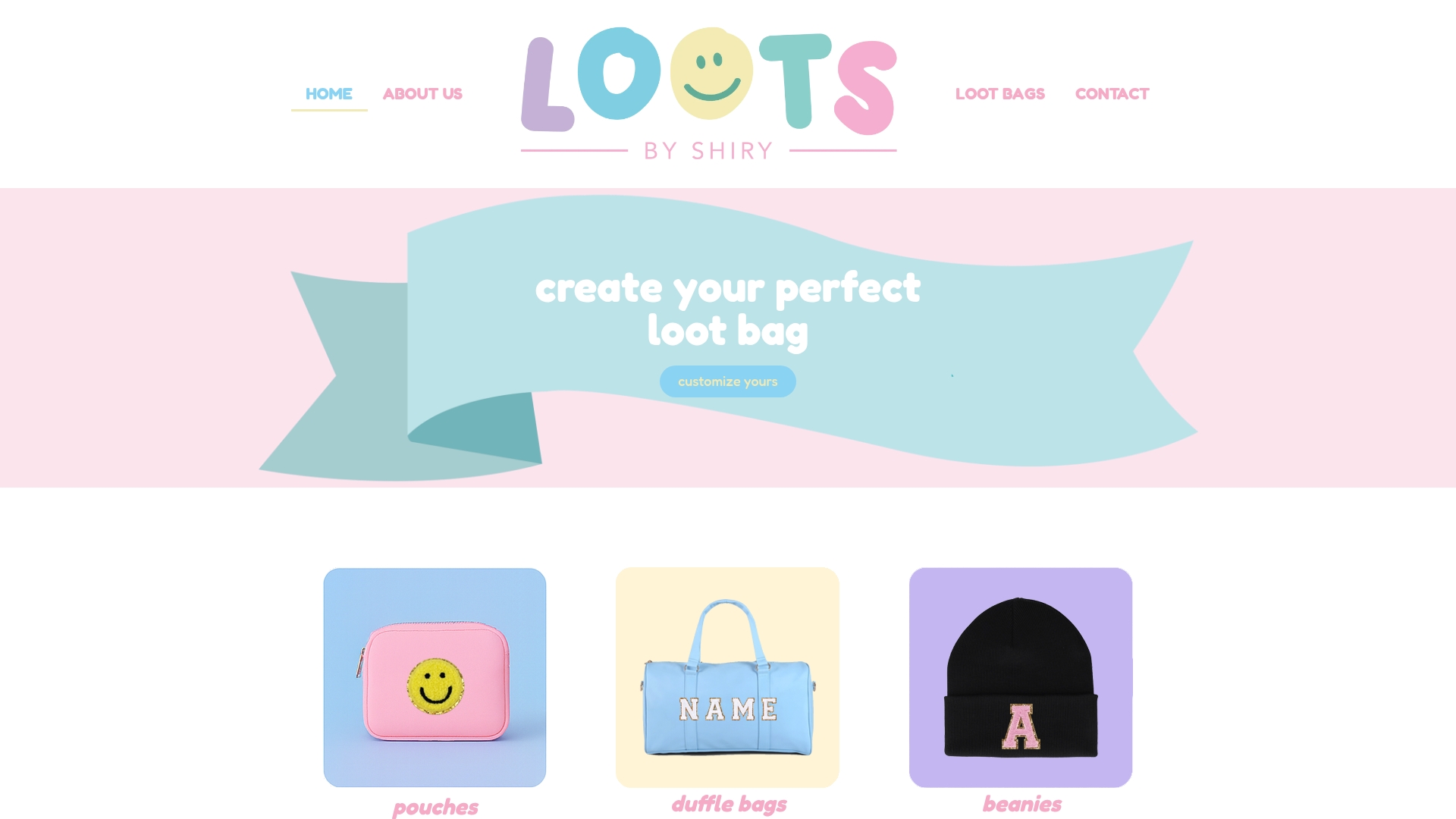
Loot bags work well for kids’ birthdays and themed events, while the totes and pouches suit baby showers, weddings, or adult gatherings where a reusable item reads better than a disposable one. Wrapping and delivery fees apply, adding a small cost to the overall presentation.
For hosts deciding between a fully custom order and a DIY approach, the general rule is: DIY works fine for small, casual gatherings, while a custom order makes more sense once personalization, consistency across a large guest list, or a specific theme is involved. Order your guest count plus a small buffer to cover late RSVPs, and place custom orders a few weeks ahead rather than the week before.
Ready to see the options: browse the shop for totes, pouches, and tumblers, or head straight to the loot bags page to start building a set for your next event.
Official and helpful resources to check
- Health Canada’s toy safety guidance covers small-parts and labelling rules for products intended for children.
- Active Parents’ favour idea roundup reflects real parent feedback on what favours get used versus ignored.
- Shimmer & Confetti’s favour guide breaks down favour categories by theme and budget.
- The Kit’s hostess gift column explains how “no gifts” requests are commonly interpreted.
Sources
- Best unique loot bag ideas | Active Parents
- Industry guide: safety requirements for children’s toys and related products | Health Canada
- How to choose party favors | Shimmer & Confetti
FAQ
At what age do you stop giving party favours?
There’s no fixed age, since favours are always optional, but many parents scale back or stop around ages 8 to 10 as kids show less interest in goodie bags. Past that age, a shared activity or food often replaces a take-home favour entirely.
When should you skip a hostess gift?
If a host explicitly says “no gifts,” that phrasing is often a polite cushion rather than a strict rule, and etiquette guidance suggests close guests can still bring a small, thoughtful token or simply help with cleanup instead. For casual gatherings among close friends, skipping a gift entirely is generally fine.
What party favours do guests actually keep?
Personalized or genuinely useful items get kept far more often than generic trinkets, since a name, patch, or colour choice raises how much a guest values the item. Practical, keepsake, and experience-based favours, as outlined in event-planning guides, tend to outperform disposable novelty items.
What is the four-gift rule for birthdays?
The four-gift rule (want, need, wear, read) is a method some families use to simplify gift-giving expectations across different ages and budgets. Some households add a fifth category, something to give, to encourage generosity alongside receiving.
Do plus-ones or late guests need a favour too?
Not necessarily. Favours are typically planned around the confirmed guest count, so ordering a small buffer above that number covers most last-minute additions without extra stress for the host.