Non-food favours are the safest, fastest choice for any allergy-friendly party. Skip the treat bags filled with candy and reach for small keepsakes, art supplies, or activity kits instead. When packaged food is part of the plan, only use items with a clear “Contains” statement that meets Health Canada and CFIA allergen-labelling rules, and call the manufacturer if anything is unclear.
Quick safe options at a glance:
- Non-food keepsakes: mini notebooks, sticker sheets, temporary tattoos, small puzzles
- Washable art supplies: crayons, watercolour sets, washable markers
- Small games: card games, mini activity kits, play dough (latex-free)
- Prepackaged treats only when the label clearly declares all priority allergens
For a ready-made, personalised option, LootsByShiry’s customisable loot bags let you choose colours, names, and non-food contents so every child gets something safe and special.
Pro Tip: Order customisable loot bags at least two to three weeks before the party to allow time for personalisation and shipping.
Key takeaways
Non-food favours are the single most reliable way to make a kids’ party safe and inclusive for children with food allergies in Canada.
| Point | Details |
|---|---|
| Non-food favours first | Art supplies, games, and keepsakes carry no food allergen risk and pass most school policies. |
| Check labels carefully | Look for a “Contains” statement and prescribed allergen names; avoid bulk-bin items entirely. |
| Communicate before the party | Collect written allergy lists at RSVP and welcome parents to send a safe treat for their child. |
| Emergency readiness | Epinephrine is the first-line treatment for anaphylaxis; have an autoinjector on hand and know how to use it. |
| LootsByShiry for personalised bags | Customisable non-food loot bags from LootsByShiry let you personalise each child’s favour safely. |
Table of Contents
- Why allergy-friendly favours matter at Canadian kids’ parties
- Best non-food allergy-friendly favour ideas by age
- If you want to include packaged food: a Canada-specific checklist
- DIY allergy-safe favour projects and printable ideas
- How hosts should manage an allergy-safe party
- Where to buy allergy-friendly favours in Canada
- Simple label template and packing best practices
- The part most party guides get wrong
- LootsByShiry makes allergy-safe loot bags personal
- Sources
- FAQ
Why allergy-friendly favours matter at Canadian kids’ parties
Canada identifies priority food allergens that must be declared on prepackaged foods: peanuts, tree nuts, sesame seeds, milk, eggs, seafood (crustaceans, molluscs, and fish), soy, wheat and triticale, mustard, and added sulphites at regulated levels. Food allergies affect a significant number of Canadian children, and reactions can range from hives to life-threatening anaphylaxis. A birthday party treat bag is a small thing to get wrong with very large consequences.
The 11 priority allergens hosts need to watch for:
- Peanuts
- Tree nuts (cashews, almonds, walnuts, pecans, and others)
- Sesame seeds
- Milk
- Eggs
- Seafood: crustaceans (shrimp, crab, lobster), molluscs (clams, oysters, scallops), and fish
- Soy
- Wheat and triticale
- Mustard
- Added sulphites at regulated levels
One thing many hosts do not realise: “may contain” warnings are entirely voluntary under Canadian regulations. Their absence does not mean a product is allergen-free. Health Canada is clear that precautionary statements are not a substitute for reading the ingredient list or contacting the manufacturer directly. A product without a “may contain peanuts” label could still be processed on shared equipment.
Pro Tip: When collecting RSVPs, add one line to your invitation: “Please let us know about any food allergies or dietary restrictions so we can make sure everyone is included.” You get the information you need, and parents of allergic children feel seen rather than like an afterthought.
Best non-food allergy-friendly favour ideas by age
Non-food favours sidestep allergen risk entirely. No label checks, no manufacturer calls, no “may contain” guesswork. The only material sensitivities to watch for are latex (in some balloons and stretchy toys) and certain craft glues or metallic paints.
Toddlers (0–3 years): Keep it simple and chunky. Board books, soft fabric pouches filled with safe small items (supervised), bath crayons, and foam stickers work well. Avoid anything with small parts.
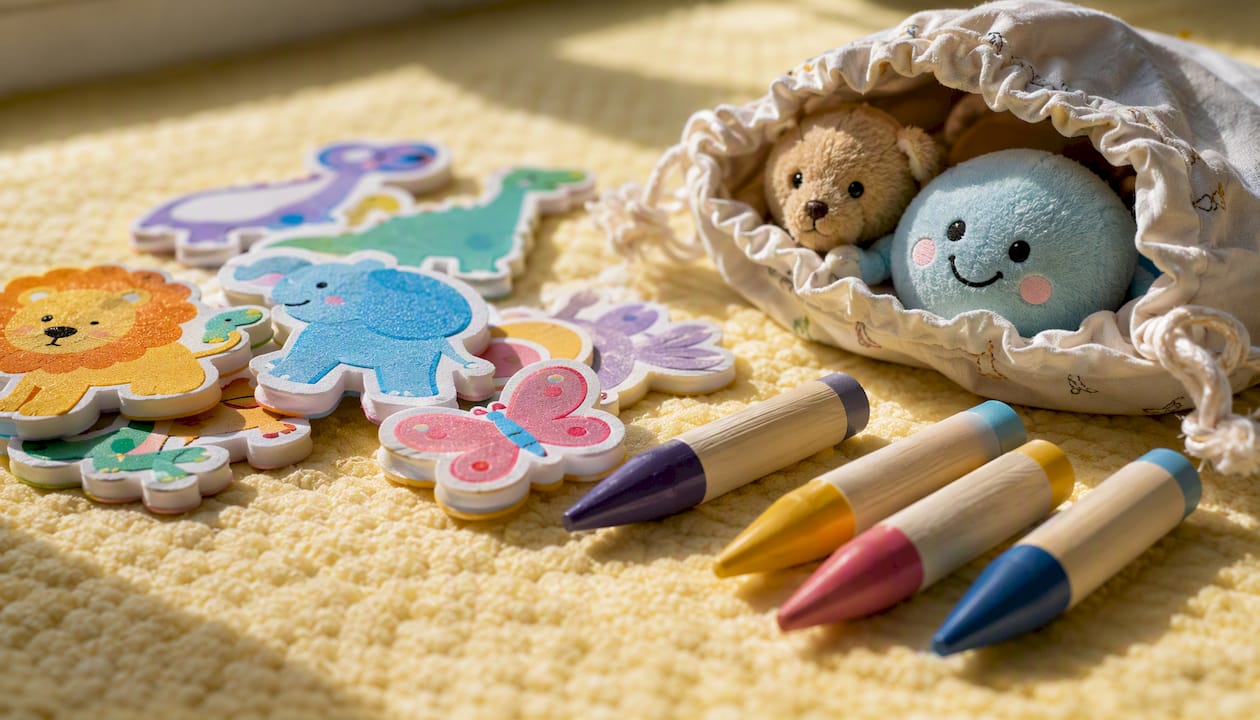
Preschool (3–5 years): This age group loves creative play. Washable crayons, mini watercolour sets, foam sticker sheets, simple puzzles (6–12 pieces), and play dough in sealed containers (confirm latex-free) are all classroom-friendly and parent-approved.
Early elementary (6–8 years): Kids this age can handle more detail. Mini notebooks with gel pens, temporary tattoo sheets, card games like Go Fish or Snap, small activity kits (bead bracelets, friendship bracelet string), and seed-packet plantings are popular and low-cost.
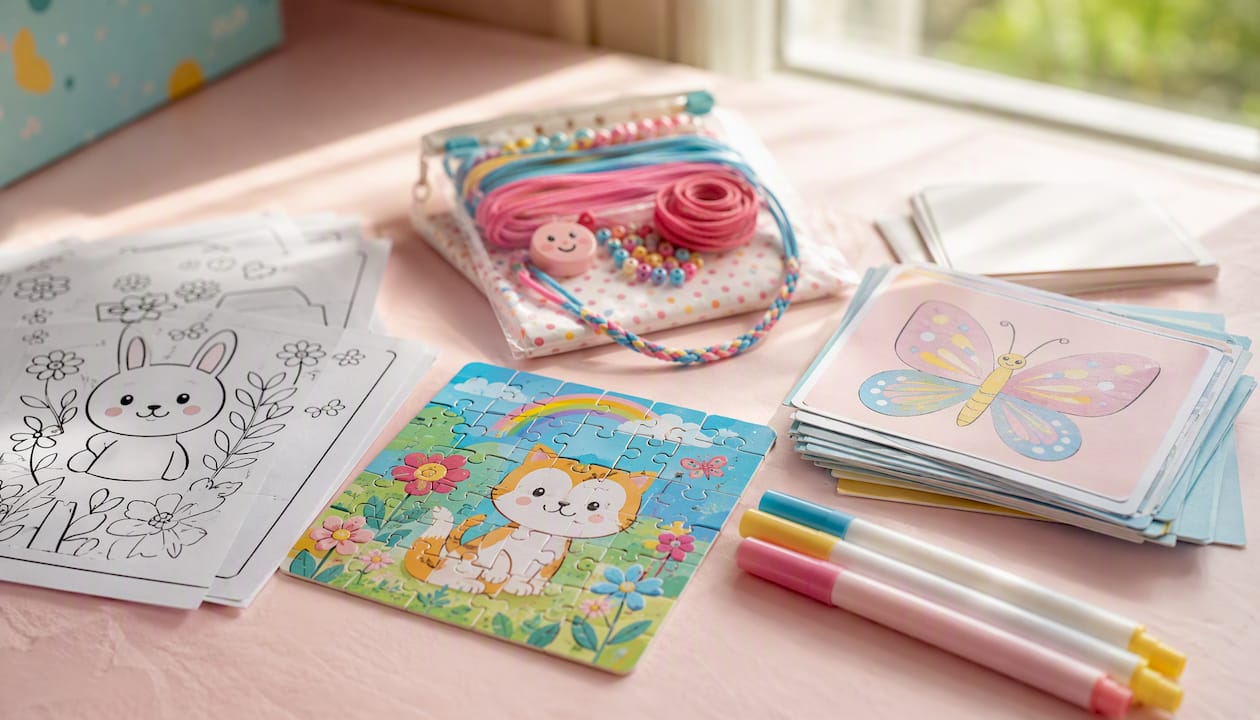
Older kids (9–12 years): Think novelty and personalisation. Custom keychains, mini sketchbooks, small puzzle cubes, lip balm (fragrance-free options available), and reusable tote bags or pouches they can decorate themselves.
Price guidance:
| Age Group | Budget Option | Mid-Range | Premium |
|---|---|---|---|
| Toddlers (0–3) | Foam stickers, bath crayons ($1–3) | Board book ($5–8) | Soft fabric pouch set ($10–15) |
| Preschool (3–5) | Crayon set, sticker sheet ($2–4) | Mini watercolour kit ($5) | Play dough + tools set ($10–12) |
| Elementary (6–8) | Temporary tattoos, card game ($2–5) | Bead bracelet kit ($6–9) | Mini notebook + pen set ($10) |
| Older kids (9–12) | Lip balm, puzzle cube ($3–6) | Mini sketchbook + markers ($8–12) | Custom pouch or tote ($14) |
Classroom-friendly note: many schools have nut-free or allergen-aware policies that extend to party favours. Non-food items pass those policies without any extra paperwork.
If you want to include packaged food: a Canada-specific checklist
The short answer: only use packaged items that clearly declare priority allergens through a “Contains” statement or within the ingredient list, using the prescribed source names required under Canadian regulations. Health Canada confirms that “Contains” statements and prescribed source names are the authoritative way allergens must appear on Canadian prepackaged food labels.
Step-by-step checklist:
- Check the ingredient list for all 11 priority allergens by their prescribed source names (e.g., “peanut,” “milk,” “egg,” not vague terms like “natural flavour”).
- Look for a “Contains” statement directly below or near the ingredient list. It should name every priority allergen present.
- Confirm the label uses CFIA-required prescribed names — “wheat” not “flour,” “milk” not “dairy.”
- Avoid bulk-bin candy and loose bakery items entirely. Cross-contamination risk is high and there is no readable label to verify.
- If the label is unclear or the “Contains” statement is missing, call the manufacturer before buying. Ask: “Does this product contain [specific allergen]? Is it made on shared equipment?”
- Never assume “may contain” absence means safe. Check the ingredient list regardless.
What a Canadian “Contains” statement looks like:
That line appears after the ingredient list. If it is missing but the product contains priority allergens, the allergens must still appear in the ingredient list itself by their prescribed names. Both formats are valid; the “Contains” statement is simply easier to scan quickly.
DIY allergy-safe favour projects and printable ideas
DIY favours give you full control over what goes into each bag. The key is assembly discipline: a clean surface, sealed packaging for each component, and no food items mixed into the workspace.
Quick DIY projects:
- Printable activity sheets: Print colouring pages, word searches, or mini-games at home. Slip into a clear sleeve. Cost: under $1 per child. Time: 20 minutes for a batch of 20.
- Sticker packs: Buy sheets in bulk and sort into small resealable bags. Cost: $1–2 per child. Time: 10 minutes.
- Custom friendship bracelets: Pre-cut string in party colours, bundle with a simple instruction card. Cost: $2–3 per child. Time: 30 minutes for 15 kits.
- Seed-packet plantings: Small paper envelopes filled with easy-grow seeds (sunflower, marigold). Add a handwritten label. Cost: $1–2 per child. Time: 15 minutes.
- Mini chalkboards: Small wooden chalkboards with a piece of chalk. Cost: $3–5 per child. Time: 5 minutes.
Assembly tips: Wipe down your work surface before starting. Use individually sealed bags for each favour so components from different kits do not mix. If any craft supply contains latex (some stretchy bands do) or metallic paint with heavy-metal pigments, swap for a latex-free or water-based alternative.
Material sensitivities to know:
- Latex: present in some balloons, stretchy toys, and rubber bands. Use latex-free alternatives.
- Some craft glues: contain solvents. Use school-safe PVA glue instead.
- Metallic paints: some contain nickel or other metals. Choose water-based craft paint.
Pro Tip: Assemble DIY favours in a kitchen that has been wiped down after any food prep. Cross-contamination on counters and shared utensils is a real risk even when the favour itself contains no food.
How hosts should manage an allergy-safe party
Good planning before the party matters far more than scrambling during it.
Pre-party communication: When sending invitations, ask parents to share allergy information in writing. A simple line works: “We want every child to have a safe and fun time. Please reply with any food allergies or dietary needs.” Food Allergy Canada recommends collecting written allergy lists, welcoming parents to send a safe treat or meal for their child, and photographing labels in advance so parents can verify products before the party.
Host checklist:
- Wipe down all surfaces and serving areas before guests arrive
- Set up a dedicated hand-washing station and remind children to wash hands before eating
- Keep food in one designated area; keep favour bags in a separate, clearly labelled spot
- Do not allow outside food to be shared among children without checking with the host first
- Label all food items, including what they contain
- Keep a written list of each child’s allergies visible to all supervising adults
Emergency response, in order:
- Recognise symptoms: hives, swelling, vomiting, difficulty breathing, sudden paleness or limpness.
- Inject epinephrine immediately using the child’s autoinjector. Epinephrine is the first-line treatment for anaphylaxis; antihistamines are not a substitute.
- Call 911.
- Lay the child flat with legs elevated (unless breathing is difficult, in which case let them sit up).
- A second dose of epinephrine may be given after 5–15 minutes if symptoms return and a second autoinjector is available.
- Stay with the child until emergency services arrive.
Pro Tip: Ask parents of allergic children to bring a valid, non-expired epinephrine autoinjector at drop-off and to show you how to use it. Better yet, request a trainer device in advance and practise the steps yourself before the party.
Where to buy allergy-friendly favours in Canada
Canadian specialty party retailers, local makers, and certified allergen-free brands all carry non-food favour options. When evaluating any vendor, ask three things: Are the materials clearly listed? Are non-food items kept separate from food products in their warehouse or studio? Can you get a custom or personalised option?
For parents and planners who want a ready-made, personalised solution without the sourcing legwork, LootsByShiry’s pastel pouches and customisable loot bags are a strong fit. Key features that align with allergy-safe party planning:
- Non-food contents: pouches, beanies, tote bags, tumblers, and other keepsakes with no food allergen risk
- Personalisation: names, patches, and colour choices so each child’s bag feels individual
- Clear sourcing: products are described with material information so you know what you are ordering
- Bulk and event orders: suitable for classroom parties, birthday parties, and larger celebrations
Order at least two to three weeks ahead for custom options. Standard items may ship faster; check the product page for current lead times.
Pro Tip: For mixed-age parties or events where you need both kids’ and adult favours, LootsByShiry’s full range covers both, so you can order everything from one place with consistent personalisation.
Simple label template and packing best practices
Whether you are packing DIY favours or prepackaged treats, clear labelling removes confusion at the party and gives parents the information they need at a glance.
Label template (copy and adapt):
| Field | What to write |
|---|---|
| Item name | e.g., “Watercolour kit” or “Mini notebook” |
| Contents / allergens | “Non-food item” OR “Contains: [list allergens]” |
| Prepared by / date | e.g., “Packed by [Host name], [Date]” |
| Contact | Host phone number or email for questions |
Packing best practices:
- Wrap each DIY component individually before placing it in the favour bag
- Use sealed resealable bags for any prepackaged treats; do not mix them with non-food items in the same compartment
- Keep allergen-free items in a clearly labelled separate bin or basket at the party
- If you have children with different allergen profiles, colour-code the bags and note the colour system on the invitation or at the door
One important distinction: manufacturers are legally required to declare priority allergens on prepackaged food labels under Canadian regulations. Host labels are not a legal substitute for that declaration. They are an additional layer of communication, not a replacement for reading the original product label.
The part most party guides get wrong
Most allergy-party advice focuses on food swaps: use a nut-free cake, find a gluten-free cookie, source an allergen-free candy. That framing keeps food at the centre of the favour strategy, which means hosts are always one missed label away from a problem.
The more useful shift is structural: treat non-food favours as the default, not the fallback. A mini watercolour set or a personalised pouch does not require a label check, a manufacturer call, or a “may contain” disclaimer. It just works for every child in the room. The energy you would have spent verifying a packaged treat can go into making the bag feel personal and memorable instead.
Where the conventional advice also falls short: it rarely addresses the social dimension. A child who receives a different treat bag because of their allergy notices. A child who receives the same personalised, non-food loot bag as everyone else does not. That distinction matters more than the allergen list.
The other gap is emergency preparedness. Hosts spend a lot of time on the favour table and very little time on what happens if something goes wrong. Knowing where the epinephrine autoinjector is, knowing how to use it, and having called 911 in your head before the party starts is more protective than any label check.
LootsByShiry makes allergy-safe loot bags personal
Choosing non-food favours is the right call. The harder part is finding something that feels special rather than generic. That is exactly what LootsByShiry was built for.
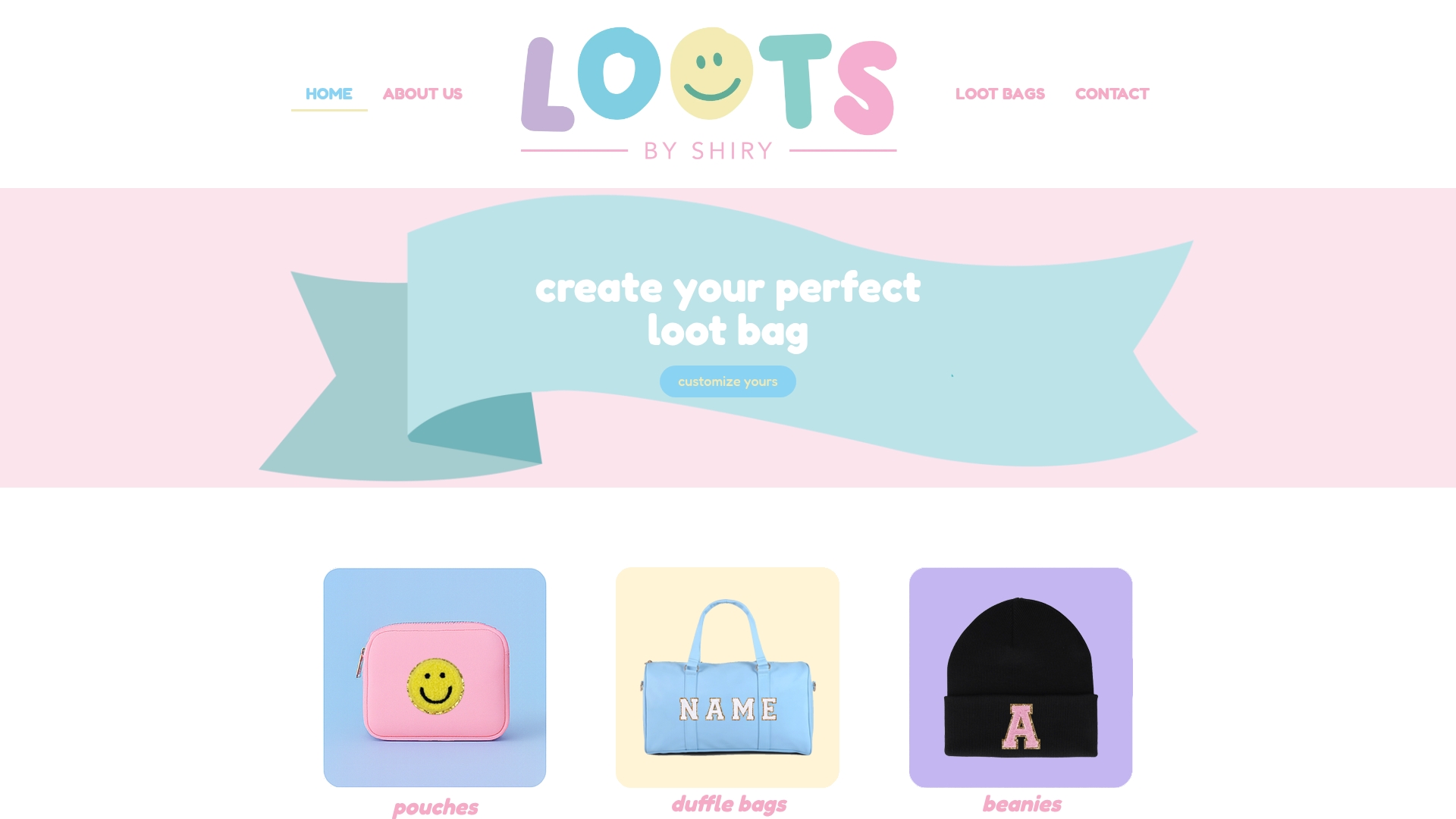
Every loot bag from LootsByShiry is customisable: names, patches, colours, and themes chosen by you, assembled into a keepsake each child will actually want to keep. No food, no allergen risk, no last-minute label panic. Whether you need 10 bags for a birthday party or 50 for a classroom celebration, the LootsByShiry shop has options at multiple price points with clear product descriptions. Custom orders are also available for themed events or specific colour palettes. Browse the full collection and start personalising at Lootsbyshiry.
Sources
These are the primary sources to consult when verifying product labels, allergen rules, and party-safety guidance in Canada:
- Inspection
- Questions and answers about new regulations to enhance the labelling of food allergens, gluten and added sulphites – Health Canada
- Children’s parties – Food Allergy Canada
FAQ
What are good gifts for people with food allergies?
Non-food items are the safest choice: art supplies, small games, books, personalised pouches, or keepsakes carry no allergen risk. If you want to include food, choose prepackaged items with a clear “Contains” statement that names all priority allergens under Canadian labelling rules.
What allergy-friendly snacks work well at kids’ parties?
Look for prepackaged items that carry a “Contains” statement listing all 11 Canadian priority allergens, avoid bulk-bin or loose bakery items, and call the manufacturer if the label is unclear. Non-food favours sidestep this entirely and are the lower-risk option for mixed-allergy groups.
What are the 11 priority allergens in Canada?
Canada’s 11 priority allergens are peanuts, tree nuts, sesame seeds, milk, eggs, crustaceans, molluscs, fish, soy, wheat and triticale, mustard, and added sulphites at regulated levels, all of which must be declared on prepackaged food labels under CFIA rules.
What should hosts do if a child has an allergic reaction at a party?
Inject epinephrine immediately using the child’s autoinjector, call 911, and keep the child calm and lying flat with legs elevated until help arrives. Epinephrine is the first-line treatment for anaphylaxis; antihistamines are not a substitute and should not delay the epinephrine dose.
Can LootsByShiry loot bags work for allergy-safe parties?
Yes. LootsByShiry’s customisable loot bags are non-food, so they carry no food allergen risk. You choose the contents, colours, and personalisation, making them a practical and inclusive favour option for children’s parties in Canada.