
A brand gifting guideline defines what you may give, how it must look, and how to manage value, privacy and accessibility. It has to reconcile brand identity, recipient usefulness and compliance. The three reference points planners return to most are the Canada Revenue Agency for tax, Accessibility Standards Canada for usability, and the Competition Bureau for marketing claims.
TL;DR:
- The CRA’s administrative policy makes qualifying noncash employee gifts nontaxable up to a combined $500 yearly fair market value, including taxes; excess amounts are taxable.
- Put accessibility requirements in supplier briefs, then test force, grip, stability, contrast, tactile cues, instructions, and assistive technology compatibility on a physical sample.
- For gifts sent to recipients’ homes, get explicit consent, secure addresses, share only necessary details with couriers, and delete the data after delivery.
- Require documented approval for gifts to regulated recipients or gifts above your ceiling, and assign value limits, records, and payroll questions to named owners.
- Substantiate environmental claims with specific materials or certification, and approve a physical sample before production to catch print, color, durability, and personalization errors.
Table of Contents
- What should a brand gifting guideline include?
- How do you choose gifts that match your brand and the people receiving them?
- What rules should govern logos, colours and personalisation?
- What gifting policy, ethics and tax rules should you build in?
- What accessibility checks should suppliers pass?
- How should you handle privacy, consent and delivery?
- How do you plan packaging, timing and quality control?
- What common gifting mistakes should you avoid?
- Where can you get personalised, brand-forward gift bags?
- Why I always start with a small sample run
- FAQ
- Sources
What should a brand gifting guideline include?
A guideline works when anyone on your team can read it quickly and know what to buy, what to refuse and who to ask. Here is a checklist you can paste into your own policy and adapt:
- Purpose: one sentence on why you give gifts (welcome, thank-you, milestone, event favour).
- Audience: who may receive gifts, and which groups need extra care, such as public servants or regulated industries.
- Approved item list: categories you allow, for example drinkware, tote bags, pouches and consumables.
- Brand rules: logo placement, colours, fonts and approved personalisation options.
- Value limits: a per-recipient ceiling and a yearly cap per person.
- Approval triggers: any gift above the ceiling, any gift to a recipient in a regulated role, any new supplier.
- Accessibility clause: minimum usability checks every item must pass.
- Privacy clause: how delivery details are collected, stored and kept.
- Records: who keeps receipts, approvals and consent logs.
Ownership matters as much as content. Marketing should own the brand rules and the approved item list. HR owns anything involving employees, and procurement owns supplier briefs and quality checks. Finance or payroll should own value thresholds, because that is where tax questions land.
Approval triggers are easiest to enforce when they are concrete. A branded tote for a conference attendee might need no sign-off at all. A premium gift for a client in a regulated sector should need a documented approval, because those recipients often face strict internal ethics rules of their own. Writing that example into the policy saves your team from guessing under deadline pressure.
How do you choose gifts that match your brand and the people receiving them?
Start with your brand tier, then work backward to utility. A premium audience expects materials and finishing that feel considered. A casual or event audience cares more about whether the item gets used the next day. In both cases, usefulness beats novelty, and an item people keep keeps your brand in view.
Match the category to the moment:
- Drinkware and tumblers: strong for welcome kits and milestone gifts, because people use them daily. Check that print or colour-change coatings survive washing.
- Tote bags: work for conferences, retail and community events. They suit almost any audience and carry a logo well.
- Pouches: a good fit for smaller, personal gifts such as travel or desk items, and for adding a personal touch to a team gift.
- Consumables: safe for one-off thank-yous, but check allergens and dietary needs before you order in volume.
Our own guidance on branded event giveaways people keep going deeper on which items earn a place in a bag and which end up in a drawer.
Sustainability claims need the same discipline as any other marketing claim. The Competition Bureau warns that environmental claims must be substantiated, and that vague terms like “eco-friendly” can amount to deceptive marketing under the Competition Act. If a supplier says an item is sustainable, ask what it is made of and what evidence backs the statement. Specific, verifiable details such as recycled content or a certified material are safer than a green adjective. For a sense of how specific sustainable features can look, this overview of eco-friendly gifts for children lists concrete material and design choices.
Pro Tip: Ask every supplier for a one-line, written description of what makes an item sustainable, and publish only what that line supports.
What rules should govern logos, colours and personalisation?
Treat brand application as a short set of measurable rules, so a reviewer can say yes or no without a debate. These are best-practice ranges, not specifications, so adjust them to your own brand book.
- Logo scale on small goods (pouches, pens, small tumblers): a logo sized to stay legible without dominating the item.
- Logo scale on large goods (tote bags, duffle bags): a logo sized to read as confident rather than loud.
- Placement: pick one primary position per category and keep it. A logo centred on one tote and offset on another looks accidental.
- Clear space: keep a margin around the logo equal to the height of a key letter or mark in it, and keep seams, handles and folds out of that zone.
- Colour contrast: test the logo against the actual item colour, not the colour on your screen. Pastel items and light coatings often need a darker logo variant.
- Typography: limit gifts to one or two approved fonts, and avoid thin weights on textured fabrics.
Personalisation is where brand consistency usually slips, because every name or patch is a small exception. Set parameters up front:
- A maximum character length for names, so long names do not force a smaller font than short ones.
- One approved font and one colour for names across the whole order.
- A fixed patch position, with a short list of approved patch designs.
- A proofing step where a person approves the name list before production, since typos cannot be undone on a finished bag.
Contrast checks also serve accessibility. A logo or name that passes a plain legibility test for you will usually be easier for more people to read, which links directly to the supplier checks in the accessibility section below.
What gifting policy, ethics and tax rules should you build in?
Start with modest, written value thresholds. Canadian ethics guidance recommends that gifts be a normal expression of courtesy and avoid any appearance of a conflict of interest, and that organisations set written internal policies to protect trust. Your own thresholds should reflect your industry and who your recipients are.
A workable policy covers these points:
- A per-gift ceiling, and a higher approval level for anything above it.
- A rule that the approver cannot be the person who will benefit from or be influenced by the gift.
- Disclosure of any gift to a recipient in a regulated or public-sector role.
- A log of gifts given, with date, recipient category, value and approver.
- A stated process for declining or returning gifts that break the policy.
Employee gifts also have a tax side. The Canada Revenue Agency states that non-cash gifts and awards are generally taxable unless they meet its administrative policy criteria, and that the threshold sits at a combined fair market value of $500 or less per year, including taxes. Eligible gift cards that cannot be converted to cash are treated as non-cash, so they count toward that same limit.
The yearly non-taxable limit for non-cash gifts and awards is $500 per employee, taxes included, and amounts above it are taxable. That means a welcome kit, a birthday gift and a holiday gift all draw from one yearly budget, so track them together. Keep receipts and valuations, and bring payroll or legal in for anything unusual, such as long-service awards or gifts to contractors. Our team gift bag ideas for Canadian employers show how to build a gift within that limit.
What accessibility checks should suppliers pass?
A gift only works if the recipient can actually use it. Accessibility Standards Canada recommends designing branded products for usability by people with a range of abilities, including attention to force to operate components, visual contrast or tactile cues, and instructions in accessible formats, as outlined in its procurement guidance.
Turn that into a supplier checklist:
- Force to operate: lids, zips, clasps and caps open without strong grip or pinching.
- Size and weight: items can be held, carried and lifted by people with limited strength or reach.
- Stability: drinkware and containers do not tip easily.
- Visual contrast: text and logos stand out from the background.
- Tactile cues: buttons, openings and orientation can be found by touch where relevant.
- Instructions: care and use instructions are available in accessible formats, such as large print or a screen-reader-friendly web page.
- Compatibility: if the gift involves a device or app, it works with common assistive technology.
Include accessibility in the brief itself, not as an afterthought. Accessibility Standards Canada’s procurement guidance recommends writing accessibility requirements and evaluation criteria into contracts and requiring suppliers to maintain compliance. For small gift orders, that can be as simple as marking two or three checks as mandatory and scoring the rest.
Pro Tip: Ask for a physical sample and have two or three colleagues with different abilities try it before you approve production.
How should you handle privacy, consent and delivery?
Treat recipient data as something you hold in trust. Collect only what you need, say why you need it, and delete it once the gift is delivered. Direct-to-home delivery to employees is the riskiest case, so ask for explicit, informed consent, capture addresses over a secure connection, and remove them when delivery is complete.
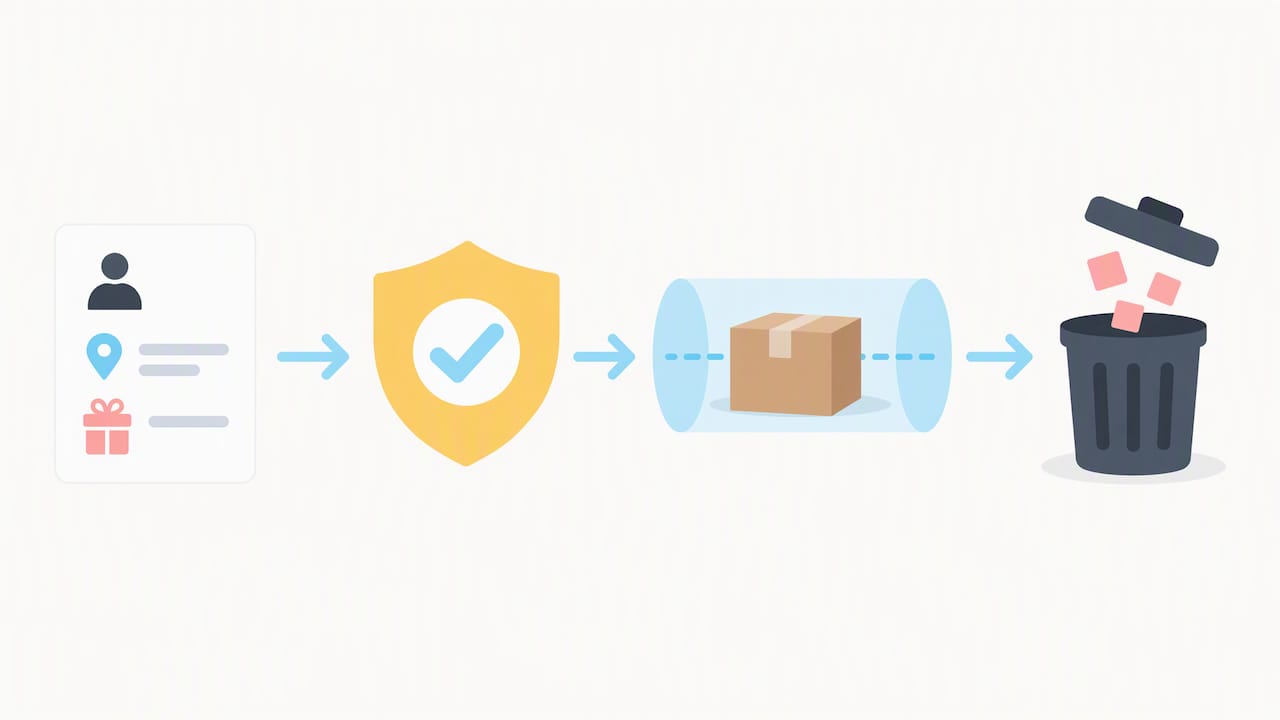
If you plan any follow-up message, such as a thank-you note or survey, Canada’s anti-spam legislation applies. The CRTC explains that businesses must obtain consent before sending commercial electronic messages. Implied consent applies in some relationships but is time-limited. Messages must also include clear sender identification, a valid contact address that stays usable for at least 60 days, and an unsubscribe mechanism. The Office of the Privacy Commissioner adds that organisations are responsible for ensuring that suppliers of contact lists obtained proper consent.
Practical rules to include:
- Never reuse a delivery list for marketing unless recipients agreed to that.
- Keep consent records with date, wording and method.
- Honour unsubscribe requests promptly.
- Share only the minimum data with couriers and suppliers.
Distribution choices carry trade-offs. On-site handout needs no personal data at all and suits events and office teams. Direct-to-home reaches remote staff and distributed clients but needs consent, secure handling and a deletion step. Pick the method that fits the audience, not the one that is easiest for you.
How do you plan packaging, timing and quality control?
Presentation is part of the gift. The same tumbler feels different arriving in tissue with a handwritten card than loose in a mailer. Work through these steps in order:
- Draft the note and card copy. Keep it short, warm and specific to the occasion, and have someone proofread every name.
- Fix the packaging layout. Decide where the logo, wrapping and any insert go, and keep that layout identical across the batch.
- Approve a sample. Review a finished item for print quality, colour accuracy, personalisation and fit.
- Test durability. Check that prints and coatings survive washing, rubbing or heat as they will in real use.
- Confirm delivery partners and dates. Agree on tracking, damage handling and a fallback if an address fails.
- Schedule by occasion. Welcome gifts work best near day one, thank-you gifts soon after the event or project, and milestone gifts on or just before the date.
Our guidance on gift bag presentation for event planners walks through the unboxing details.
Pro Tip: Build a buffer into every schedule, so a reprint or courier delay never forces you to ship a gift you have not approved.
What common gifting mistakes should you avoid?
Most brand damage from gifting comes from a handful of repeated errors. Fix them before they reach a recipient:
- One-size-fits-all gifts: segment by audience and occasion, even if you only create two or three versions.
- Vague sustainability claims: replace “eco-friendly” with a specific, documented material or process, or leave the claim out.
- Ignoring accessibility: add the supplier checks above to every brief and test a sample.
- Poor logo treatment: use your size, placement and clear-space rules, and reject items that break them.
- Privacy lapses: collect only what you need, store it securely and delete delivery data after the gift arrives.
- Unchecked value: log every gift against the yearly limit, so you notice taxable amounts before payroll does.
- Skipping the sample: approve a finished item before production, because a bad batch is costly to correct.
- Personalisation errors: proof every name list twice, and have a second person sign off.
Where can you get personalised, brand-forward gift bags?
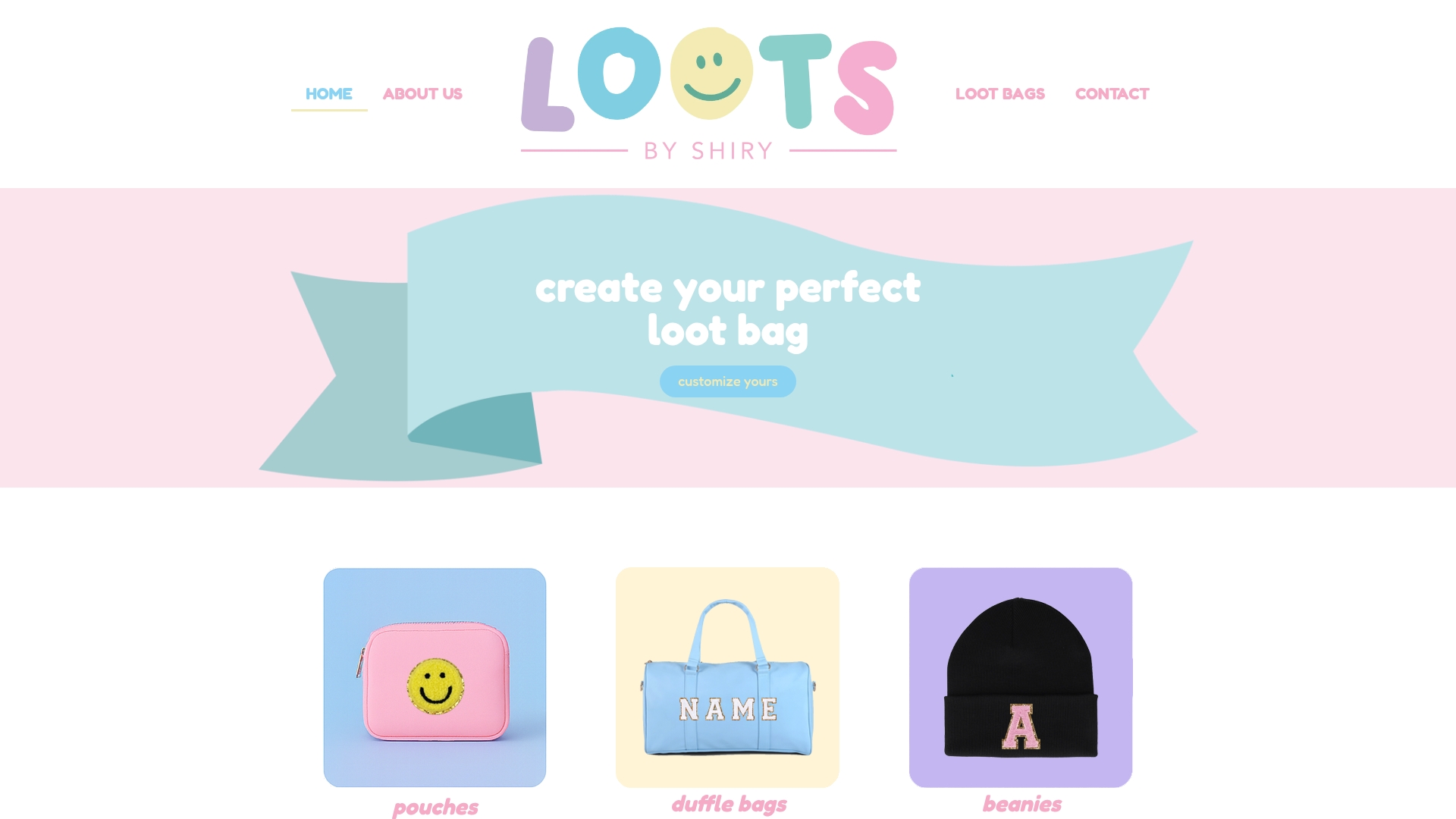
When a brand guideline calls for gifts that feel individual rather than generic, we make that part simple. We offer customizable loot bags, cotton tote bags, pastel pouches and colour changing tumblers, with name and patch personalisation and colour choices you control.
- Event favours: personalised loot bags for birthdays, corporate events and themed gatherings.
- Team gifts: tote bags and pouches that carry your brand and still feel personal to each recipient.
- Everyday use items: colour changing tumblers that recipients actually keep and use.
Browse our shop categories, see our loot bags with wrapping and delivery options, or send us a request for a custom quote. Our cotton tote bags and pastel pouches start at $12.00, colour changing tumblers are $10.00, and loot bag pricing is available on request.
Why I always start with a small sample run
Personalisation is what turns a branded item into a gift someone remembers, but it also multiplies the chances for small mistakes. A name set slightly too large or a patch sitting a few millimetres off is easy to miss on a proof and obvious on a finished bag. That is why I recommend ordering a small test run before any large batch, and asking for samples at the start of procurement, not the end. You get to hold the real thing, check it against your guideline and fix problems while they are still cheap.
— Shiry
FAQ
Can you provide an example of a brand style guide for gifts?
A gift-focused brand style guide is a short document covering approved logo versions, colours, fonts, placement rules and personalisation limits for each item category. The checklist and logo rules in this article give you a starting structure. Add your own brand book assets, and attach photos of an approved sample for each category.
What is the 7-gift rule?
We could not find a recognised gift rule in the Canadian guidance we reviewed, so we do not recommend citing one. Definitions vary online, so check the source before relying on it. Use your written value thresholds, approval triggers and the CRA yearly non-taxable limit as your working rules instead.
What would gifts for clients be categorized as?
Client gifts are usually treated as promotional or relationship-building expenses, and they fall under your gifting and ethics policy rather than payroll rules. Gifts to employees are handled differently, because they can be taxable benefits. Ask your accountant how your organisation should classify and record each type.
How do you keep brand consistency across different gift types?
Define a short set of rules that apply to every item, including logo position, clear space, approved colours, fonts and personalisation limits. Then adapt only the scale to each category. Approving a physical sample of each type before production catches inconsistencies early.
Sources
- Canada
- Guide for Including Accessibility in Information and Communication Technology (ICT) Related Procurement- Digital Accessibility Toolkit
- Crtc
- Competition-bureau