
There is no single rule. Plenty of sellers will sell you one item, but personalised or pre-packaged favours usually come with set minimums, typically ranging from 4 to 100 units or more depending on the product and how much customisation it needs. The product page is always the final word on what a specific supplier requires.
TL;DR:
- Most suppliers set minimum orders based on production and personalization costs, with highly personalized items typically requiring 24 to over 100 units.
- Ordering early and asking for smaller batches, samples, or returns can help manage high minimums for smaller guest lists.
- A general rule of thumb is to order one favour per guest plus a 10% buffer, rounded up to the nearest supplier increment, with about two to three weeks lead time.
- Small, non-custom items often have no minimum, but personalized or boxed favours usually start at a minimum of 4 units and can exceed 100 units.
- Combining smaller items, personalizing with stickers or tags, or splitting orders with other hosts are effective strategies to avoid overordering.
Table of Contents
- Minimum order for favours: typical ranges by product type
- Why suppliers set minimum quantities in the first place
- How many favours should you actually order?
- What if the minimum order is too high for your guest list?
- LootsByShiry’s take on minimums and turnaround
- Get favours without overordering
- Sources
- FAQ
Minimum order for favours: typical ranges by product type
Minimums track two things: how the item is made and how much personalisation it needs. Understanding both helps you shop smarter instead of guessing.
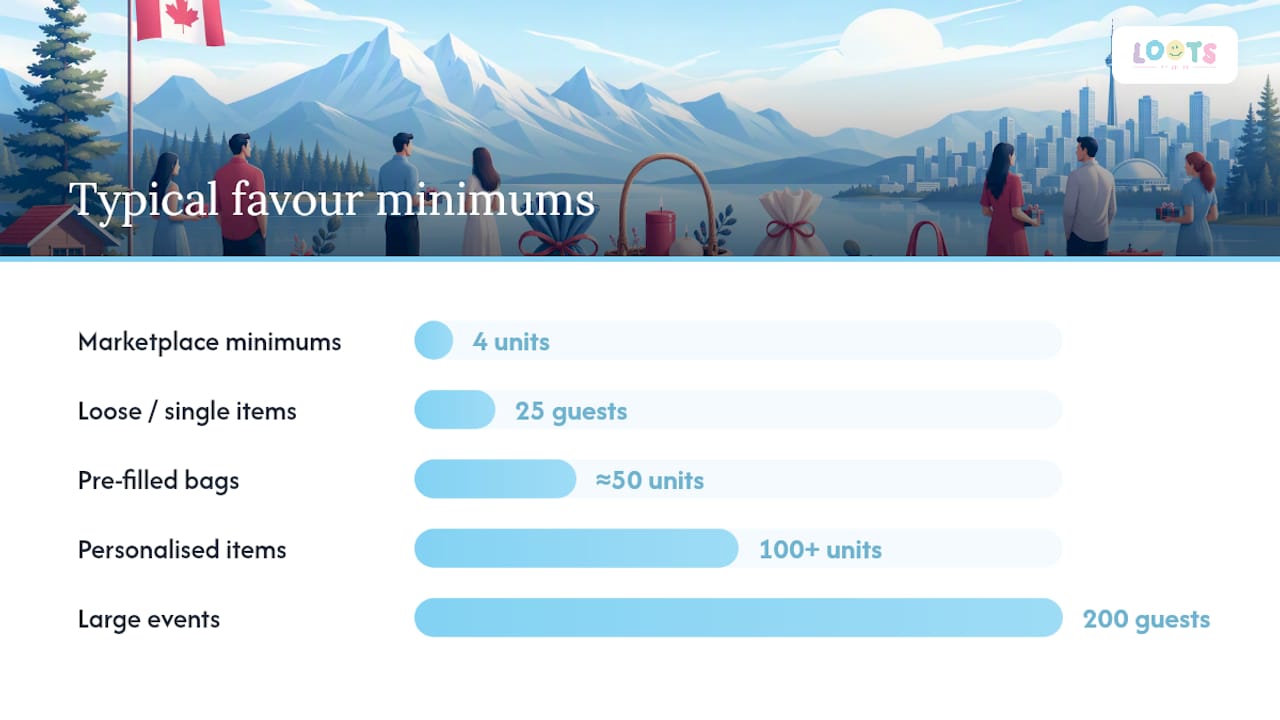
- Non-custom single items (a candle, a mini bottle, a stock trinket): often sold from 1 to 24 units, since no setup or artwork is involved.
- Pre-filled bags and kits: usually 4 to 50, because someone has to assemble each one by hand.
- Personalised items (names, monograms, patches): frequently 24 to 100+, since artwork and print setup only pay off at scale.
- Boxed keepsakes: sold in preset increments, often 10, 25, or 50, tied to how the boxes are packed and shipped.
Most ecommerce carts enforce these increments automatically. Try to enter “37” and the quantity box may round you up to 40 or refuse the order entirely. That’s not a glitch, it’s the increment rule doing its job, and it’s worth checking how minimum and maximum quantities work on a product page before you fall in love with a design.
Here’s how that plays out in practice. A 25-guest birthday party can usually order loose or single-unit favours with no trouble. An 80-guest wedding shower often lands in the pre-filled bag range, meaning a minimum around 50 is common. A 200-person corporate event or wedding almost always clears personalised minimums easily since the order naturally exceeds 100 units anyway. Marketplace listings vary too. Some small shops set minimums as low as four bags, while larger manufacturers require far more.
Why suppliers set minimum quantities in the first place
Minimums aren’t arbitrary. They reflect real costs a supplier has to cover before the first favour ever reaches your table.
Digital printing presses and packaging lines both have setup costs, whether you’re ordering 10 units or 500. A supplier running a short digital print job absorbs that setup cost across fewer items, which is why small custom runs cost more per piece. Converted or pre-packaged formats (a boxed set, a shrink-wrapped kit) are often built in batches at the factory level, so the minimum is baked into how the product exists at all.
Personalisation adds another layer. Artwork proofing, name lists, and colour matching all take staff time regardless of order size, so suppliers set higher minimums to make that labour worthwhile.
- Manufacturing setup costs favour larger runs over one-offs.
- Pre-converted packaging (boxes, kits) locks in natural minimums.
- Personalisation (names, patches, monograms) usually pushes minimums higher.
- Shipping a handful of items can trigger minimum freight charges, making tiny orders proportionally expensive.
Pro Tip: Ask a supplier whether their minimum is a hard manufacturing limit or a store policy. Store policies sometimes bend for repeat customers or slightly larger deposits.
How many favours should you actually order?
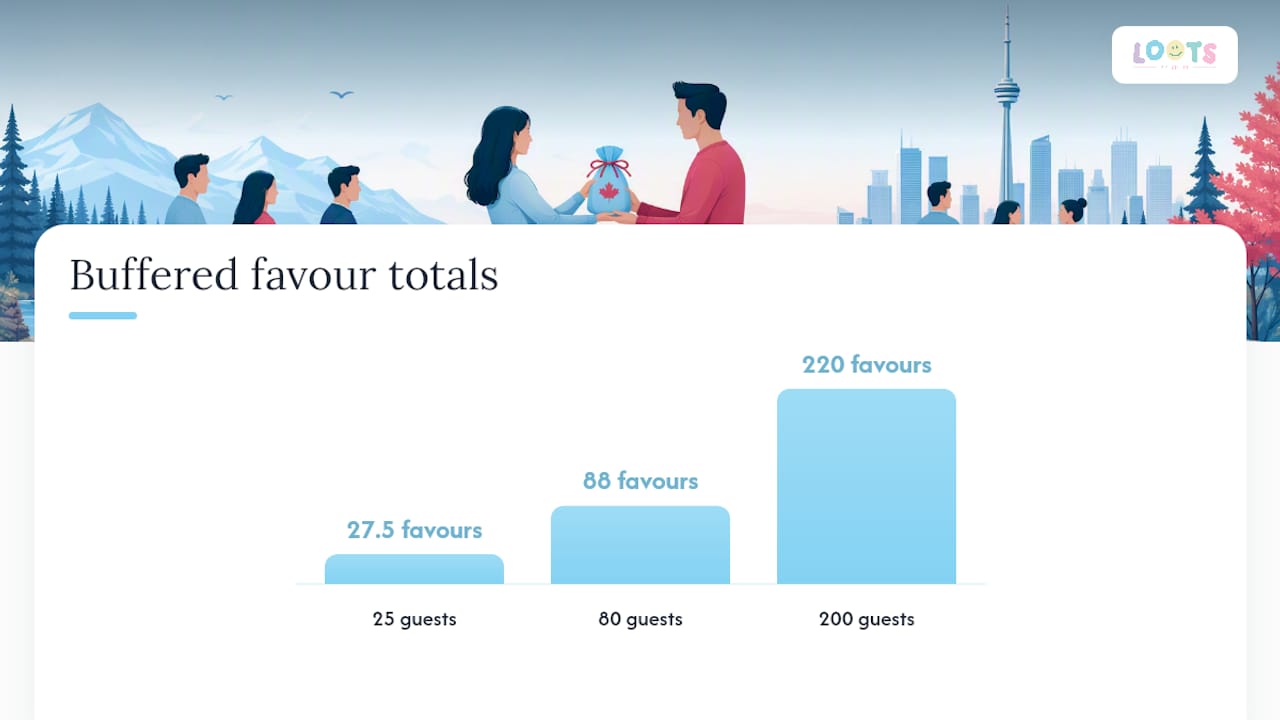
Start with one favour per guest, then add a 5 to 10% buffer for breakage, no-shows who bring a plus-one anyway, or last-minute additions to the list. A party favour calculator built around exactly this formula backs it up: one per guest plus roughly 10% extra, rounded up to whatever increment your supplier requires.
Here’s the math worked out for three common guest counts:
- 25 guests: 25 plus 10% buffer equals 27.5, round up to 30 to match a common increment.
- 80 guests: 80 plus 10% buffer equals 88, round up to 90 or 100 depending on the supplier’s tier.
- 200 guests: 200 plus 10% buffer equals 220, round up to 225 or 250.
Lock in your final count 2 to 3 weeks before the event so your supplier has time to produce and ship without rush fees.
Statistic Callout: One favour per guest plus a 10% buffer is the standard planning formula used across most quantity calculators, and it holds whether you’re ordering candy or custom keepsakes.
What if the minimum order is too high for your guest list?
A minimum quantity that outnumbers your guest list by 50 or 100 units is a common problem, and it has real fixes.
Pick a non-custom item with a lower minimum, then personalise it yourself with a simple sticker or handwritten tag. Buying unbranded bulk items and adding a low-cost personal touch sidesteps a high customisation minimum while still feeling personal. You can also mix smaller unit items into one bag to hit a favour count without hitting a product minimum, or split a large order with another host planning a similar event around the same time.
On the negotiation side, ask suppliers directly:
- Can you run a shorter batch for a small artwork or rush fee?
- Is a sample or small test batch available before committing to the full minimum?
- Will you take back or exchange unused surplus?
Pro Tip: Local artisans and small print shops are often more flexible on minimums than large manufacturers, and per-household distribution works well for anything pricier than a $5 keepsake.
LootsByShiry’s take on minimums and turnaround
We see the same tradeoff on repeat: faster turnaround usually means accepting a slightly higher minimum, while plain, less-customised items can ship in smaller batches. Personalised loot bags with names or patches need more lead time and larger runs to make the setup worthwhile, which is exactly why we manage turnaround windows of roughly 1 to 12 weeks rather than promising next-day custom work at rush prices. Ordering early is still the cheapest way to get exactly what you want, in exactly the quantity you need.
— Shiry
Get favours without overordering
LootsByShiry solves the guessing game other favour suppliers create: instead of forcing you into a rigid case-lot minimum, our product pages spell out quantities and turnaround upfront so you know what you’re committing to before checkout.
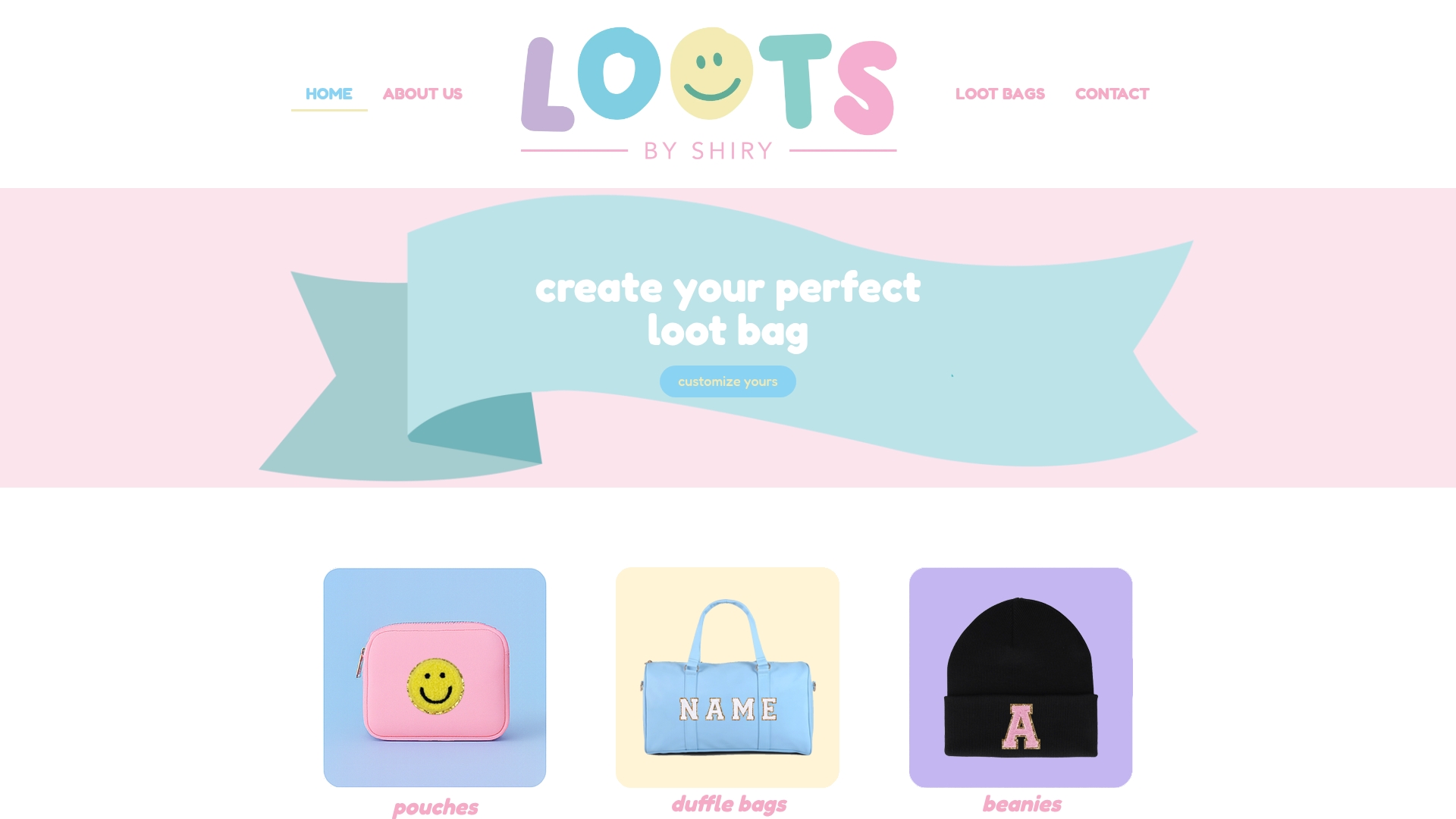
Browse Cotton Tote Bags, pastel pouches, and Colour Changing Tumblers in the shop, or check the loot bags category for options that include wrapping ($0.50 per bag) and delivery ($10) as clear add-ons rather than surprise fees. If your guest count sits awkwardly between a supplier’s tiers, or you want to split an order with another host, reach out directly through our personalisation page to ask about custom quantities. Planning an adult event instead of a kids’ party? Our guide to adult party favours walks through per-person versus per-household picks. Get a custom quote before you commit to a number you’re not sure about.
Sources
- What is the minimum or maximum quantity of a product
- Party Favor Calculator — Quantities, Packaging & Cost by Guest Count | UseCalcPro
- How Much for Party Favors? Cost Calculator (2026) | Party Genius AI
- Do You Give Wedding Favors to Each Guest? – Zola Expert Wedding Advice
FAQ
Is there always a minimum order for party favours?
No. Many non-custom, single-unit items ship with no minimum at all, but personalised or pre-packaged favours almost always carry one, commonly starting at 4 and climbing past 100 for highly customised products. Always check the product page since minimums vary supplier by supplier.
How much does favour delivery cost?
Delivery fees depend on the supplier and order size, and small orders often carry a higher per-item shipping cost because freight minimums apply regardless of quantity. LootsByShiry lists a flat $10 delivery fee on its loot bags page, separate from any wrapping charges.
What is the etiquette for wedding favours?
Most couples give one favour per guest, though giving one per household is a widely accepted alternative for larger or higher-cost items. Either approach is considered proper etiquette; the choice usually comes down to budget and how large the item is.
How much should you spend per person on wedding favours?
Many couples spend around $5 or less per guest, though budget tiers vary from roughly $3 to $5 for budget-friendly options up to $8 to $15 for premium keepsakes. Children’s favours generally sit at the lower end of that range, while adult and wedding favours can run higher depending on the item.
How many favours should I order for a 100-guest event?
Take your guest count, add a 10% buffer, and round up to your supplier’s nearest increment. For example, with 80 guests, adding 10% buffer equals 88, which you round up to 90 or 100 depending on the supplier’s quantity tiers as explained in the supplier’s quantity tiers.