
Choose a name label when the main job is saying whose it is: a guest’s name on a loot bag, a tote or a tumbler. Choose a patch when you want a picture, a theme or a badge that makes the item feel like part of the party. For most birthdays and events, the best result uses both: a name for the guest and one patch for the theme. At Loots by Shiry, you choose names, patches and colours yourself, so you can try the combination before you order.
This guide explains the difference in plain terms, how each one behaves on party favours and gifts, what to check for children’s items in Canada, and how to decide when you are ordering for 10 guests or 100.
TL;DR
- A name label identifies the person. A patch decorates and signals a theme. Many hosts need both.
- Names suit large guest lists and mixed ages. Patches suit themed parties, teams and corporate branding.
- For children under three, avoid anything that can detach. Health Canada’s guidance on small parts is the rule to keep in mind.
- Keep lettering short and simple, and confirm small text reads clearly on the material before you order in bulk.
- Pick one “hero” item per guest and personalize that, rather than decorating everything.
Table of Contents
- What is the difference between a name label and a patch?
- How each one is applied and where it works
- Durability and care: what to expect
- Child safety: the part that matters most for kids’ parties
- How to decide: five questions
- Combinations that work
- What our customers can choose
- Ready to build your set?
- FAQ
- Sources
What is the difference between a name label and a patch?
A name label is a small piece of text, usually a first name, in a plain, readable style. Its purpose is practical: it tells a child (and a parent in a crowded hallway) which bag is theirs. SavvyMom’s Canadian loot-bag guide recommends personalized name labels because they are unique, useful and easy to add to a loot bag, and notes that name tags make packaging look extra special.
A patch is a decorative badge. It can carry a shape, an icon, a character-style symbol, initials or a short word. Its purpose is mood: a star for a superhero party, a bolt for a sports day, a flower for a garden party. It tells guests what the party was about long after the cake is gone.
The simplest way to separate them:
| Name label | Patch | |
|---|---|---|
| Main job | Identify the owner | Show a theme or style |
| Typical content | A first name, short text | An icon, shape, badge or initials |
| Best for | Large guest lists, school-age kids, shared coat rooms | Themed parties, teams, corporate events |
| Reads from | Close up | Across the room |
| Risk if overdone | Looks plain | Looks cluttered |
Neither is better in general. They answer different questions, and the right pick follows from what you want the guest to feel when they open the bag.
How each one is applied and where it works
Both can be applied to many surfaces: fabric bags, pouches, totes, duffle bags, beanies and drinkware. The practical differences come from the surface and the size.
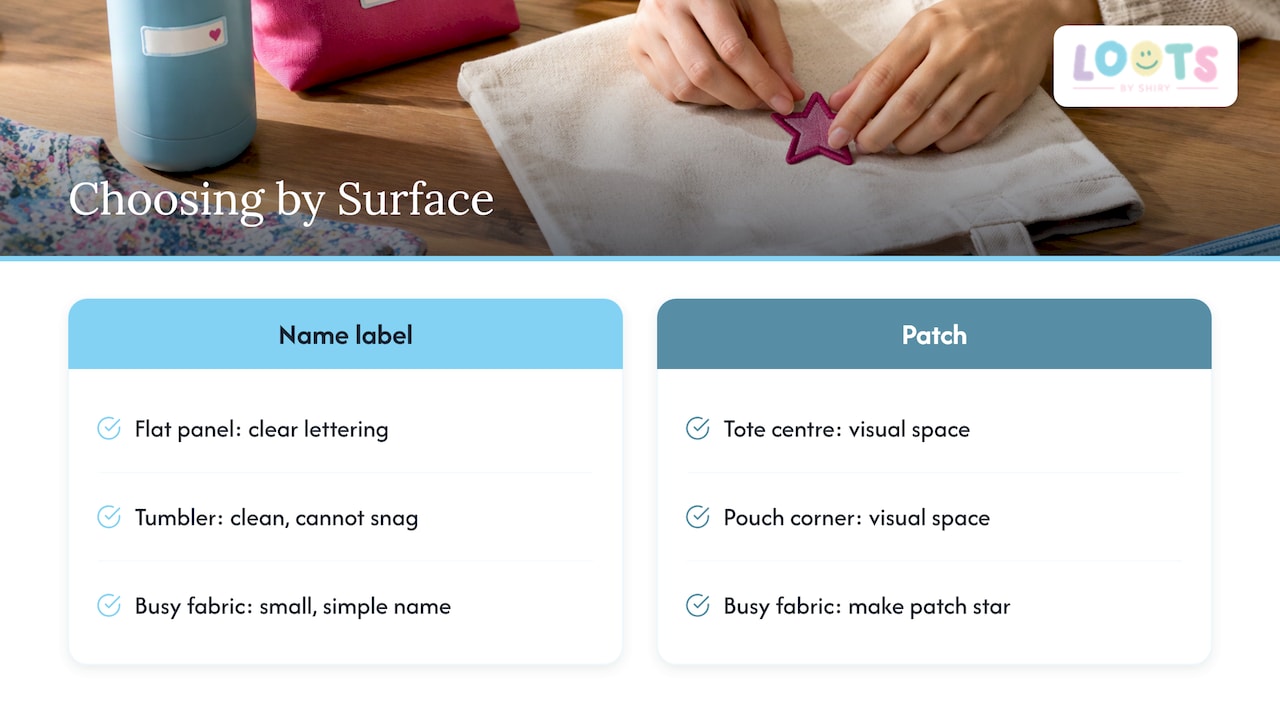
Fabric items. Totes, pouches, duffle bags and beanies take either option well. A name suits a flat panel where there is room for clear lettering. A patch suits a spot with some visual space around it, such as the centre of a tote or the front corner of a pouch.
Smooth, hard items. A tumbler is a different case. A name lettered directly on the surface reads cleanly and cannot catch or snag. If you are curious about how personalization options differ by item, our guide on choosing tumbler personalization for a 20-tumbler order walks through it.
Fabric choice. The smoother and plainer the surface, the more clearly small lettering reads. Heavily textured or patterned fabric competes with a name. If your bag is busy, make the patch the star and keep the name small and simple, or the reverse.
For more on methods for bags, see our page on personalizing tote bags for gifts or 10 to 100 event orders.
Durability and care: what to expect
A favour is only a favour if it survives the car ride home, and a good one gets reused. Whatever you pick, think about how the item will be used:
- A tote or duffle bag gets carried, stuffed and thrown on the floor. Choose a placement that is not where straps and corners rub.
- A pouch gets opened and closed all day. Keep decoration away from the opening.
- A beanie gets washed more often than anything else. Keep the design simple and follow the care instructions that come with it.
- A tumbler is best looked after by hand. Our tumbler care guide covers four steps to protect prints and colour-changing coatings.
A name tends to be small and flat, so it is less likely to catch on things. A patch has more presence and benefits from sensible placement. The common-sense rule: the more an item will be handled, the simpler and flatter the decoration should be.
Child safety: the part that matters most for kids’ parties
If guests include toddlers, this is the section to read twice. In Canada, the rules and guidance for children’s products focus on parts that can come off.
Parts that can detach. Health Canada’s guidance says garments for children under three should not have small parts intended to be separable, or parts that can detach with reasonably foreseeable use. Its examples include plastic decals and hook-and-loop fasteners. For a party host, this translates into a simple rule for the youngest guests: choose flat, firmly attached decoration and leave off loose beads, buttons or add-ons.
Toy-like favours. If a favour is itself a toy or toy-like, Health Canada’s industry guide says a toy likely to be used by a child under three must not have a small separable component or one that can detach with reasonably foreseeable use.
Lead. Health Canada also notes that accessible parts of children’s clothing and clothing accessories fall under the Consumer Products Containing Lead Regulations, which limit total lead content to 90 mg/kg.
Choosing child-friendly products. Health Canada’s general advice is to read labels and follow safe-use instructions on children’s products.
What this means in practice:
- For guests under three, pick a name with a flat, secure patch or no patch at all, and no loose embellishments.
- Think about the guest list by age group. Our loot bags by age guide helps you match what goes in the bag to the child.
- Read our guides on kids’ patch safety for Canadian hosts and age-based party favour rules before you finalize a design.
If you have questions about a specific child’s needs, such as allergies or sensitivities to materials, ask the parent or your family doctor. They know the child better than any guide does.
How to decide: five questions
Event planners handle this with a checklist, and so can you. Global Asia Printings’ 2026 personalization guide suggests planners align customization with schedule, venue, budget and guest volume, and use curated choices such as short text styles, colours or pre-designed patches to avoid delays and inconsistency. Applied to a party:
1. How many guests? With 10 guests, every bag can have a different name and patch. With 40 or more, pick one patch design for everyone and vary only the name. It keeps the order simple and the look consistent.
2. How old are they? Toddlers: keep it flat and secure. School-age: names are a gift in themselves, because a bag with your own name feels yours. Teens and adults: a patch can look more like a badge than a toy.
3. Is there a theme? A strong theme earns a patch. No theme, or a colour-only theme, makes the name the star. Our superhero loot bags page shows how a theme and names work together for bigger guest lists.
4. What is the budget? Spread your spend on one good item per guest instead of several small decorated ones. Our guide to one keepsake, one treat explains the idea, and whether personalized favours are worth $2 to $5 per guest puts numbers on it.
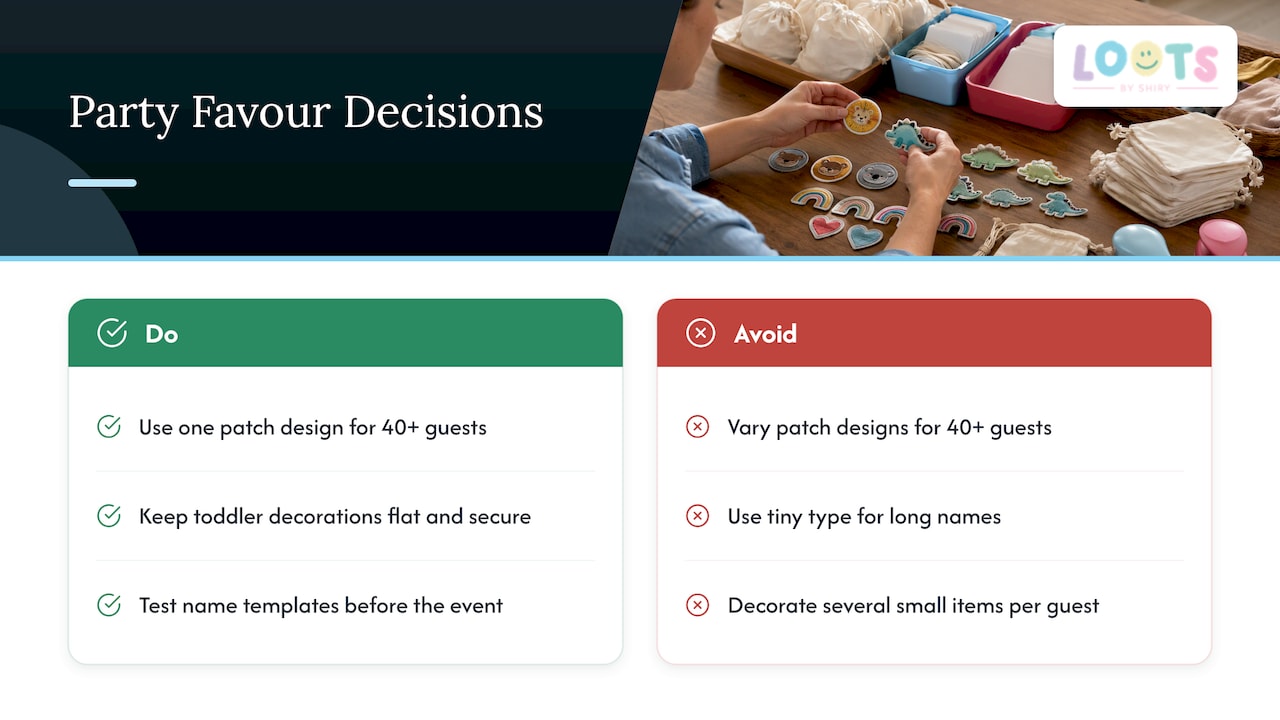
5. Will the lettering be readable? The same guide recommends testing name templates before the event and confirming small lettering reproduces clearly on the chosen material. Long names in tiny type are the usual problem. A short name in clear, simple lettering reads from across the room.
Combinations that work
- The classic. A guest’s name on the front, one theme patch in the corner. Works for birthdays at almost any age.
- The team. Same patch for everyone, names underneath. Good for sports days, clubs and corporate groups.
- The colour match. Choose a bag colour that echoes the party palette and keep the name in a contrasting shade for legibility.
- The keepsake. A single reusable item, such as a tote or pouch, with a name and a patch. It is the sort of favour that gets used again, which fits our approach to reusable, personalized birthday loot bag ideas.
What our customers can choose
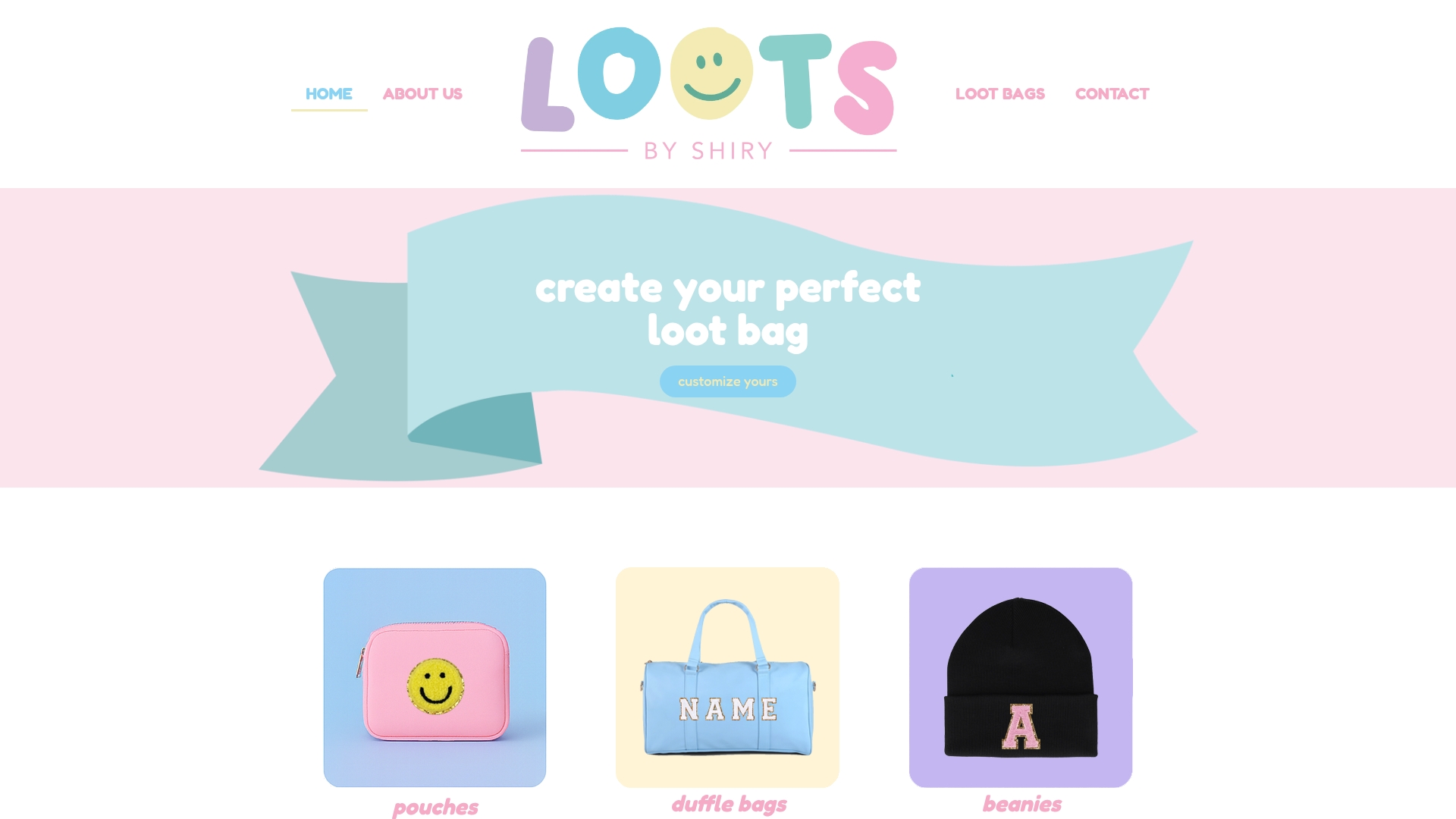
At Loots by Shiry, the customer drives the design. You choose the names, the patches, the colours and the theme, whether the item is a loot bag, a cotton tote, a pastel pouch, a colour-changing tumbler, a duffle bag or a beanie. If you need something that is not in the shop, you can send an inquiry for a custom order.
Published prices on our shop: cotton tote bags are $12.00, pastel pouches are $12.00 and colour-changing tumblers are $10.00. Wrapping on loot bags is $0.50 per bag and delivery is $10. Loot bags are listed on their own page, where you can set up your order. We serve Canada from Vaughan and Richmond Hill.
Our view: name first, patch second
When we talk with parents and event planners, the first question is always “which one?” Our answer is the same: start with the name. A child who sees their own name on a bag knows immediately that it was made for them, and that feeling is what a loot bag is for.
Then add one patch that carries the theme. One is enough. It gives the bag a point of view without turning it into a collage, and it keeps the design clean when you are making many at once.
We built Loots by Shiry around this idea of choice. The customer picks the name, the patch, the colour and the theme, and we make the bag around those decisions. Generic packaging is easy to find. A bag that carries a child’s name and a badge they picked is the one that comes back to the next playdate.
Shiry
Ready to build your set?
Start with the item, then choose the name, the patch and the colour. For bags made for a guest list, go to our loot bags page. For totes, pouches and tumblers, browse the shop.
If you want help with the card that goes with the bag, our favour tag wording ideas have lines for every kind of party.
FAQ
Is a name label or a patch better for a kids’ birthday loot bag?
For most kids’ parties, start with the name, because it makes each bag feel personal and stops mix-ups. Add one patch if the party has a theme. For guests under three, keep any decoration flat and securely attached, with no loose parts.
Can I use both a name and a patch on the same item?
Yes, and it is the most popular combination. Put the name where it can be read easily and place a single patch to carry the theme. Keeping to one patch avoids a cluttered look, especially on smaller items like pouches.
What is safest for toddlers?
Health Canada’s guidance for children under three says to avoid small parts that can separate or detach with reasonably foreseeable use. For toddlers, choose a flat, secure design and skip beads or loose add-ons. Our kids’ patch safety guide covers this for Canadian hosts.
How should I order for a big party?
Choose one patch design for everyone and vary only the names. That keeps the order consistent and simple. Check the spelling of every name before you confirm, and keep names short enough to read clearly on the item.
Can I order something that is not in the shop?
Yes. We take custom orders by inquiry, so if you want a different item or a particular combination of names, patches and colours, get in touch through our site.
Sources
- 30+ Classic, Fun Loot Bag Ideas, SavvyMom
- Onsite Personalization Trends for Better Events, Global Asia Printings
- Guidelines for the flammability requirements of children’s sleepwear, Health Canada
- Industry Guide to Health Canada’s Safety Requirements for Children’s Toys and Related Products
- Back-to-school online shopping, Health Canada