
Most party favour mistakes come down to five things: age-inappropriate or unsafe items, ignored allergies, cheap bulk buying, no personal touch, and favours that do not match the party at all. The fix is one rule: pick safe, age-appropriate, inclusive, and meaningful favours over anything trendy or sold in bulk. Get that right and the rest of the planning gets much easier.
TL;DR:
- Choosing safe, age-appropriate favours that meet safety guidelines prevents choking hazards and ensures suitability for all guests.
- Personalizing favours with names, colors, or themes significantly increases their value and reduces the likelihood of leftovers or waste.
- Splitting favours by age group and avoiding bulky or fragile items helps prevent unsafe situations and simplifies distribution.
- Ordering roughly 10% more favours than needed and packing them the night before minimizes waste and avoids last-minute mistakes.
- Opting for reusable, sustainable items and checking packaging risks enhances safety and aligns with environmentally conscious guest preferences.
Table of Contents
- 1. Top 10 party favour mistakes hosts make
- 2. How to avoid these mistakes before you order or assemble favours
- 3. Safety and age guidelines every host must follow
- 4. Personalization and inclusivity prevent the ‘ignored favour’ mistake
- 5. Why guest demographics change the whole favour list
- 6. Budget missteps and overbuying
- 7. Not accounting for ease of transport for guests to take favours home
- 8. Neglecting timing and presentation of distribution during the party
- 9. Choosing favours that are too generic or uninspired
- 10. Overlooking cultural sensitivities or inappropriate items for certain audiences
- 11. An eco-friendly alternative worth considering
- 12. Choose guest experience over trendiness
- How we help hosts avoid the most common favour mistakes
- FAQ
- Sources
1. Top 10 party favour mistakes hosts make
Favour bags go wrong in predictable ways, and most of them are easy to catch once you know what to look for.
- Age-inappropriate items and choking hazards. Small figurines, mini puzzle pieces, or bouncy balls might delight an eight-year-old but pose a real risk to a toddler sibling who wanders over to the gift table.
- Latex balloons or loose packaging. A popped balloon leaves rubber fragments that are easy to swallow, and plastic wrapping left on a toy is its own suffocation risk.
- Food favours without allergy labelling. Peanuts, tree nuts, dairy, and gluten are the usual culprits, and a candy bag with no ingredient list can turn a fun moment into a trip to the first aid kit.
- Prioritizing quantity over quality. Ten dollar-store trinkets per bag sound generous, but most end up in the trash before the car ride home.
- Overly gendered or stereotyped gifts. Handing out pink items to girls and blue items to boys by default can leave some guests feeling like an afterthought rather than a guest of honour’s friend.
- Irrelevant or non-themed favours. A dinosaur party with generic stickers and no dinosaur in sight feels like the favours were grabbed last minute, because they usually were.
- Unchecked battery compartments, small screws, or weak construction. Cheap light-up toys sometimes ship with battery doors that pop open with light pressure, which is a hazard for any child who still puts things in their mouth.
- Failing to add a buffer or ordering too late. Counting exact guest numbers with zero spares guarantees an awkward moment when someone’s cousin shows up unannounced.
- Ignoring sustainability. Single-use plastic trinkets pile up fast, and more guests now notice and appreciate a reusable item over a bag of disposable junk.
- No personalization or a missing thank-you note. A favour with the birthday child’s name on it or a short note feels intentional; an unlabelled bag of candy feels like an obligation.
2. How to avoid these mistakes before you order or assemble favours
A few quick checks before you buy anything catch most of the problems above.
- Use the toilet-paper-roll test: if a toy or part fits through the tube, it is too small for a child under three.
- Swap edible favours for non-food items, or clearly label every ingredient and offer an allergy-friendly alternative alongside it.
- Pick one reusable or higher-quality item over five tiny trinkets; it costs about the same and gets kept longer.
- Add a name tag or a short handwritten thank-you to each bag; it takes a minute and noticeably raises how the gift feels.
- Order roughly 10% more favours than your guest count, and plan to strip away any loose packaging at the moment you hand bags out.
Pro Tip: Pack favours the night before and do a five-minute “hazard sweep”, checking for loose small parts, uncovered batteries, and any food item without a label.
3. Safety and age guidelines every host must follow
Canadian safety guidance gives hosts a concrete rule rather than a guess. Health Canada recommends that toys likely to be given to children under three measure at least 3 cm in diameter or 6 cm in length, since anything smaller can lodge in a young child’s throat. That single measurement is worth checking before any favour goes in a bag meant for a mixed-age crowd.
A short list of items to watch for:
- Latex balloons, which can burst into pieces small enough to choke on.
- Small detachable parts and small, powerful magnets, both flagged repeatedly as high-risk for young children.
- Unsecured battery compartments that open with light pressure.
- Plastic bags or wrapping left on a toy, which provincial guidance also flags as a suffocation risk.
Remove all packaging before handing a favour to a child, skip anything fragile enough to break into small pieces, and label every food item clearly.
4. Personalization and inclusivity prevent the ‘ignored favour’ mistake
A favour that carries a child’s name, a chosen colour, or a matching patch reads as something made for that guest, not something pulled off a shelf an hour before the party. That small signal of intention is often the difference between a bag that gets opened at the party and one that gets left behind on a chair.
A few low-effort ways to add that touch:
- Stick a printed name label on each bag so kids find their own favour instantly.
- Colour-code bags by guest group, which also helps with quick distribution.
- Add a small themed patch or charm that ties the favour to the party’s theme.
We build our loot bags around exactly this kind of input, letting a host choose names, patches, and colours before anything ships. For timing, we recommend placing orders with enough lead time for customization and building in the same 10% buffer mentioned earlier, since a rush order leaves no room for a damaged piece or a late RSVP.
5. Why guest demographics change the whole favour list
A birthday party with a mixed crowd of toddlers, school-age kids, and a few adults picking up siblings needs more than one favour plan. A single bag of small toys might delight the six-year-olds and sit untouched with the teenagers, while posing a real hazard to any toddler who gets into it.
The simplest fix is splitting favours by age group rather than treating every guest the same. A toddler table can get larger, simple items that pass the 3 cm or 6 cm size check, while older kids get something with more detail or a mild challenge, like a small craft kit. Adults rarely want a loot bag at all, but a small shared treat or a token keepsake acknowledges them without forcing a kids’ item into their hands.
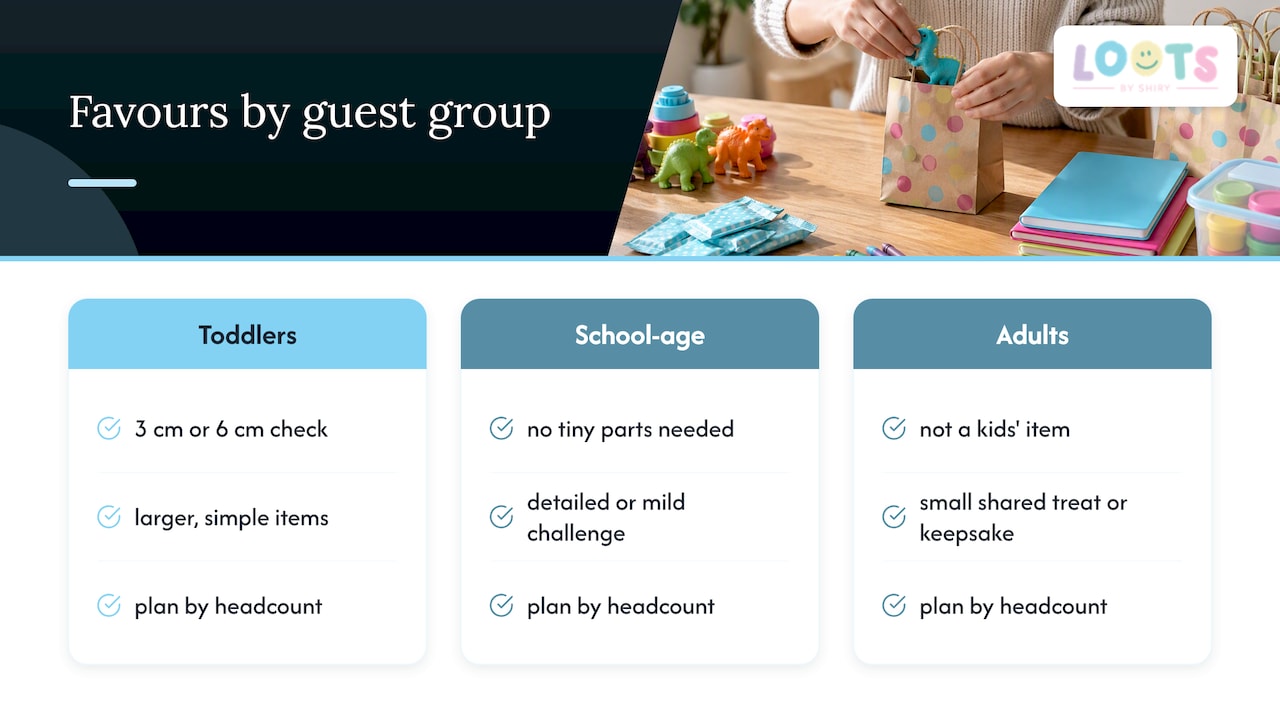
Headcounts matter here too. Knowing roughly how many toddlers, kids, and adults are coming before you order means you are not stuck handing out the same unsafe item to a one-year-old and a ten-year-old because it was the only thing left in the box.
6. Budget missteps and overbuying
Favour budgets tend to go wrong in one of two directions: hosts either overspend on items nobody keeps, or underbuy and run out mid-party. Both come from skipping the planning step of matching spend to guest count and favour type before shopping.
Buying in bulk because a pack price looks cheaper per unit often means forty tiny trinkets instead of twenty better ones, and the cheaper items are usually the first to break or get left behind. A tighter budget spent on fewer, sturdier items, like one reusable tumbler or tote per guest, tends to outperform a bigger spend spread across disposable filler.
Overbuying “just in case” without a real plan wastes money the same way underbuying wastes goodwill. The fix is the same buffer rule from earlier: count confirmed guests, add roughly 10% extra, and set that number before browsing, not after falling for a bulk discount.
7. Not accounting for ease of transport for guests to take favours home
A favour that cannot survive a car ride is a favour that gets left behind. Loose items with no container, anything that leaks or crumbles, or a bag that rips the moment it is picked up all create the same problem: guests either abandon the favour at the venue or arrive home with a mess.
A simple, sturdy carrier solves most of this. A cotton tote bag holds its shape far better than a thin plastic bag and survives being tossed in a car seat or a stroller basket. For parties with younger guests, a drawstring pouch or small bag with a secure closure means nothing spills before anyone gets to the parking lot.
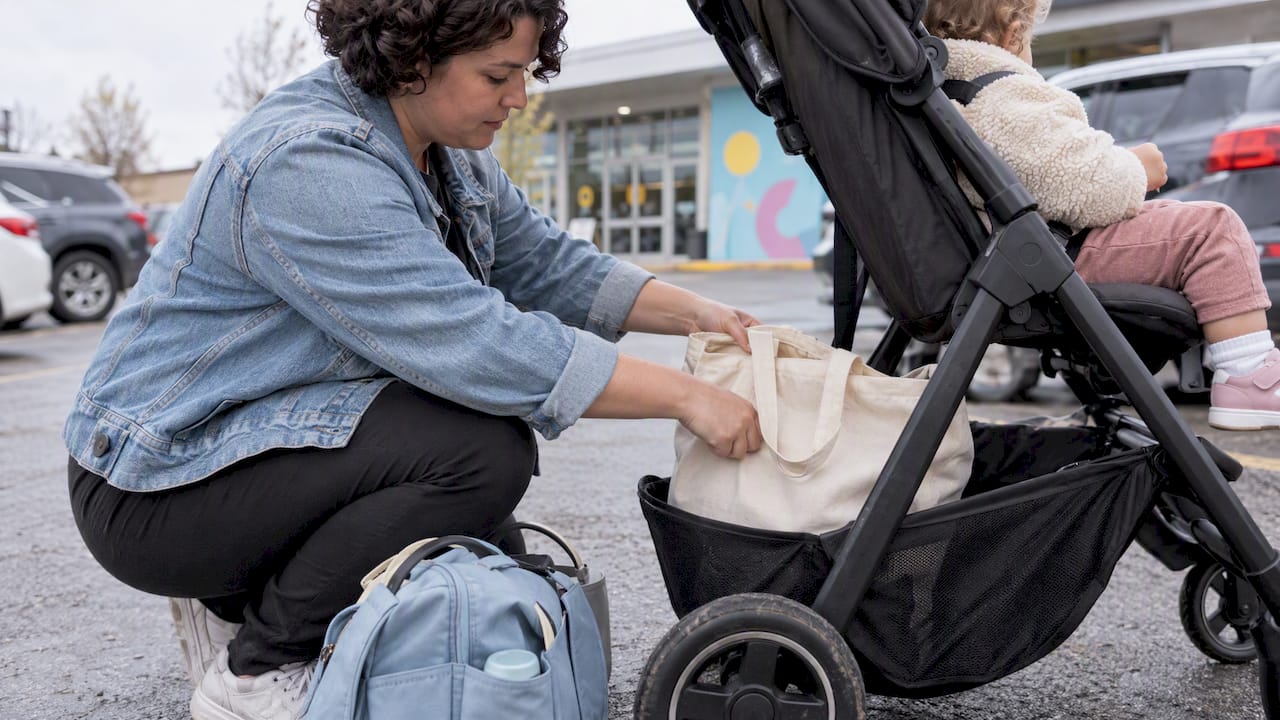
Think about how guests are actually leaving, whether that is a parent carrying a toddler and a diaper bag, or a kid riding a bike home, and pick a favour container that fits that reality rather than one that only looks good on a gift table.
8. Neglecting timing and presentation of distribution during the party
Handing out favours at the wrong moment creates its own set of problems. Give them out too early and they get forgotten, spilled, or opened mid-party before the cake even arrives. Leave it until the very end, when parents are already gathering coats and kids are tired, and distribution turns into a rushed scramble with favours handed out unevenly or missed altogether.
The better approach is picking one clear moment, often right as the party is wrapping up or right after cake, and treating it as its own small event rather than an afterthought. A dedicated favour table near the exit, or one adult assigned to hand bags out by name, keeps the moment calm and makes sure nobody leaves empty-handed.
Presentation matters here too. A neatly arranged table of labelled bags reads as intentional, while a cardboard box of loose items grabbed on the way out feels like a chore being checked off. The few minutes it takes to set up a simple distribution point pay off in how the whole gesture is remembered.
9. Choosing favours that are too generic or uninspired
A plain bag of mixed candy or a handful of unbranded stickers technically counts as a party favour, but it rarely feels like one. Generic items signal low effort even when that was not the intent, and they are the favours most likely to get left on a table or tossed in the first garbage can on the way to the car.
Usefulness tends to beat novelty. A small reusable item a guest will actually use again, like a colour-changing tumbler, tends to get kept far longer than a dollar-store toy that breaks within a day. Tying the favour to the party’s theme, even in a small way like a matching colour or a printed name, also makes a generic item feel chosen rather than grabbed off a shelf.
The goal is not an elaborate gift. It is picking one thing a guest will recognize as meant for them, specifically, rather than a placeholder that could have come from any party.
10. Overlooking cultural sensitivities or inappropriate items for certain audiences
A favour that works perfectly for one group of guests can land badly with another. Food items tied to a specific holiday, imagery that carries religious meaning, or novelty items that play on stereotypes can all make a guest feel singled out in the wrong way, even when no harm was intended.
The safest approach is choosing neutral, broadly appropriate items unless you know your guest list well enough to be specific. When in doubt, a simple personalized item, like a bag with a guest’s name and a colour they picked, sidesteps most cultural missteps entirely because it is built around the individual rather than a generic cultural reference.
It is also worth checking any text, imagery, or symbols printed on bulk-ordered favours before committing to a large order. A design that reads as harmless on a product page can carry a different meaning to a guest from a different background, and that is a much easier problem to catch before the party than after.
11. An eco-friendly alternative worth considering
Reusable items are not the only sustainable swap available to hosts. Plantable paper products, made from recycled paper embedded with seeds, offer a favour that turns into something living rather than something thrown out. Greet n’ Grow makes plantable cards from post-consumer recycled paper with non-GMO seeds, shipped plastic-free, which works well as a small addition to a favour bag or as the favour itself for an eco-conscious crowd.
12. Choose guest experience over trendiness
Safety comes first, always, and after that the only real question is whether a guest will keep and use what you handed them. Skip the trendy bulk-bin items and pick fewer, better things. A party is remembered for how it felt, not for how many trinkets left the building.
— Shiry
How we help hosts avoid the most common favour mistakes
We build favours around personalization because a generic bag is the mistake we hear about most often. Our loot bags let a host add names, patches, and colour choices so every bag feels made for that guest, not pulled off a shelf.
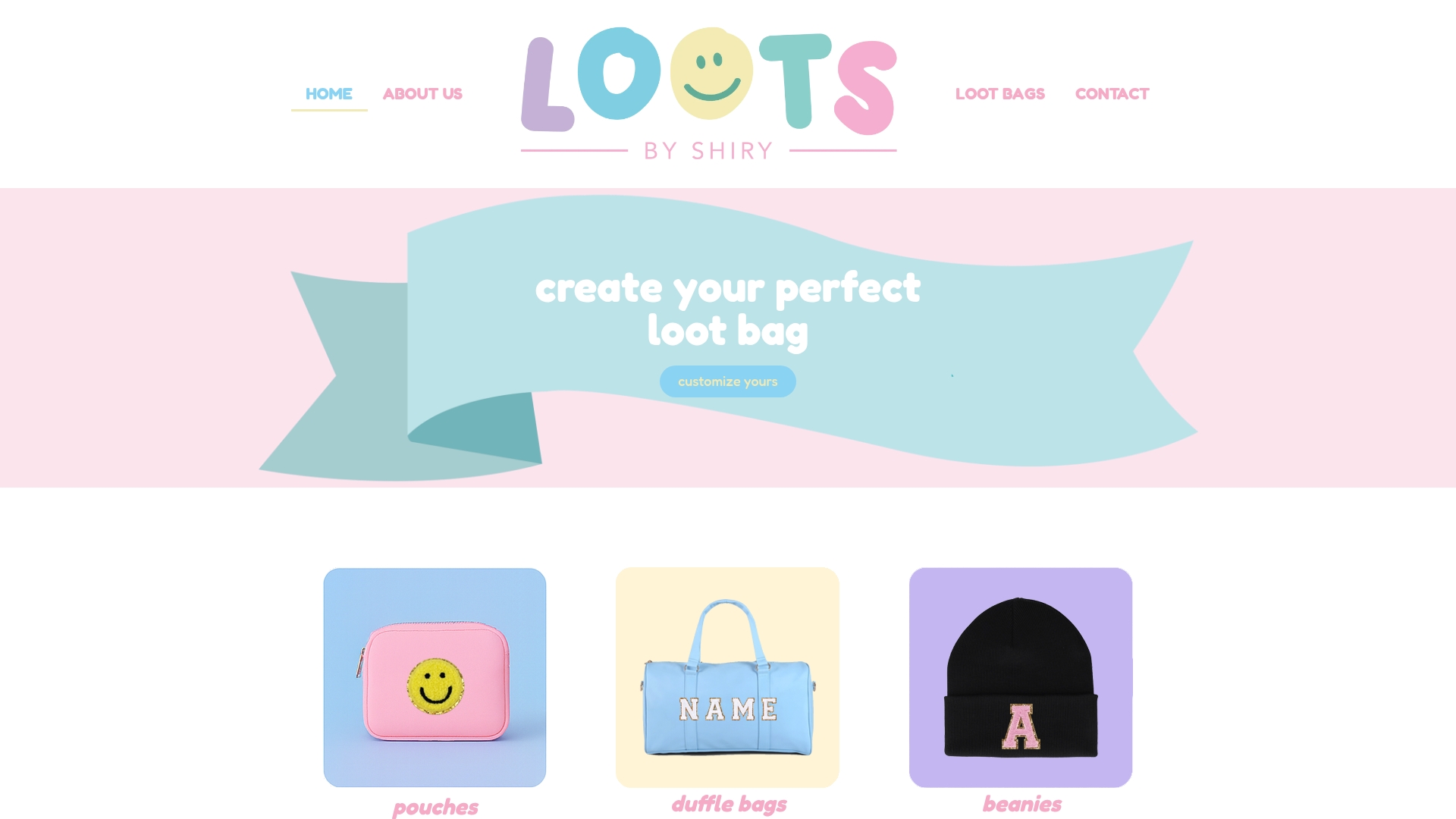
- Cotton tote bags, pastel pouches, and colour-changing tumblers give guests a reusable keepsake instead of disposable filler.
- Wrapping and delivery services are available to help your order arrive ready to hand out. Current prices are listed on the pricing page.
- Build in your buffer before ordering, since customization takes time that a last-minute rush order will not allow.
Ready to put together favours your guests will actually keep? Browse the shop or start a custom loot bag order today.
FAQ
What party favours do people actually like?
Most guests keep favours that are useful or personalized, such as a reusable tumbler, a tote bag, or a small item with their name on it. Items that only entertain for a minute, like cheap toys or loose candy, tend to get left behind.
At what age do you stop giving party favours?
There is no fixed age, but favours typically shift from toys to small keepsakes or treats once kids move into their tween and teen years. Many hosts stop entirely once the party is adults-only, replacing favours with a shared treat or small token instead.
What does “party favours” mean in slang?
“Party favours” is also used informally as slang for recreational drugs or small items shared casually among adult party guests. In the context of event planning, though, it simply refers to small gifts or keepsakes given to guests before they leave.
Are party favours necessary?
Party favours are a tradition, not a requirement, and plenty of successful parties skip them entirely. When hosts do include them, a thoughtful, safe, and personalized item tends to matter more than having favours at all.
Sources
- Guidance document: Safety requirements for children’s toys and related products — Health Canada
- Small parts in toys — Health Canada
- Preventing choking — HealthLink BC