
Most hosts should plan for a modest amount per guest for a typical kids’ party; simpler versions cost less and more polished, personalized favours cost more. Multiply your guest count by your target per-guest figure to lock in a total budget before you shop, and remember that thoughtful packaging usually raises perceived value more than adding extra items ever does.
TL;DR:
- Budget per guest typically ranges from $2 to $5 for kids’ party favors, with personalized options generally costing around $5 to $10 in total.
- Adding a 10% to 15% buffer to your total favor budget helps cover last-minute extras or replacements close to the event date.
- Sourcing favors from dollar stores, big-box retailers, or bulk suppliers can significantly lower costs, especially when splitting larger packs across multiple events.
- Simple, well-chosen favors like mini arts and outdoor kits tend to be more appreciated and last longer than inexpensive trinkets that get abandoned quickly.
- Personalization costs are modest if ordered early, and customizable favors from vendors like Loots by Shiry offer a time-saving alternative to DIY assembly.
Table of Contents
- How to set a realistic party favor budget
- Budget-friendly favour ideas with real cost estimates
- Where should you buy party favors to save money?
- Packaging and presentation on a small budget
- DIY or store-bought: which actually saves you money?
- Why personalized loot bags work: a practical perspective from Loots by Shiry
- How do you handle favours for guests with allergies or dietary restrictions?
- Can you split favour costs with other parents or hosts?
- Author perspective: what I’ve learned about favour budgets
- How Loots by Shiry helps you hit your favour budget
- Sources
- FAQ
How to set a realistic party favor budget
The fastest way to blow your party favor budget is skipping this step entirely and just wandering the dollar store aisles hoping for inspiration. A few minutes with a calculator saves you from that.
Start by deciding how you want to frame the number. Others find it simpler to work per-guest, since that number scales cleanly whether you’re hosting 8 kids or 30. For most people planning a birthday party, corporate event, or themed gathering, the per-guest model is easier to defend when relatives start asking why the budget crept up.
Here’s how the math plays out in practice:
- Pick your per-guest target. Say you land on $3 per child for a typical birthday party.
- Multiply by guest count. Fifteen kids at $3 each gives you a $45 favour budget.
- Add a buffer of 10% to 15%. That $45 becomes roughly $50 to $52, which covers the almost inevitable last-minute add: an extra bag because a cousin showed up uninvited, or a broken item that needs replacing the morning of the party.
- Fold in packaging and shipping separately. If you’re ordering anything online or personalizing items, shipping and production costs need their own line, not a guess baked into the per-item price.
A second example: 25 guests at $5 each (aiming for a nicer favour tier) gives you $125, plus a buffer that pushes the working number to around $140. A third: a smaller gathering of 6 kids at $2 each is just $12, plus buffer, landing near $14. The math stays simple no matter the scale, which is exactly the point.
Wedding and adult-event favours follow the same logic but usually sit at a higher per-guest range, since pricing guidance for Canadian weddings shows costs climbing with personalization, packaging quality, and order quantity. The same three factors drive kids’ party costs too, just at a smaller scale.
One detail that trips people up: personalization and packaging costs don’t shrink proportionally at low guest counts. A custom tag or name patch costs close to the same whether you’re ordering 10 or 40, so very small parties sometimes see a higher effective per-guest rate for anything personalized. Build that into your expectations rather than being surprised by it at checkout.
Budget-friendly favour ideas with real cost estimates
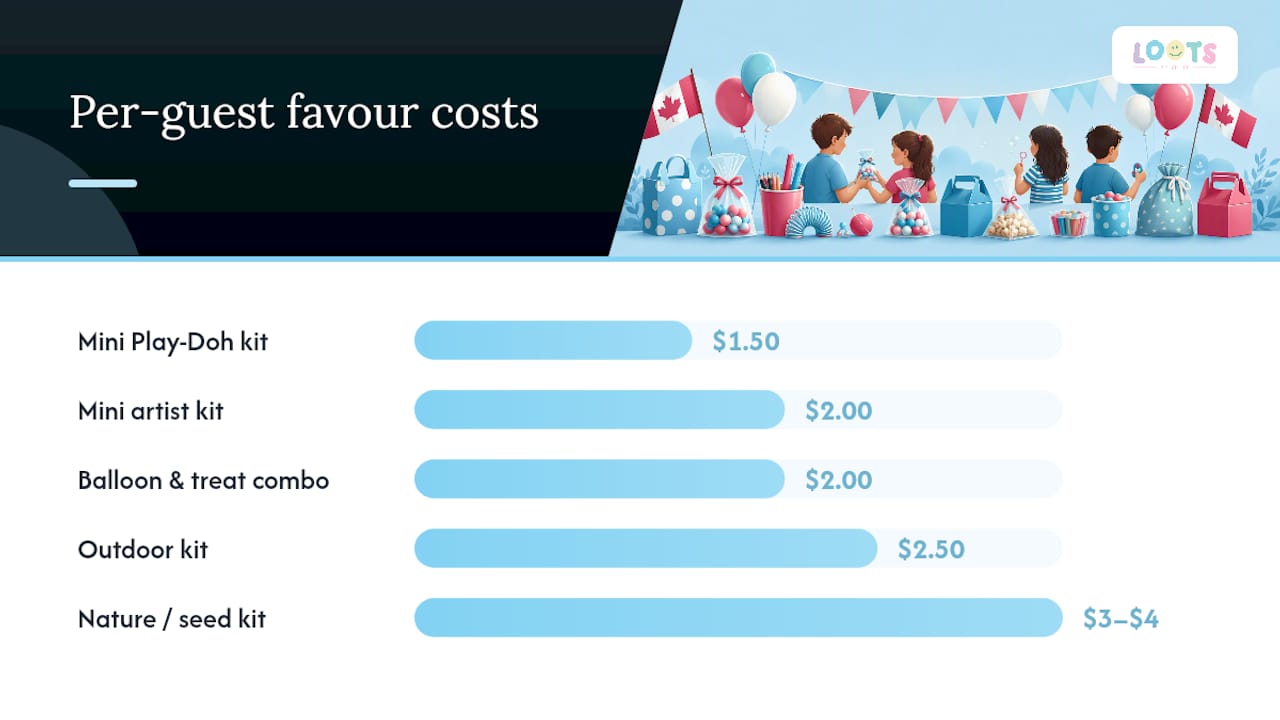
Once your total number exists, the next job is filling it with things kids or guests actually want, not seven dollar-store trinkets that get abandoned in the car on the way home. Canadian pricing guides that break down affordable loot bag ideas consistently show that a single well-chosen item beats a pile of filler, both on cost and on how long the favour actually gets used.
Here are six concepts that reliably work, with realistic per-guest costs:
- Mini Play-Doh kit (a small tub plus a couple of cookie cutters): roughly $1.50 per child, sourced from Dollarama or Walmart. Works best for ages 3 to 7.
- Mini artist kit (crayons, a small colouring pad, maybe stickers): around $2 per child, split a bulk box of crayons across several bags to cut the cost further. Fits most ages.
- Outdoor kit (bubbles, a small ball, chalk): approximately $2.50 per child, and it holds up well for active groups aged 4 to 10.
- Nature or seed kit (a small planting pot, seed packet, mini trowel): around $3 to $4 per guest, a strong pick for spring and summer parties and for eco-conscious hosts.
- Book bag (one paperback or activity book instead of trinkets): $3 to $4.50 per guest, and it’s the option most parents actually thank you for.
- Balloon and treat combo (a balloon plus a small bag of Bulk Barn candy): roughly $2 per guest, easy to assemble the morning of the event.
| Favour idea | Approximate cost per guest | Best sourced from |
|---|---|---|
| Mini Play-Doh kit | $1.50 | Dollarama, Walmart |
| Mini artist kit | $2 | Dollarama, craft retailers |
| Outdoor kit | $2.50 | Walmart, dollar stores |
| Nature or seed kit | $3 to $4 | Garden centres, Amazon.ca |
| Book bag | $3 to $4.50 | Book outlets, thrift stores |
| Balloon and treat combo | $2 | Bulk Barn, dollar stores |
If your total budget is genuinely tight, resist the urge to stack three or four small items into one bag just to make it look fuller. One good book or a decent craft kit reads as more generous than a handful of plastic trinkets, and it avoids the landfill-bound loot bag problem parents have gotten increasingly vocal about. A Bargainmoose breakdown of budget loot bags makes the same point: fewer, better items consistently outperform quantity for both cost and satisfaction.
Where should you buy party favors to save money?
Retailer choice affects your per-unit cost more than almost any other decision you’ll make. Dollar stores win on small trinkets, craft basics, and bulk candy scoops. Big-box stores like Walmart tend to beat dollar stores on multi-packs of things like bubbles or small toys, since their bulk pricing often lands lower per unit even before any sale. Craft retailers make sense when you need supplies for a DIY component, like ribbon or small containers, and Bulk Barn remains one of the most efficient sources for per-guest candy portions since you control the exact weight and cost. Online bulk packs through Amazon.ca often make sense once your guest count clears 20, where the per-unit savings outweigh shipping.
A few tactics consistently lower your total spend:
- Shop post-holiday clearance. Halloween, Christmas, and Easter clearance racks are goldmines for small toys and stationery that work fine for a birthday party six months later.
- Split larger packs across events. A 24-pack of crayons or a bulk bag of temporary tattoos can be divided across two or three parties, which is exactly the craft-kit splitting tactic that drops per-guest cost without dropping quality.
- Stack store coupons with sale pricing where retailers allow it, particularly around back-to-school and holiday sale windows.
- Buy containers separately from contents, since pre-packed novelty loot bags almost always cost more per unit than assembling your own.
Pro Tip: If you’re ordering anything personalized, whether it’s a name patch, a printed tag, or a custom colour choice, order at least 2 to 3 weeks ahead. Production and shipping delays are the most common reason people end up paying rush fees, and that pressure almost always shows up right when you’re least able to absorb an extra cost.
Timing matters just as much for DIY supplies.
Packaging and presentation on a small budget
Packaging deserves its own line in your budget, not an afterthought squeezed out of whatever’s left. A basic kraft paper bag with a printed tag reads as more intentional than an expensive cellophane bag stuffed haphazardly, and it usually costs less. Buying containers in bulk, separate from the contents, keeps your unit cost down while still giving you room to spend a little more on the actual favour inside.
A few low-cost swaps make a real difference:
- Kraft paper bags with a simple tag instead of pre-packaged cellophane sets, often cutting packaging cost by half or more.
- A short length of ribbon or twine tied once, rather than elaborate bows that add cost without much visual payoff.
- Repurposed containers, like small jars or tins, that guests can reuse afterward, turning packaging into part of the gift.
- Handwritten or simply printed name tags instead of custom stickers, which look personal without the added print cost.
Pro Tip: Group your favours together on a small table or tray rather than handing them out individually. A simple visual display makes a $2 favour look considerably more generous than the same item handed over loose at the door.
If you want the personalized look without the DIY labour, customizing party favors with a name or patch is one way to get that finished presentation without hand-lettering forty tags yourself.
DIY or store-bought: which actually saves you money?
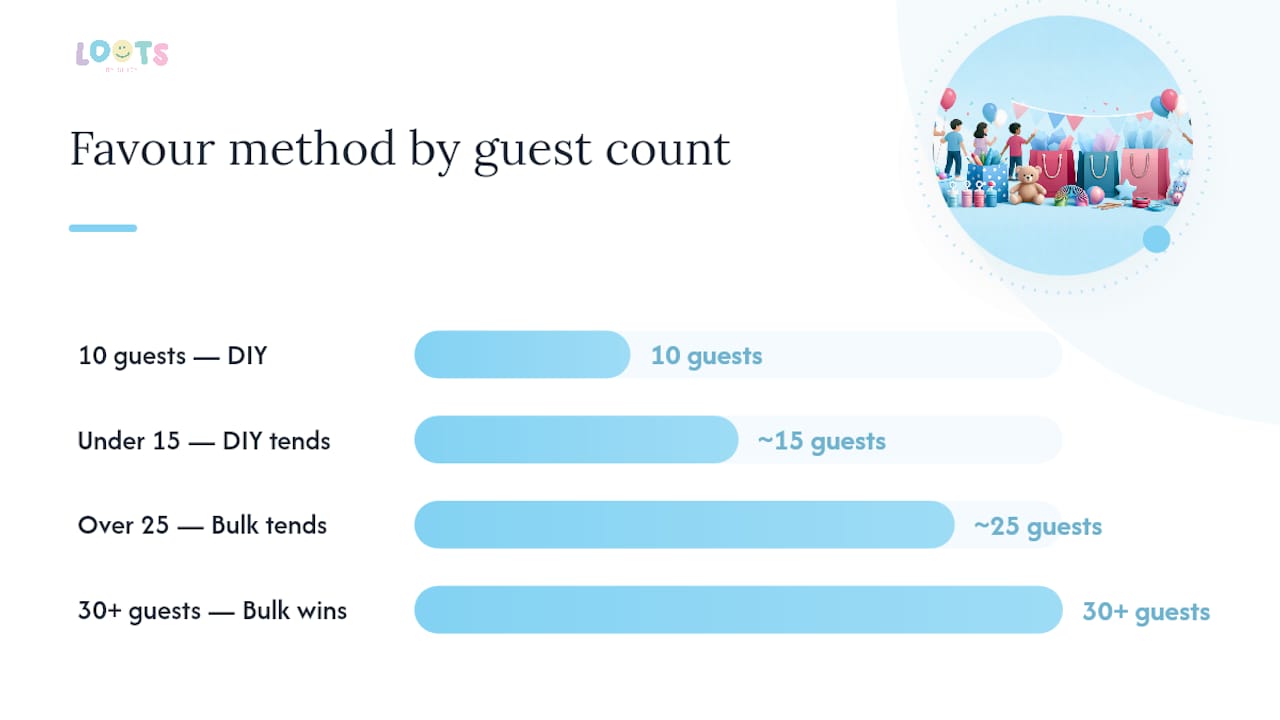
The honest answer depends less on cost per item and more on what your time is worth. A DIY favour, like hand-assembled treat bags or homemade bath salts, often costs less per unit than a bulk store buy, but only once you’ve accounted for your own hours spent assembling, packaging, and cleaning up. For a 10-guest party, that math usually favours DIY. For 30 or more guests, the time cost climbs fast enough that a bulk store purchase frequently wins even though the per-unit price looks higher on paper.
A hybrid approach splits the difference well: buy one solid, ready-made item as the base of the favour, then add a single DIY accent, like a hand-written tag or a ribbon you tied yourself. That gives you a polished result without the multi-hour assembly line.
Run through this before deciding:
- How many guests are you favouring? Under 15 tends to favour DIY; over 25 tends to favour bulk buys.
- How much free time do you realistically have in the week before the event, not the week you’re imagining you’ll have?
- How polished does the result need to be? A backyard party has more room for rough edges than a milestone birthday with photos planned.
Why personalized loot bags work: a practical perspective from Loots by Shiry
Personalization changes how a favour gets perceived without changing much on the cost side. Adding a name, a patch, or a colour choice to a loot bag makes it read as a gift rather than a giveaway, and that shift in perception is worth more to most hosts than the small premium it adds. The customization process lets names, patches, and colours get chosen at checkout rather than tacked on as an afterthought.
The timing principle stays the same as anywhere else: personalized orders need lead time. Production runs, patch application, and shipping all take longer than grabbing a pre-made bag off a shelf, so budgeting for personalization means budgeting for the calendar too.
A few things worth knowing before you order:
- Personalization options typically include name printing, patch selection, and colour choices, all handled during the ordering process.
- Ordering earlier avoids the rush-fee pressure that hits last-minute custom orders across the industry, not just with any one supplier.
- A 4imprint alternative comparison is worth a look if you’re weighing mass-personalization platforms against a more hands-on customization experience.
How do you handle favours for guests with allergies or dietary restrictions?
The safest approach is defaulting to non-food favours whenever your guest list includes unknown allergy status, which covers most birthday parties with kids from different households. Craft kits, books, small toys, and outdoor items sidestep the allergy question entirely, and they tend to survive longer than a bag of candy anyway.
When food is part of the plan, ask about allergies directly on the invitation rather than guessing. A simple line like “let us know of any allergies” gives you time to swap in a nut-free or dairy-free treat for specific guests without redoing the whole batch. Keep any allergen-friendly substitutes visually similar to the main favour so no child feels singled out. If your party budget allows it, buying one small batch of allergen-free treats alongside your main favour costs only a little more and solves the problem cleanly. Labelling ingredients on treat bags, even briefly, also helps parents make a fast call at pickup without having to ask you directly in front of their child.
Can you split favour costs with other parents or hosts?
Group buying is one of the most underused ways to cut a party favor budget without cutting quality. If you know another parent hosting a birthday around the same time, splitting a bulk pack of craft kits, candy, or small toys between both events can meaningfully lower the per-guest cost for both parties, since splitting a larger kit across several bags is exactly the kind of bulk-buy tactic that pays off at scale.
Some communities also run informal favour swaps, where parents trade surplus party supplies from past events instead of buying new. Corporate or classroom events can apply the same logic: pooling a shared favour budget across a few departments or a few classroom parents often unlocks bulk pricing that no single event could reach alone. It takes a bit of coordination, usually just a group chat and a shared spreadsheet, but the savings on anything ordered in quantity, from custom items to bulk candy, are real enough to be worth the extra planning.
Author perspective: what I’ve learned about favour budgets
The biggest mistake I see hosts make isn’t overspending. It’s spreading a decent budget across too many small items instead of one memorable one. A parent once told me they cut their favour list from five trinkets to a single personalized tumbler per child, and the thank-you notes actually mentioned the favour by name for the first time. Two habits worth adopting right now: set your per-guest number before you shop, and spend more on fewer things.
— Shiry
How Loots by Shiry helps you hit your favour budget
LootsByShiry is the practical middle ground between spending hours assembling DIY bags and settling for generic pre-packed novelty sets. It sells custom loot bags, pouches, tumblers, and tote bags, each personalized with a name, patch, or colour choice at checkout, so you get a finished, gift-worthy result without the assembly time a DIY approach demands.
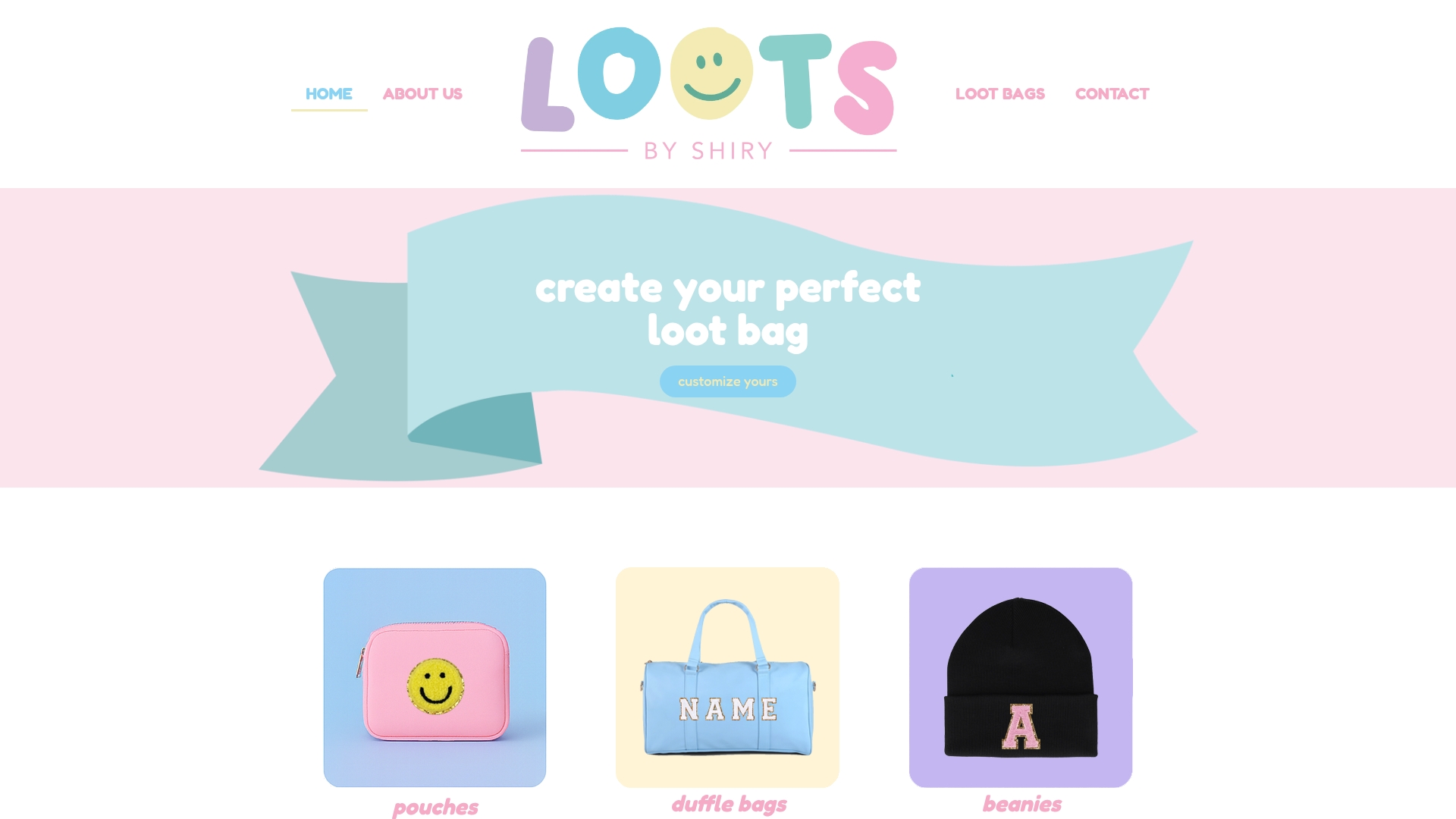
Ordering works the same way any personalized purchase should: browse the loot bag shop or the colour-changing tumblers, pick your customization, and place your order with enough lead time, ideally 2 to 3 weeks out, to avoid rush pressure. Before you commit to a DIY plan for a large guest list, run the comparison honestly: price out the bulk supplies against your own hours spent assembling, and weigh that against a per-unit personalized option that arrives ready to hand out. If the numbers land close, request a quote on a personalized order and see whether a finished product beats the DIY route for your specific guest count.
Sources
- 6 awesome, budget-friendly birthday loot bag ideas (Canada) — Bargainmoose
- How much do wedding favours cost in Canada — Bridebook (Canada)
Prices shift by region, retailer, and season, so treat every figure here as a planning range rather than a guarantee.
FAQ
How much should a party favor cost?
Most kids’ party favours cost between $2 and $5 per guest, with simpler versions landing under $2 and more polished, personalized options reaching $5 to $10.
How much should you budget for party favors overall?
Multiply your per-guest target by your guest count, then add a 10% to 15% buffer for last-minute additions or replacements.
What are some budget-friendly party favors?
Mini Play-Doh kits, small artist kits, outdoor bubble sets, book bags, and balloon-and-candy combos all reliably cost under $5 per guest when sourced from Dollarama, Walmart, or Bulk Barn.
How much should you spend on party bags for a large guest list?
Larger guest counts often benefit from bulk buying and splitting kits across bags, which can lower the per-guest cost even as your total spend rises with headcount.
Are personalized favours more expensive than generic ones?
Personalization adds a modest premium, but options like LootsByShiry’s customizable loot bags keep that premium small while significantly raising how special the favour feels to guests.