
There’s no functional difference: a goody bag and a loot bag are the same thing wearing two different names. The gap is regional vocabulary, not content. What matters more than the label is what’s inside it, and the smart move for 2026 is to pack one meaningful, personalised, or consumable item rather than a handful of disposable trinkets that end up in a landfill by Tuesday.
- Same product, different accent: “loot bag” and “goody bag” (or “goodie bag”) describe one thing.
- The real decision is quality versus quantity, not which word to use on the invite.
- A personalised option, like a custom loot bag with a guest’s name on it, tends to get kept longer than five dollar-store toys combined.
Key Takeaways
Choosing one personalised or consumable item over a stuffed bag of trinkets cuts waste, saves assembly time, and leaves guests with something they actually keep.
| Point | Details |
|---|---|
| Terms are interchangeable | “Loot bag” (Canada), “goodie bag” (U.S.), and “party bag” (UK/Australia) all mean the same product. |
| Quality beats quantity | One good or personalised item outperforms several disposable trinkets for guest satisfaction and waste reduction. |
| Match age to format | Kids under 3 need consumable or plush-only items; kids 7 and up notice and value quality. |
| Budget guides format | $3 to $5 per guest suits multi-trinket bags; $8 to $15 per guest buys one quality personalised item. |
| Personalisation adds value | LootsByShiry lets hosts add names, patches, and colours to totes, tumblers, and pouches, turning a favour into a keepsake. |
Table of Contents
- Goody bag vs loot bag: what the terms actually mean
- What actually goes inside a goody bag or loot bag?
- Why hosts are ditching the stuffed goody bag
- How to choose the right favour approach for your party
- Ready-to-use favour ideas by budget and theme
- How personalised loot bags solve the junk problem
- Where to find personalised loot bags for your next party
- Sources
- FAQ
Goody bag vs loot bag: what the terms actually mean
A “goody bag” or “goodie bag” is a small bag of treats and trinkets handed out to guests at the end of a party. A “loot bag” is the exact same item under a different name. Neither term implies anything about quality, size, or contents. The word choice is purely a matter of where you grew up.
According to a Reddit thread in r/AskACanadian, Canadians overwhelmingly reach for “loot bag” when describing party favours for kids, while American parents tend to say “goodie bag.” Cross the Atlantic and you’ll hear “party bag” in the UK and Australia instead. The concept traces back further than any of these terms. Wikipedia notes that giving guests small tokens has historical roots going back to European customs like the bonbonnière, a decorative box of sugared almonds given out at weddings and celebrations.
Quick stat: searches for “loot bag” cluster heavily in Canada, while “goodie bag” dominates in the U.S., per regional usage patterns tracked in the same Reddit discussion.
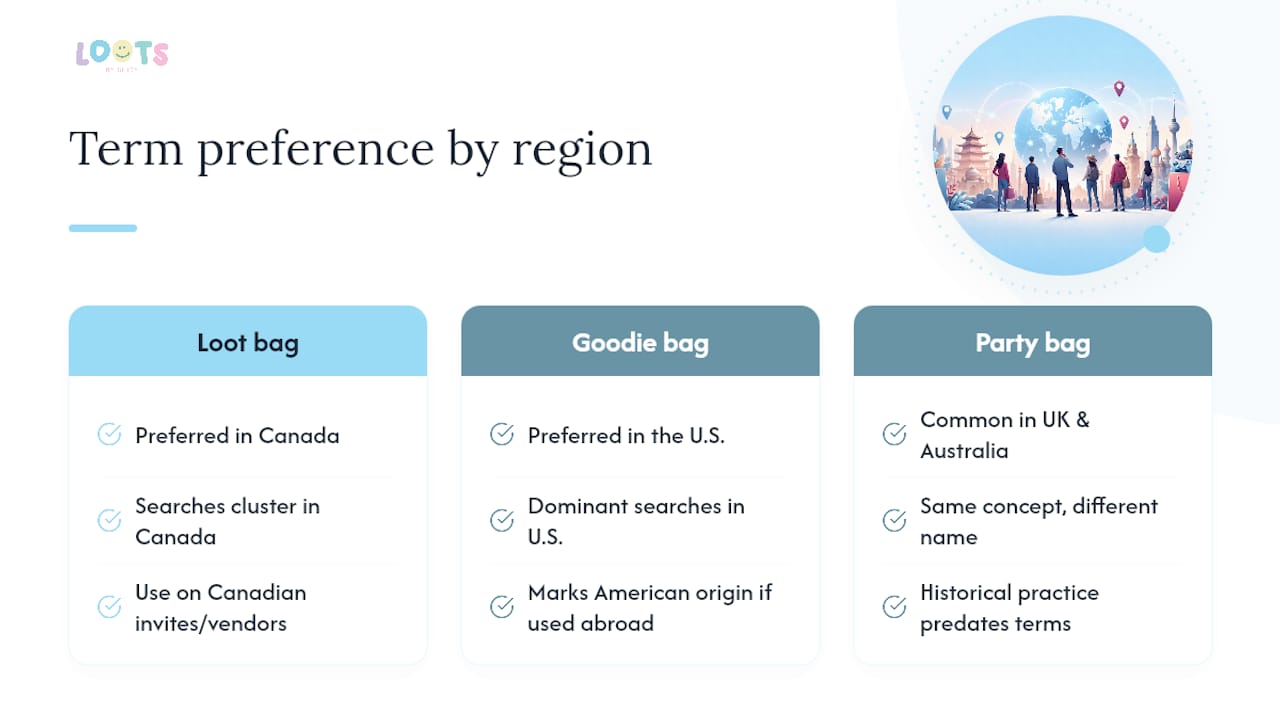
If you’re hosting in Canada, use “loot bag” on your invites and when searching for vendors. It’s the term local suppliers, party stores, and Canadian parents expect. Using “goody bag” isn’t wrong, it’ll just mark you as either American or simply unfamiliar with local convention.
What actually goes inside a goody bag or loot bag?
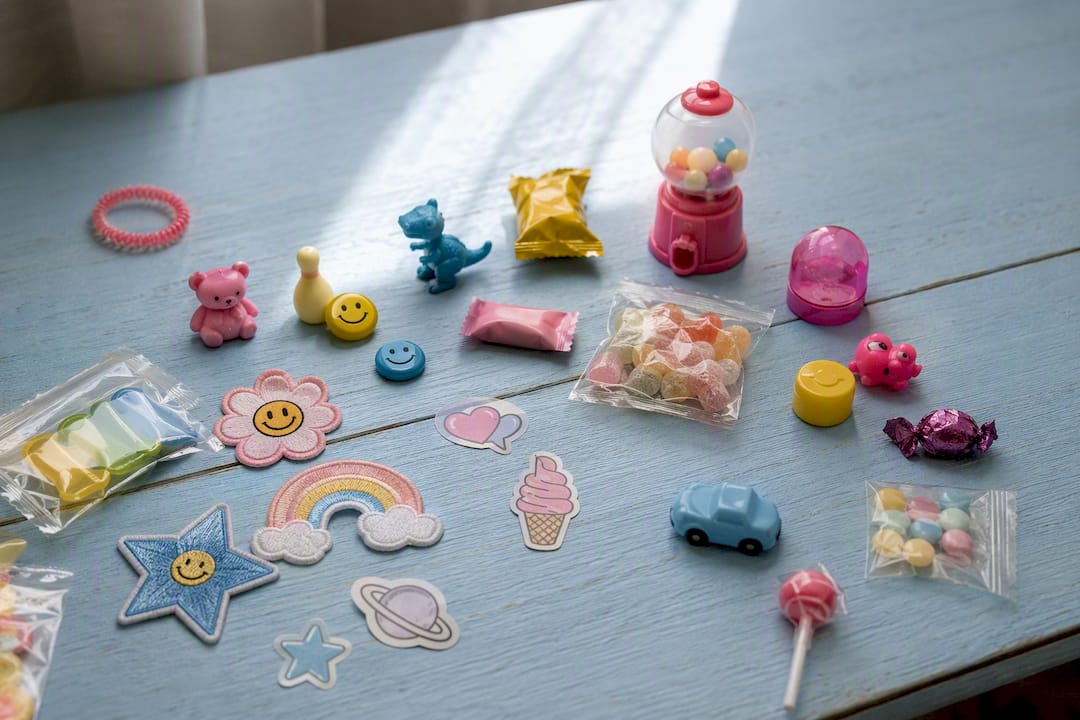
The classic loot bag is a grab bag of small, cheap items: stickers, temporary tattoos, a plastic whistle, a mini colouring book, a few pieces of candy, maybe a bouncy ball. It’s the format most of us grew up with, and it’s still common at budget-conscious parties for younger kids who genuinely delight in unwrapping five tiny things in a row.
The alternative gaining ground fast is the curated favour: one substantial item instead of six trinkets. That might be a good-quality toy, a personalised water bottle, a craft kit, a themed activity set, or a consumable like a bag of gourmet cookies. Some hosts split the difference with a reusable pouch or pastel pouch holding just one or two well-chosen things.
- Multi-trinket bags work best for younger crowds (ages 3 to 6) where quantity feels exciting.
- Single curated items suit older kids (7 and up) who notice and appreciate quality over volume.
- Consumables (treats, snacks) sidestep the “what do I do with this plastic thing” problem entirely.
- Activity kits keep kids occupied at the party itself, not just after.
Pro Tip: If you’re torn between formats, match the item to the venue. A trampoline park party doesn’t need another small toy underfoot, but a themed craft kit travels home easily and gives kids something to do the next rainy afternoon.
Why hosts are ditching the stuffed goody bag
Parent frustration with traditional loot bags isn’t new, but it’s louder than it used to be. A widely discussed Today captured what a lot of parents have quietly thought for years: a bag stuffed with cheap plastic items often becomes clutter within a day and garbage within a week. The complaint isn’t really about the bag. It’s about what happens after the party ends.
Cheap plastic favours rarely survive past the car ride home, and the environmental cost of manufacturing and shipping them for a few minutes of novelty is hard to justify once you actually think about where they end up.
The U.S. EPA’s research on plastic pollution backs up the environmental half of that concern: single-use plastic items contribute meaningfully to pollution, and reducing them is one of the more straightforward ways households can cut waste. SavvyMom’s roundup of loot bag ideas reflects the same shift in advice, pointing hosts toward fewer, better items instead of bulk trinkets. The trend line is clear: one good thing beats five forgettable things.
How to choose the right favour approach for your party
Picking a format doesn’t have to be complicated if you work through it in order.
- Start with guest age. Kids under 3 need consumable or plush items, no small parts, ever. Ages 4 to 6 do well with a mix of small toys or one modest item. Ages 7 and up genuinely notice and remember quality.
- Set a per-head budget. Anywhere from $3 to $5 per guest gets you a decent multi-trinket bag; $8 to $15 per guest buys one personalised or higher-quality item.
- Count your guest list. A 25-kid party makes hand-assembling 25 multi-item bags a real time cost. Fewer guests means more room to splurge per bag.
- Check venue rules. Some party venues restrict confetti, glitter, or balloons inside favours. Ask before you buy.
- Flag allergies early. If any consumable is going in the bag, ask about food allergies when you send invites, not the week of.
- Budget your assembly time. A themed pack with one item per guest assembles in a fraction of the time a ten-piece trinket bag takes.
For a rough guide: 10 to 15 guests at $10 to $12 each usually buys one solid personalised item apiece. 20 to 30 guests at $3 to $5 each usually means a simpler consumable or small toy, unless you’re prepared to batch-assemble.
Pro Tip: Run every planned item through a choking-hazard check if any guest is under 4, even if most of the group is older. One toddler sibling tagging along is enough reason to skip anything with small, detachable parts.
Ready-to-use favour ideas by budget and theme
You don’t need to invent your favour mix from scratch. Here are templates that cover most party styles.
- Low-cost multi-trinket bag ($3 to $5 per guest): stickers, a small puzzle, a couple of candies, sourced from a party supply store or dollar retailer.
- Activity kit with a moderate budget per guest: a mini craft project, colouring set with quality markers, or a themed sticker book.
- Edible-only bag ($4 to $7 per guest): cookies, chocolate coins, a small box of treats, no plastic waste at all.
- Reusable pouch with one item at moderate cost: a pastel pouch holding one toy or trinket the child will actually reuse.
- Themed pack ($6 to $10 per guest): matched to the party theme, dinosaur eggs for a dino party, glow sticks for a night party.
How personalised loot bags solve the junk problem
Adding a name, a patch, or a colour choice to a loot bag changes how a kid treats it. A bag with your child’s name stitched or printed on it doesn’t get tossed in the recycling bin with the wrapping paper. It gets carried to school. LootsByShiry builds on that idea by letting customers choose names, patches, and colours for each bag, turning a throwaway favour into something a guest actually wants to keep.
The product range covers more than the classic bag: cotton tote bags, colour-changing tumblers, pouches, beanies, and duffle bags, all customizable through an interactive design process where the buyer’s choices shape the final product.
- Personalisation shifts the perceived value of a $6 item closer to a $15 one.
- One well-made personalised favour replaces four or five disposable trinkets without shrinking the “wow” factor for guests.
A host’s honest take on switching formats
Packing five dollar-store trinkets into a bag always felt like busywork, not generosity. Switching to one personalised item per guest cut prep time and cut waste, and more of those bags actually made it home intact instead of into the venue’s garbage can.
Where to find personalised loot bags for your next party
Party stores and big-box retailers cover the cheap, multi-trinket route well enough if that’s the plan. If you’re ready to try the other approach, one substantial item per guest, LootsByShiry builds that item around your child’s name, a chosen patch, and a colour palette instead of leaving you to guess what a stranger’s bulk order might include. That’s the practical difference: you’re not picking from a fixed catalogue of generic favours, you’re driving the design yourself, down to the colour and the name printed on the bag.
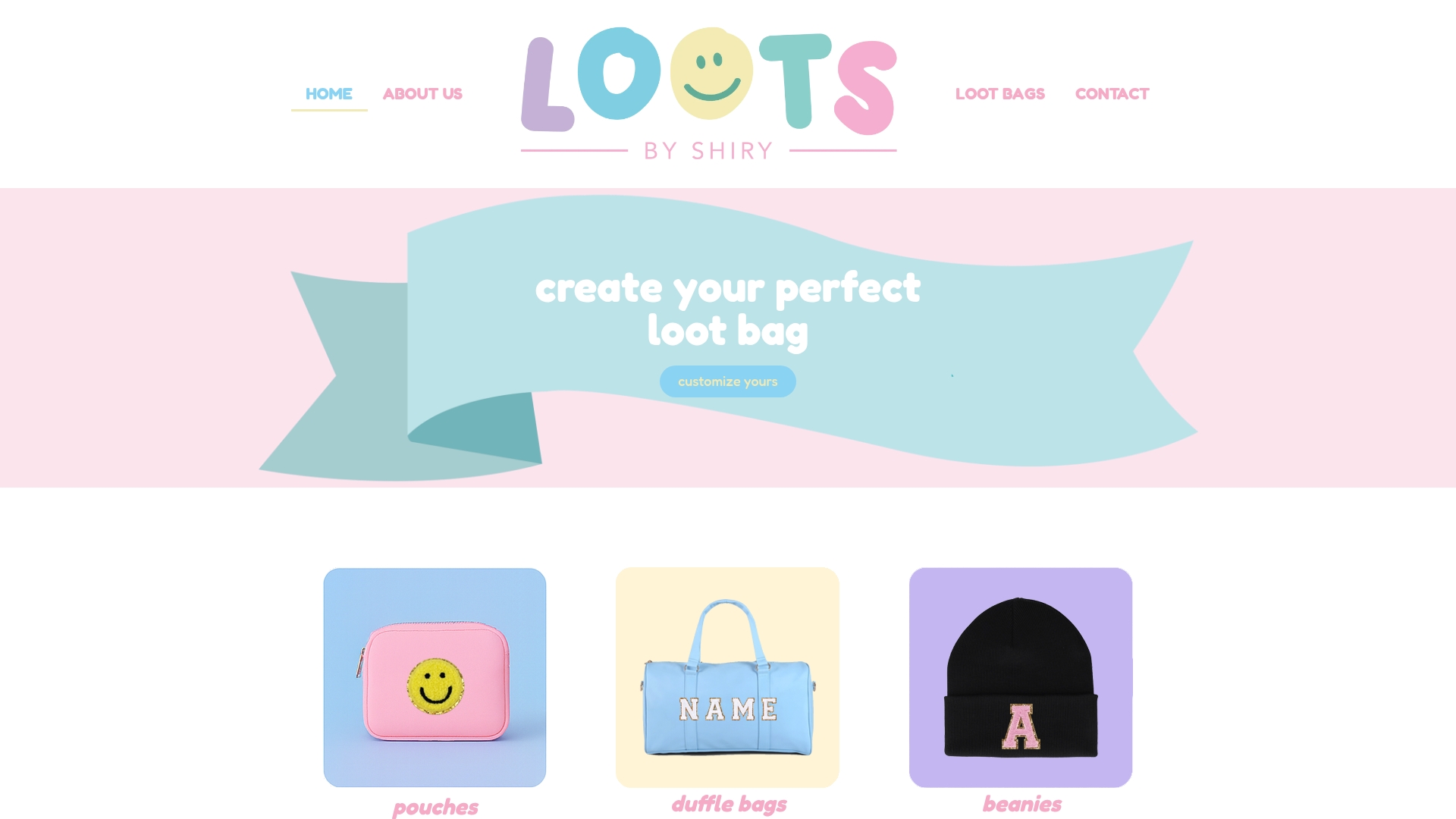
The lineup includes loot bags, cotton tote bags, colour-changing tumblers, and duffle bags, all built through the same interactive design process. If your next party calls for something a guest will actually carry home and use, not toss, browse the loot bag collection and start customizing names, patches, and colours for your guest list today.
Sources
FAQ
What is the difference between a goody bag and a goodie bag?
None. “Goody bag” and “goodie bag” are two spellings of the exact same term, both referring to a small bag of party favours given to guests.
What does “loot bag” mean?
“Loot bag” is the Canadian term for a small bag of favours or treats given to party guests, functionally identical to a “goodie bag” or “party bag.”
What does “goody bag” mean?
“Goody bag” describes the same item as a loot bag: a small bag of trinkets, treats, or gifts handed out at the end of a party, typically to children.
Do people still do goody bags?
Yes, but the format is shifting. Parents increasingly favour one quality or personalised item, like a custom loot bag, over a bag stuffed with several small disposable trinkets, according to trend reporting from SavvyMom.
How many items should go in a loot bag?
There’s no fixed number. A budget multi-trinket bag might hold four or five small items, while the increasingly popular alternative is a single well-chosen or personalised piece per guest.