You can get usable letter patches immediately from ready-made iron-on letters, but for custom, durable results, choose embroidered or chenille patches with sew-on backing for anything you plan to wash often. Ready-made wins on speed. Custom patch letters win on fit, colour matching, and how long they survive the laundry. The checklist below tells you exactly what to ask before you order.
TL;DR:
- Custom patches made with embroidery or chenille are more durable and wash-resistant than iron-on options, especially for frequent laundering.
- Woven and printed patches excel at fine detail, small text, and full-color designs, while chenille provides a plush, retro look suited for large, bold letters.
- When applying iron-on patches, preheating the garment, positioning accurately, and letting the patch cool are essential for long-lasting adhesion, with sewing recommended for high-wash items.
- Ordering in bulk greatly reduces the per-unit cost, and suppliers should provide clear proofs, colour swatches, and detailed turnaround estimates before purchase.
- Sourcing patches through direct suppliers involves multiple steps, whereas companies like LootsByShiry bundle patch customization with event-specific items, streamlining the process.
Table of Contents
- What are custom patch letters and how do you choose the right style?
- Chenille, embroidered, woven, or printed: which patch style fits your letters?
- How do you apply iron-on letter patches correctly?
- How much does it cost to get a custom patch made?
- Where should you order custom letter patches, and what should you ask?
- Why patches still matter for event personalization
- Order patches the easy way: skip the sourcing hunt
- Sources
- FAQ
What are custom patch letters and how do you choose the right style?
Custom patch letters are individually made or ordered letter appliqués, embroidered, woven, chenille, or printed, designed to your exact size, colour, and font rather than pulled off a rack. Personalized patch letters exist because off-the-shelf packs rarely have the right size, colour, or spacing for a specific jacket, tote bag, or jersey number. Once you know what you’re buying, the decision comes down to five practical questions.
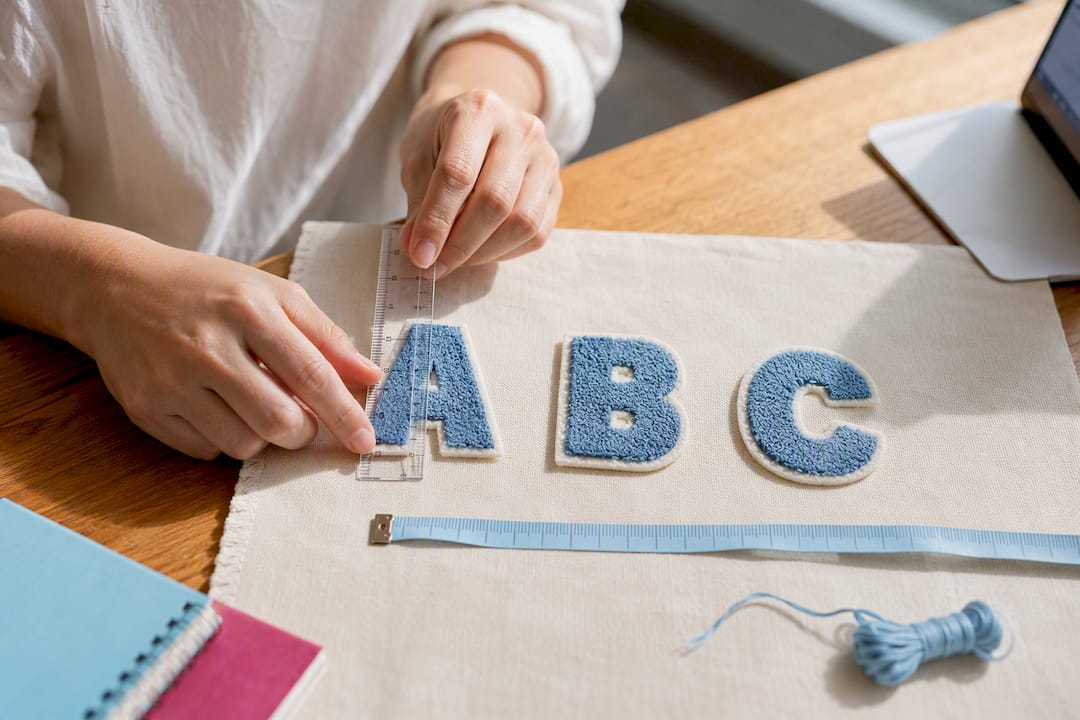
1. Match the style to the use case. Chenille suits oversized varsity letters and retro streetwear. Chenille patches are the classic varsity look, soft and tactile, but thicker than woven patches, so they need the right backing to stay put. Embroidered letters work for most everyday personalization, from backpacks to team gear. Woven patches handle fine detail and small text better than chenille ever could.
2. Decide on backing before you decide on anything else. Sew-on holds up best through repeated washing and heavy use. Iron-on is faster and fine for lighter items. Hook-and-loop (Velcro-style) backing suits patches you want to swap between garments, like team names on removable panels.
3. Get the size right for the garment. Letters for jacket backs typically run larger (2 to 4 inches tall) than letters for caps or small totes (under an inch). Centre spacing matters more than most buyers expect. Uneven gaps between letters are the fastest way to make a custom patch look homemade.
4. Vet the vendor with four questions. Ask for a digital proof before production, a fabric swatch if you’re unsure about colour, their minimum order quantity, and a real turnaround estimate including shipping.
5. Budget by quantity, not just style. Single letters or small monogram sets cost more per piece. Larger runs (think team jerseys or matching bags for an event) bring the per-unit price down substantially.
Pro Tip: Order one physical swatch before committing to a full run. Screen colours and thread colours don’t always match, and a five-dollar swatch beats a costly reprint.
Chenille, embroidered, woven, or printed: which patch style fits your letters?
The visual style you pick affects legibility as much as looks. Chenille is soft, thick, and built for scale, best when letters are large and the goal is texture over precision. It’s the material behind classic varsity jackets and letterman-style patches, and it stays popular for exactly that nostalgic look.
Embroidered letter patches vary by stitch type. Satin stitch gives clean, defined edges good for small to medium letters. Fill stitch covers larger areas with texture, useful for bigger block letters or when you want depth. Thread count and stitch density both affect how crisp the letter edges look up close.
Woven and printed patches are the better call for anything with fine detail, script fonts, gradients, or small text that embroidery would blur into a blob. Printed patches also handle full-colour designs cheaper than multi-thread embroidery can.
A few finishing details that quietly matter:
- Merrowed edges (a stitched overlock border) hold up longer and resist fraying compared to raw heat-cut edges.
- Heat-cut edges look cleaner on small or intricate shapes but can fray faster with repeated washing.
- Colour contrast between letter and backing fabric is what actually makes text readable from a few feet away, not just font choice.
- Thread sheen (matte vs. glossy) changes how letters read under different lighting, worth checking on a swatch first.
How do you apply iron-on letter patches correctly?
Getting an iron-on patch to stick permanently comes down to heat, pressure, and prep, not luck.
- Preheat the garment for a few seconds before placing the patch. This step alone meaningfully improves adhesion and it’s the step most people skip.
- Position the patch carefully. Check letter spacing and alignment now. There’s no adjusting once the adhesive sets.
- Cover with parchment paper or a thin cloth to protect both the patch and your iron.
- Press with firm, even pressure for the time your supplier recommends, usually 30 to 45 seconds per section, moving the iron in overlapping passes rather than holding it still.
- Let it cool fully before handling or wearing.
For anything that gets washed weekly, sewing around the patch edge after ironing is a small extra step that adds real staying power. Backpacks, hoodies, and kids’ clothing all fall into this category.
Care after application: wash on a gentle cycle in cold water, turn the garment inside out, and skip the dryer’s high heat. Air dry or use low heat instead.
If a corner starts lifting, a household iron with a fresh press (plus a stitch or two at the loose spot) usually fixes it. If patches keep detaching despite proper application, ask your supplier for a stronger backing option next time.
Pro Tip: Iron-on patches on synthetic or waterproof fabric (like nylon totes or rain shells) often fail faster than on cotton. If your item is synthetic, ask for sew-on from the start.
How much does it cost to get a custom patch made?
Price depends on three things: style, size, and quantity. Chenille and multi-colour embroidery cost more per piece than simple woven or printed letters, because of thread density and machine time. A single custom letter costs more per unit than a full alphabet set ordered together, since setup work gets spread across more pieces.
Minimum order quantities vary by supplier and by style. Smaller minimums mean higher unit cost. Ordering in bulk for a team, wedding party, or event brings the per-patch price down noticeably.
Proofing and production timelines matter just as much as price:
- Digital proofs typically arrive within a few business days once your file specs are locked in.
- Standard production runs a week or two after proof approval; rush options usually cost extra.
- Simple vector artwork or high-resolution images speed up the proof stage. Blurry logos or low-res text mockups slow everything down.
- Requesting a physical swatch adds a few days but prevents colour-mismatch reorders down the line.
Where should you order custom letter patches, and what should you ask?
Finding a reliable supplier comes down to asking the right questions upfront, not hoping the finished patch matches what you imagined.
Ask every supplier: What backing options do you offer, and which do you recommend for my use case? What’s your minimum order quantity? How long until I see a digital mockup? Can I get a fabric swatch before full production? What are your shipping timelines and return policy on custom items?
Trust signals worth checking for:
- Photos of finished patches on real garments, not just flat product shots.
- Clear washability and care guidance provided upfront, not buried in fine print.
- A stated production timeline before you pay, not “we’ll let you know.”
- Reviews mentioning turnaround accuracy and stitch quality specifically.
Red flags to walk away from:
- No mockup or proof offered before production begins.
- Vague minimums (“depends on the order”) with no actual number.
- No mention of backing type until after you’ve paid.
When comparing quotes, make sure each one specifies backing, exact size, stitch density, edge finish, and quantity. A cheaper quote that leaves out backing type isn’t actually cheaper, it’s just missing information you’ll need to chase down later. For patch-adjacent personalization on printed items, custom ink alternatives cover a different route worth comparing.
Why patches still matter for event personalization
Patches show up in our product line constantly, mostly as name initials and small icons stitched onto loot bags and party favours where a printed name just doesn’t feel special enough. A monogrammed patch on a duffle bag or a birthday kid’s tote reads as a gift someone chose deliberately, not something grabbed off a shelf.
Every order we run includes a digital mockup before production and colour choices matched to the event’s palette. Turnaround depends on order size, but we build in proof time upfront specifically so nobody’s chasing a last-minute fix the week before a party. Small custom touches, done right, are what people actually remember from a goodie bag.
Order patches the easy way: skip the sourcing hunt
Sourcing your own patch supplier means chasing quotes, comparing minimums, and hoping the swatch matches what showed up on screen. LootsByShiry skips that entirely: patches, names, and colour choices come built into the loot bag order itself, so you get one supplier, one proof, and one delivery date instead of juggling three.
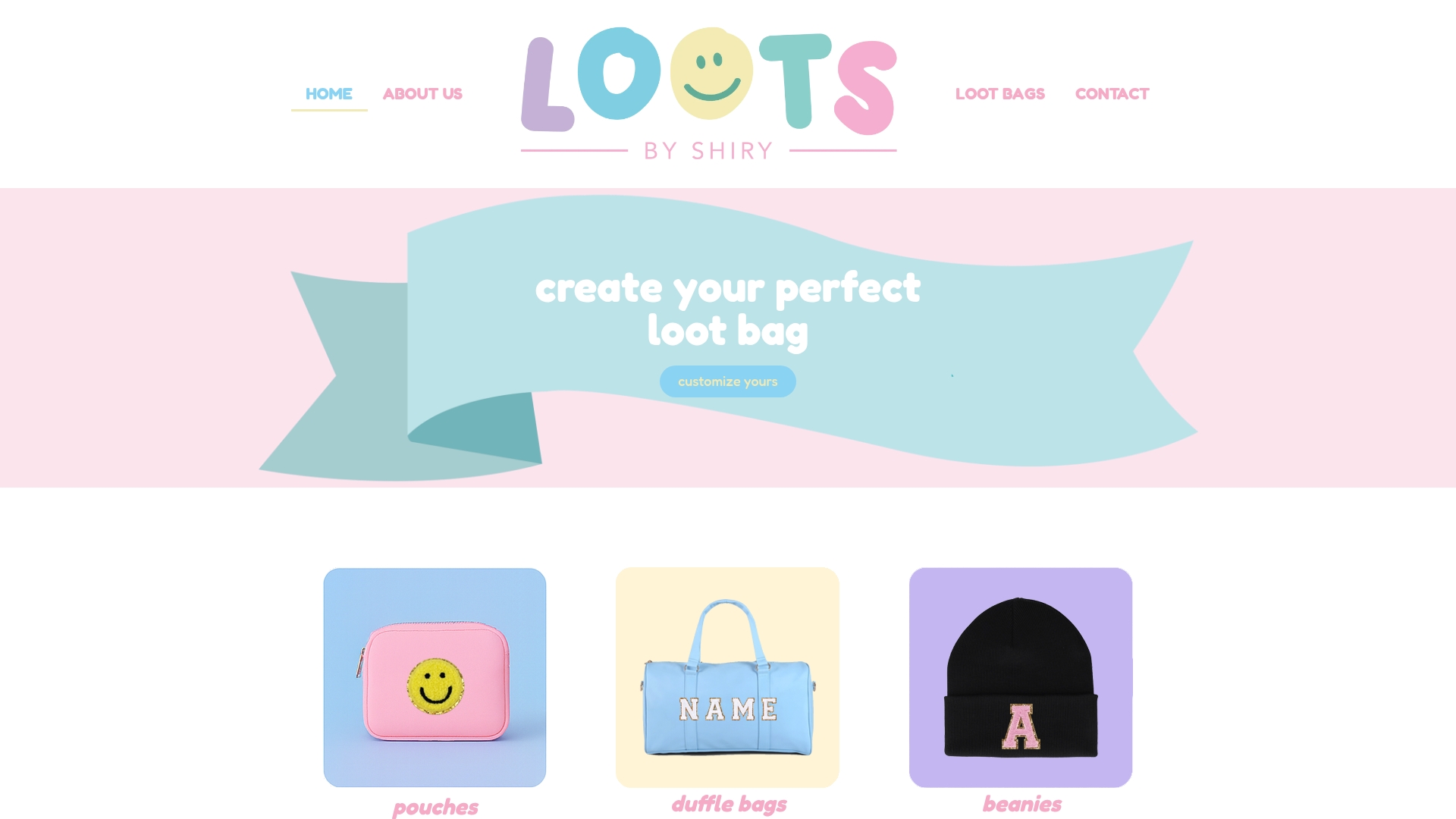
Every order includes a digital mockup before production runs, so you approve the look, spacing, and colour before anything gets stitched. Whether you’re outfitting a birthday party, a themed corporate event, or a full wedding favour lineup, the loot bags shop lets you pick your bag style, add names or initials, and choose your palette in one pass. If your event calls for something beyond bags, our personalized items category covers totes, pouches, and more with the same patch and colour customization.
Ready to see your event’s colours and names on an actual mockup? Head to the loot bags shop and start building your order.
Sources
- How to Iron-On Chenille Patches: Tips, Tricks & Precautions
- What is a Chenille Patch? 4 Best Facts & Ultimate Iron-On Guide
- The ultimate guide to applying iron-on patches
FAQ
How do you make your own letter patches?
Start with the fabric (felt, cotton twill, or chenille yarn for texture), cut or embroider the letter shape, then finish the edges with a merrowed border or heat-cut seal to prevent fraying. Home embroidery machines and iron-on adhesive backing sheets make small-batch DIY letters manageable without a full production setup.
How much does it cost to get a custom patch made?
Cost depends on style, size, and quantity: simple woven or printed letters cost less per piece than chenille or dense embroidery, and ordering in bulk lowers your unit price significantly. A single custom letter almost always costs more per piece than a full personalized set ordered together.
How do you make your own printed patches?
Printed patches use dye-sublimation or heat-transfer printing onto polyester fabric, which handles full-colour designs and fine detail better and cheaper than multi-thread embroidery. You’ll need print-ready vector or high-resolution artwork and a heat press or professional printing service to finish the patch with a sealed edge.
Where can you buy custom name patches?
Marketplaces like Etsy sell ready-made single letters for quick, single-piece needs, while custom embroidery suppliers handle full names, matching sets, and event-specific runs. For personalization built directly into a finished product rather than a standalone patch, LootsByShiry’s loot bags include name and letter patches as part of the order.