

Picking a loot bag name comes down to two things: choosing a style that fits your event or brand, then running quick checks so the name actually works. Below you will find dozens of ready-to-use ideas grouped by style, a simple template system to generate more, and the exact domain, social, and legal checks worth running before you commit.
TL;DR:
- Names based on descriptive templates are ideal for quick recognition and better search visibility, especially for new small businesses.
- Social handle and domain checks should be performed early, along with searches for existing trademarks or conflicts in provincial and national registries.
- Names implying safety for toddlers must accurately reflect the contents and age appropriateness to avoid misleading marketing claims.
- Customization of names should match the specific event theme and age group, with seasonal or holiday names providing clear occasion signals.
- Registering a trademark offers nationwide protection and is crucial if you plan to expand beyond local markets or operate under a recognizable brand.
Table of Contents
- 1. Ready-to-use loot bag name ideas grouped by style
- 2. Naming directions and templates you can reuse
- 3. How to shortlist and test a name before you commit
- 4. Trade names, incorporation, and trademarks explained
- 5. Safety and wording: what to avoid when naming kids’ loot bags
- 6. Customizing names for different themes and age groups
- 7. Loot bag name trends by occasion
- Why structured creativity wins for naming
- An alternative worth trying: test your name on real products
- FAQ
- Sources
1. Ready-to-use loot bag name ideas grouped by style
If you need a name today, start with a style that matches your event’s personality, then adapt one of the examples below to fit your theme or age group.
Playful and fun:
- Giggle & Grab
- Pop Party Pouches
- Wiggle Bag Co.
- Confetti Crew Favours
- Happy Haul Bags
Personalized and heartfelt:
- Name & Cheer
- Made for the Moment
- Yours Truly Favours
- The [Name] Edit
- Because It’s You Co.
Premium and polished:
- Little Luxe Favours
- The Celebration Edit
- Gilded Goodie Co.
- The Keepsake Collection
- Plush & Present
Theme-led:
- Dino Dash Bags
- Starry Surprise Co.
- Under the Sea Stash
- Jungle Jubilee Favours
- Rocket Ride Goodies
Eco-friendly and gender-neutral:
- Little Green Goodies
- Reuse & Celebrate Co.
- The Simple Stash
- Bundle & Bloom
- Everyday Wonder Packs
Pairing a clear category word (bag, stash, pack, edit) with a memorable feeling tends to perform well commercially, which is why names like these show up across small party-supply shops. Before you fall in love with one, run a quick search to see if it is already taken in your region or niche, something we cover in the workflow section below.
2. Naming directions and templates you can reuse
Most strong loot bag names fall into one of four directions. Descriptive names state what the product is plainly (Kids Party Favour Co.). Evocative names lean on feeling or imagery (Starlight Stash). Experiential names focus on the moment the child has (Open & Discover). Blended names combine two of these for a name that is both clear and memorable.
A handful of templates can generate dozens of options quickly:
- [Adjective] + [category]: Sparkle Bags, Giggly Goodies
- [Name or initial] + Packs: Mia’s Packs, J’s Loot Co.
- [Theme] + Co.: Dino Co., Rainbow Co.
- Portmanteau blends: combine two relevant words into one (Party + Bundle = Partundle)
Descriptive names work best for search visibility and for small businesses just starting out, since customers immediately understand what they are buying. Evocative and blended names work better once you have some brand recognition to carry the meaning.
Pro Tip: Write ten names using one template before switching to the next; forcing variety too early produces weaker options.
3. How to shortlist and test a name before you commit
Once you have a list of candidates, narrow it down with a short, repeatable process rather than picking on instinct alone.
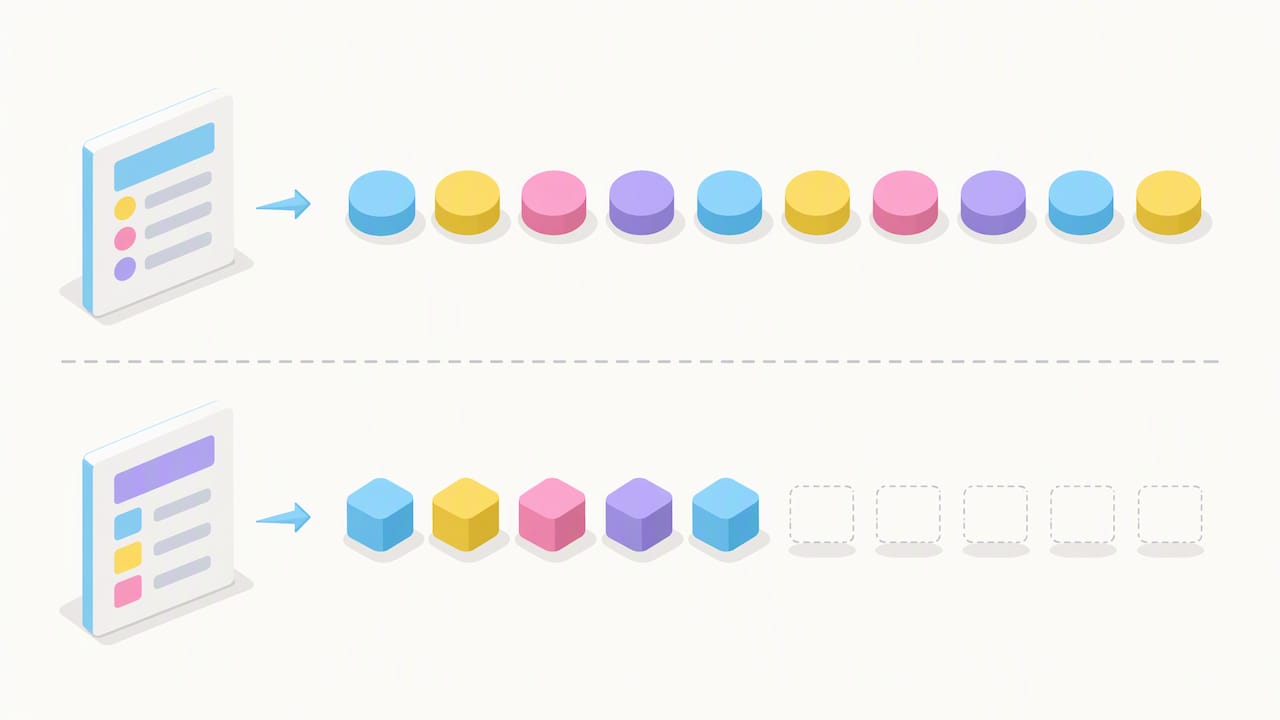
- Score each name on memorability, pronounceability, spelling simplicity, and whether it scales beyond one event type.
- Check domain availability for a .com or .ca version of the name.
- Search social handles on Instagram, TikTok, and Facebook to confirm the name is not already in heavy use.
- Run a basic web search for the exact name plus “party” or “loot bags” to spot conflicts.
- Do a preliminary Nuans or registry search if you plan to operate as a registered business, since Canadian naming guidance recommends checking the web, social handles, Nuans reports, provincial registries, and the Canadian Trademarks Database before settling on a name.
- Say it out loud to a few people in different age groups and ask them to spell it back. If two out of three cannot, the name will likely cause friction in word-of-mouth and search.
Say the name to three people and ask them to spell it back cold. If most get it wrong, discoverability and referrals both take a hit, since a name that is hard to spell is hard to find online later.
4. Trade names, incorporation, and trademarks explained
A trade name, a corporate name, and a trademark protect three different things, and conflating them is one of the most common mistakes new loot bag sellers make.
- A trade name (or operating name) is what you do business as day to day, and most businesses need to register one through their provincial or territorial registry unless they are operating strictly under a personal legal name.
- A corporate name is registered when you incorporate, either provincially or federally through Corporations Canada.
- A trademark is a separate legal asset entirely. Registering it through the Canadian Intellectual Property Office gives exclusive rights across Canada for a multi-year term, protecting the words, logos, and packaging you use to identify your goods, and that protection exists independently of registering a company name or buying a domain.
A quick Nuans preliminary search flags obvious conflicts before you register, but it is not a substitute for a full trademark search. If you plan to sell the name-branded product beyond one province, clearing a trademark matters more than a provincial trade-name registration alone, since that registration does not grant nationwide rights. Consulting a trademark agent or lawyer is worth it once real revenue is on the line.
5. Safety and wording: what to avoid when naming kids’ loot bags
Health Canada guidance warns that toys likely to be used by children under three should have no small detachable parts, since small objects present a choking hazard for that age group. A name or package description that implies a loot bag is safe for toddlers, when the contents include small toys, beads, or stickers with small backing pieces, creates a mismatch between your marketing and the actual contents.
Keep naming and packaging wording conservative: state an age range only when the contents genuinely meet it, and avoid phrases that could be read as a safety claim you cannot support.
6. Customizing names for different themes and age groups
A name that works for a toddler’s first birthday rarely works for a tween’s sleepover, so adjust tone and vocabulary to match the guest list. For younger kids, simple, sound-driven names (Giggle Grab, Pop Pouches) read as fun without needing explanation. For tweens and teens, names that nod to the event itself (Sleepover Stash, Glow Night Goodies) tend to land better than generic “kids party” language.
Theme-specific events give you the most room to play. A dinosaur party supports literal, punchy names (Dino Dash Bags), while a backyard campout or outdoor theme supports nature-driven language (Trailside Treasures, Campfire Crew Packs). Holiday-specific loot bags benefit from seasonal cues baked directly into the name rather than added only on the label, since a name like Frosty Favours or Harvest Haul Bags signals the occasion before anyone opens the packaging.
Gender-neutral naming has become more common for school events and mixed-age parties, where organizers want one name that works across a whole class rather than separate bags for different groups. Swapping gendered colour or character references for universal words like “stash,” “haul,” or “crew” keeps a single name usable across a wider range of guests, which also saves reprinting costs if you reuse packaging across multiple events.
7. Loot bag name trends by occasion
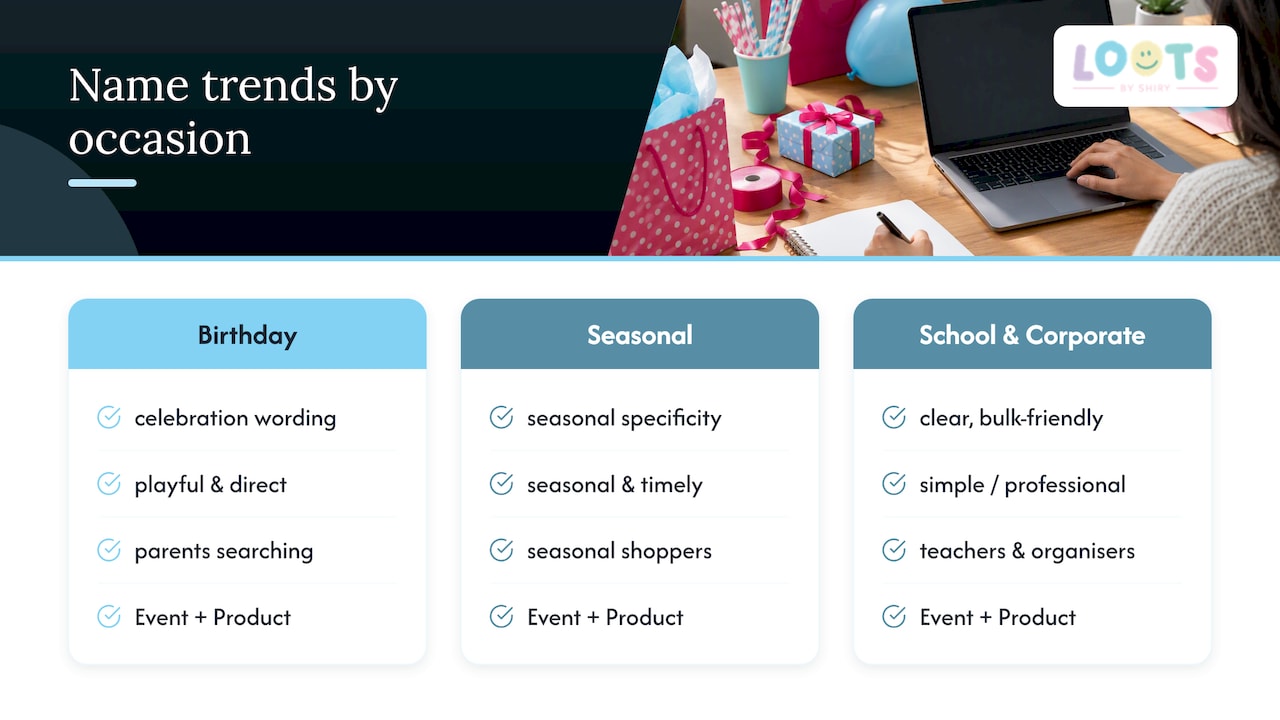
Birthday parties tend to favour names that reference the celebration directly: Birthday Bash Bags, The Big Day Edit, and similar phrasing show up often because parents searching for favours expect that language. Holiday-specific events lean into the season: Winter Wonder Packs and Spooky Stash Bags are common around December and October respectively, since seasonal specificity helps a name stand out in a crowded search.
School events, including classroom parties and year-end celebrations, tend to favour simpler, bulk-friendly names like Classroom Treat Bags or Recess Ready Packs, since teachers and parent volunteers are usually buying in larger quantities and want a name that reads clearly on a supply list. Corporate or community events use more neutral, professional naming (The Guest Favour, Thank You Bundle) to suit an adult audience without losing the celebratory tone.
Across all three occasion types, the strongest names combine one word that signals the event type with one word that signals the product category, which is the same pattern behind most of the ready-to-use examples listed earlier in this article.
Why structured creativity wins for naming
Good names come from mixing loose, playful brainstorming with disciplined filtering afterward. Pure creativity without checks produces names nobody can spell. Pure process without play produces names nobody remembers. Test your shortlist on real people before you print anything.
— Shiry
An alternative worth trying: test your name on real products
Once you have a name you like, the fastest way to see if it works is to put it on something real. We offer customizable loot bags, tote bags, and tumblers where you can see your chosen name on packaging before committing to a full order.
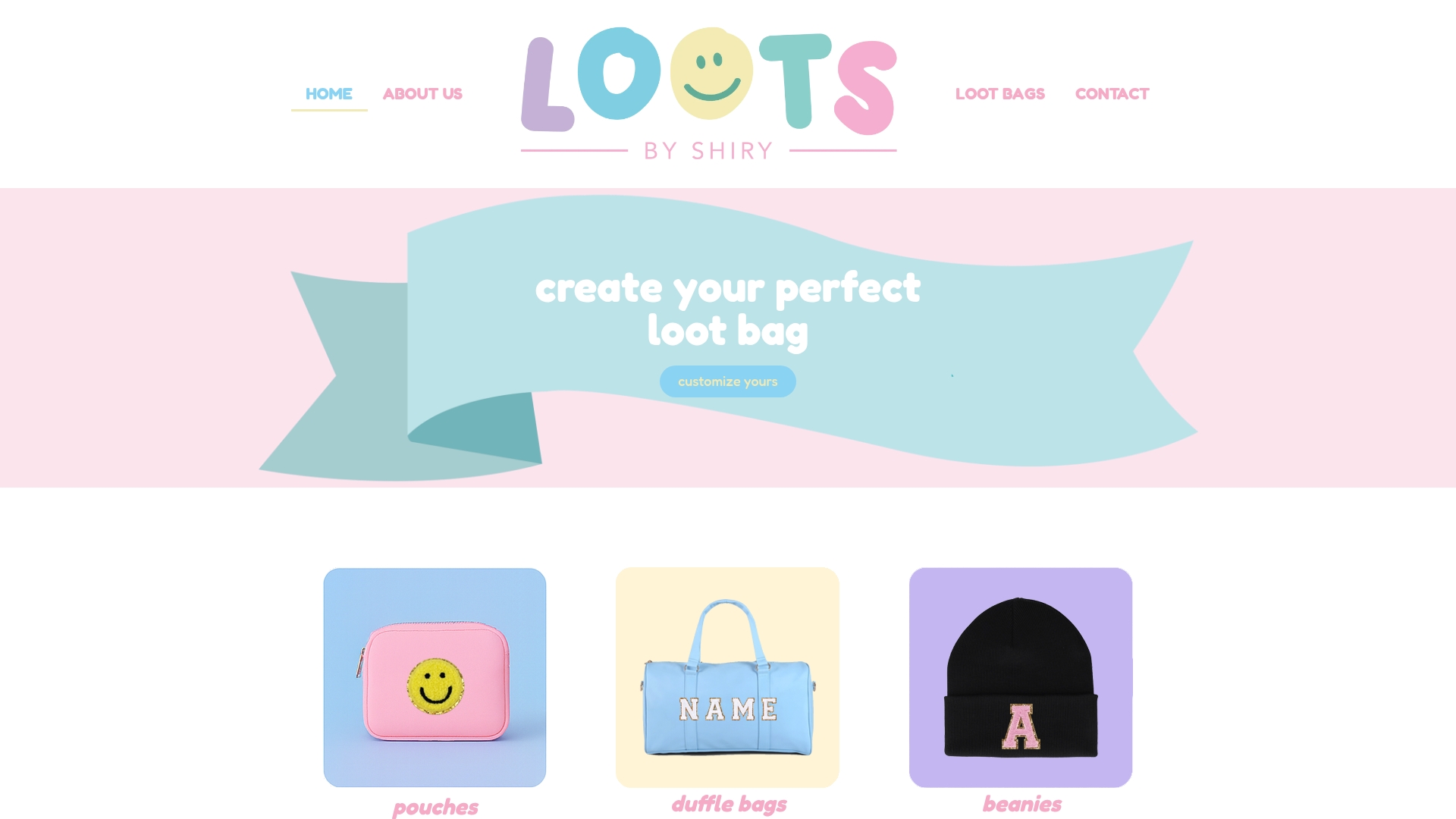
- Browse the shop to see current product categories.
- Order personalized loot bags directly once you have settled on a name.
FAQ
What are some cool ideas for a loot bag?
Strong options include playful names like Giggle & Grab, theme-led names like Dino Dash Bags, and personalized options like Name & Cheer. Pick a style that matches your event’s tone, then run a quick search and registry check before using it publicly.
What is a better name for a goodie bag?
“Loot bag,” “favour bag,” and “goodie bag” are used interchangeably in most of Canada, so there is no single correct replacement. A more distinctive alternative, such as “The Celebration Edit” or “Treasure Stash,” reads as more memorable than the generic term while still clearly describing the product.
What are some funny names for bags?
Playful, sound-driven names tend to land as funny without needing an explanation, such as Wiggle Bag Co. or Confetti Crew Favours. Testing a funny name on a few people before finalizing it helps confirm it reads as intended rather than confusing.
What are some unique goodie bag ideas?
Blended or portmanteau names, like combining “party” and “bundle” into a single invented word, tend to feel more unique than straightforward descriptive names; for examples of creative product naming and eco-friendly gifting, check out these Unusual Xmas Cards by Greet n’ Grow. Pairing an eco-conscious angle, such as Little Green Goodies, also stands out since fewer sellers use that direction.
Do I need a trademark for my loot bag business name?
A trademark is not required to start selling, but it becomes important once the name is central to identifying your products, since trademark registration through CIPO grants exclusive rights across Canada that a provincial trade-name registration alone does not provide. If you plan to sell beyond one province, clearing a trademark early avoids conflicts later.