

Textile-only patches that are securely sewn or bonded, with no hard beads, metal studs or plastic sequins, are safe for toddlers and up. For children under three, skip any patch with detachable hard embellishments and always remove loose plastic film from packaging. We follow the federal Toys Regulations and build our own age guidance around them.
TL;DR:
- A piece is a small part under Canadian rules if it detaches at 4.45 newtons and fits entirely inside the cylinder for children under three.
- For ages three to six, avoid detachable trims and long cords; older children can use decorative patches when attachments stay secure and materials are safe.
- Test each patch with a firm two to three second tug at several edge points, then repeat after washing because laundering can weaken attachments.
- Flexible film bags with openings of 356 mm or more need thicker film or a printed bilingual suffocation warning; remove outer wrap before distribution.
- Label and separate bags by age range at distribution to prevent a rushed handout from giving a child an unsuitable pack.
Table of Contents
- What Canadian rules say about small parts, materials and packaging
- How to pick patches and patch styles that are safe for different ages
- How to attach patches and test their durability before giving them to kids
- Packaging and bag design hazards
- Quick rules by age: under 3, 3 to 6, and 7 and up
- How we apply safety-first patch choices and age guidance
- What the checklist approach gets right, and where it still falls short
- Order safe, personalised loot bags built around your guest list’s ages
- FAQ
- Sources
What Canadian rules say about small parts, materials and packaging
Children’s products sold in Canada fall under two main frameworks, and both shape how we choose patches for loot bags.
The Toys Regulations (SOR/2011-17) define a small parts cylinder test: any separable piece that fits entirely inside the test cylinder when pulled with 4.45 newtons of force is banned from products meant for children under three. A fabric patch sewn flat against a bag generally will not meet that separability threshold, which is why textile-only designs get treated differently from patches carrying rigid add-ons. A patch with a glued-on bead or plastic charm can detach under exactly that kind of force, which puts it in small-parts territory.
The Canada Consumer Product Safety Act prohibits selling or advertising any consumer product that poses a danger to human health or safety, and sets chemical thresholds including a 90 mg/kg total lead limit for accessible parts of children’s accessories.
A few packaging rules matter just as much as the patch itself:
- Flexible film bags with a large opening need either a minimum film thickness or a printed bilingual suffocation warning.
- Stickers, films or coatings on accessible parts must not contain harmful substances under standard lab testing.
- Lead and other restricted substances are capped for any part a child can touch or mouth.
How to pick patches and patch styles that are safe for different ages
The safest starting point is a textile-only, low-profile patch: flat, fully fabric, no raised hardware. For toddlers and young preschoolers, that single rule eliminates most of the risk.
Avoid these embellishments on any patch meant for a child under six:
- Glass or plastic beads glued to the surface.
- Metal studs, pins or grommets.
- Sequins or rhinestones attached with adhesive rather than stitched into the weave.
- Dangling charms, tassels or cord loops.
Attachment method matters as much as decoration. Factory-sewn or professionally heat-bonded patches hold up far better than temporary iron-ons applied at home, which can lift after one wash or a few hours of handling. Check the trims too: non-toxic inks and dyes, and fabric free of recalled lead-bearing components, keep the patch safe even if a child mouths it. For readers comparing methods in more detail, our piece on patches versus embroidery breaks down durability trade-offs.
Label packs by age range on the outside of the bag, and add a short caregiver note for any pack that includes smaller trims meant for older kids only.
Pro Tip: When in doubt about a patch’s age fit, ask whether a toddler could get the whole thing into their mouth. If yes, it needs a sewn, flat, textile-only redesign.
How to attach patches and test their durability before giving them to kids
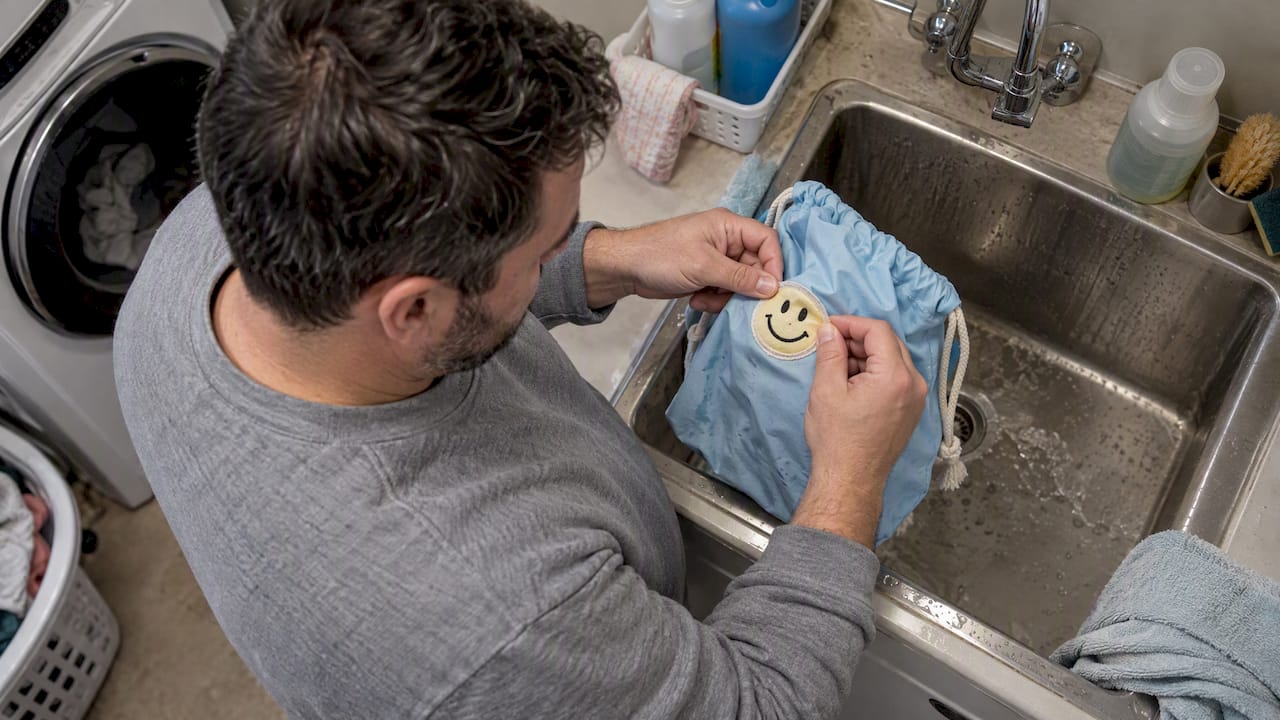
Attachment method determines whether a patch stays put through a birthday party’s worth of running, hugging and bag-swinging. Factory stitching around the full perimeter is the most durable option. Professional heat-bonding comes next, provided it covers the whole edge rather than a few spot-welds. Iron-on adhesive applied without proper heat and pressure is the weakest choice and should be avoided for children under six.
Before handing out any bag, run through this check:
- Inspect the full edge of the patch for lifting, gaps or loose threads.
- Give it a firm two to three second tug at several points around the perimeter.
- If the item will be washed, run one full cycle and re-inspect afterward.
- Check that no stitching has pulled through the fabric backing.
Health Canada’s consumer-safety guidance notes that small-part risk depends heavily on how easily a piece detaches during ordinary handling, and that repeated washing or rough play can weaken attachments that looked solid on day one.
Skip removable stickers and peel-and-stick patches for young children entirely: they are designed to detach, which is the opposite of what safety testing asks for.
Pro Tip: Store a few spare bags unused as test samples. Wash and tug-test them seasonally so you catch wear before it reaches a child’s hands.
Packaging and bag design hazards
A perfectly safe patch can still end up on a hazardous bag. Oversized flexible film packaging is the most common mistake: any opening of 356 mm or more needs either thicker film or a printed bilingual warning, under the Toys Regulations.
A few habits reduce risk at the point of distribution:
- Remove outer shrink-wrap or cellophane before handing bags to children, especially around babies and toddlers.
- Choose paper, cotton tote or reusable fabric bags over large plastic sleeves where possible.
- Avoid long drawstrings, cords or ribbon loops on straps; Health Canada’s drawstring guidance flags entanglement and strangulation risk from cords on children’s items and recommends keeping them short or absent.
- Keep decorative straps flat and sewn rather than looped or knotted.
Our gift bag presentation guide covers packaging choices in more depth for hosts planning larger events.
Quick rules by age: under 3, 3 to 6, and 7 and up
Age-tailored rules make assembling a mixed-age party far simpler.
- Under 3: fabric-only patches, no detachable decorations of any kind, no oversized flexible film bags without a printed warning.
- 3 to 6: low-profile, securely sewn or bonded patches are fine; still avoid small detachable trims, beads and long cords.
- 7 and up: more decorative styles become appropriate, but keep checking for secure attachment and non-toxic trims every time.
The 4.45 N force threshold defined in the Toys Regulations is the actual benchmark testers use to decide whether a piece counts as a detachable small part for children under three. It is a useful mental model even for a quick home check: if a firm tug detaches a piece, treat it as unsafe for that age group.
Label every pack clearly by age range, and physically separate toddler-safe bags from the rest at the table so helpers don’t hand out the wrong one in a rush. Our age-by-age loot bag guide covers contents beyond patches as well.
How we apply safety-first patch choices and age guidance
We build age guidance into every custom order rather than treating it as an afterthought. We also offer allergy-friendly favour options for hosts managing mixed dietary needs alongside patch safety.
At order time, you can request specific patch attachment styles, removal of outer plastic film before packing, and age labels printed directly on each bag. For larger events or bags split across several age groups, customizations can be tailored to match.
What the checklist approach gets right, and where it still falls short
Most advice on this topic stops at “check for small parts,” which is true but incomplete. The force threshold in the Toys Regulations is a testing standard, not a guarantee that a patch sewn by hand or bonded with household glue will hold up the same way under a birthday party’s wear and tear.
The bigger gap is packaging. Hosts spend real effort choosing the right patch and then wrap the finished bag in a thin plastic sleeve that technically needs a warning label it doesn’t have. Patch safety and packaging safety are one decision, not two.
If you take one thing from this article, make it the tug test. It costs thirty seconds, needs no tools, and catches the attachments that look fine on a shelf but fail in a toddler’s hands. Age labels and sorted bags at the distribution table matter more than any single design choice, because the biggest real-world risk is the wrong bag reaching the wrong child in a rush.
— Shiry
Order safe, personalised loot bags built around your guest list’s ages
We build every custom order around the age range provided, aiming to match patch style, attachment method, and packaging to the youngest guest rather than guessing afterward. Browse our Loot Bags line alongside Cotton Tote Bags, pastel pouches and Colour Changing Tumblers if you want to mix patch styles across a few product types.
When you order, tell us:
- The youngest age in your group, so we default to fabric-only patches where needed.
- Whether you want sewn attachment over iron-on for durability.
- Whether to skip outer plastic wrap entirely.
- Whether you’d like age labels printed on each bag for easy sorting at the table.
Wrapping adds $0.50 per bag and delivery is a flat $10 on loot bag orders. Start your order and we’ll match the build to your guest list.
FAQ
Are fabric patches safe for a one-year-old’s gift bag?
Yes, a flat, fully textile patch that is sewn or securely bonded around its full edge is generally safe, since it will not pass the small parts cylinder test the way a detachable hard piece would. Avoid any patch with beads, studs or sequins for this age group.
What embellishments should I avoid on kids’ patches?
Avoid glued-on beads, metal studs, plastic sequins, rhinestones and dangling charms or tassels, especially for children under six. These pieces can detach under normal handling and present a choking hazard under federal toy safety rules.
How do I know if a patch is attached securely enough?
Run a firm two to three second tug test at several points around the patch’s edge, and repeat it after any wash cycle. Health Canada guidance notes that attachments can weaken with repeated handling, so a one-time check at purchase isn’t enough.
Is plastic packaging on loot bags a safety concern?
Yes, flexible film bags with openings of 356 mm or larger need either thicker film or a printed bilingual suffocation warning under the Toys Regulations. Removing outer plastic wrap before handing bags to toddlers avoids the issue entirely.
Does Loots by Shiry offer age-specific patch guidance?
Yes, we default to textile-only, sewn patches for toddler-age orders and can remove outer plastic packaging or add age labels on request. You can specify these needs directly when placing an order through our loot bag page.
Sources
Before finalizing a large order, it’s worth checking current recall notices and the primary regulatory text yourself. Canadian recalls have involved detachable pompoms and small accessories on children’s items, which is a useful reminder to inspect trims closely regardless of what a label claims. For broader packaging choices, eco-friendly gift guidance can help if you’re also sourcing low-plastic favours alongside patches.