
Choose DIY when you have a small guest list, time to spare, and want a handmade touch on a tight budget. Choose custom-made favours when your guest count climbs past 50, your timeline is short, or you want consistent quality without the labour. Loots by Shiry offers a direct custom option for hosts who want interactive design input without managing production themselves.
TL;DR:
- DIY favours are most cost-effective and personal for small guest lists, but complex projects can require over 12 hours of labour for 100 guests.
- Custom favours offer consistent quality and less on-site assembly, making them ideal for larger guest counts and tighter timelines despite higher per-unit costs.
- Hybrid options reduce risk and effort by combining purchased bases with personalized labels or patches, balancing cost, quality, and customization.
- Sustainable choices include reusable items and packaging from responsible sources, avoiding single-use plastics and excess waste.
- Budgeting between $1 and $3 per guest is practical; DIY tends toward the lower end, while custom options are more costly, especially with added personalization.
Table of Contents
- Quick snapshot: ideal situations for DIY, custom, and hybrid favours
- Pros and cons of DIY favours
- Pros and cons of custom-made favours
- Cost and time comparison: realistic per-guest examples
- Sustainability and materials: choosing low-waste favours
- How to choose: decision checklist and vendor questions
- Hybrid workflows: buy base items, add personal touches
- Practical DIY favour ideas with effort and cost notes
- Author perspective: why customization matters and practical trade-offs
- Loots by Shiry: a direct, low-fuss custom option for event favours
- FAQ
- Sources
Quick snapshot: ideal situations for DIY, custom, and hybrid favours
The right approach depends less on taste and more on your guest count, your calendar, and how much assembly time you can realistically give up.
- DIY fits small guest lists, confident crafters, and tight budgets where the time trade-off makes sense.
- Custom fits large guest lists, compressed timelines, and hosts who want a polished, consistent result without assembly.
- Hybrid fits hosts who want a personal touch without producing every component from scratch.
A practical tip for each: if you are doing DIY, test your project on 10 units before committing to 100. If you are going custom, order a sample before the full batch. If you are going hybrid, buy the base item first and design the personalization around what’s actually available.
Pros and cons of DIY favours
DIY favours appeal because the upfront materials cost for simple projects can look appealingly low, and the result carries a personal signature that a catalogue item cannot replicate.
- Pro: lower materials cost for simple designs, especially when you’re filling premade bags rather than building items from scratch.
- Pro: full creative control, since you choose every colour, label, and filler.
- Con: labour is almost always underestimated, particularly for anything involving multiple steps or drying time.
- Con: hidden costs add up, including tools, adhesives, packaging, and the batches that don’t turn out.
- Con: quality drifts across a long production run, especially late at night on guest number 80.
Practitioners report that complex DIY favour projects for around 100 guests can require 12 or more hours of labour, and hidden costs like tools and failed attempts often erode the savings DIY promised in the first place.
Pros and cons of custom-made favours
Custom suppliers trade a higher per-unit price for consistency and time saved, which matters most once your guest list grows past the point where an evening of crafting covers it.
- Pro: professional, consistent finish across every single unit, with no visible quality drift from guest one to guest 150.
- Pro: reduced assembly time, since the labour happens before the item reaches you.
- Pro: design input without production work, which is where a service built around interactive customization, like choosing your own names, patches, and colours through Loots by Shiry, fits naturally.
- Con: higher per-guest cost than raw materials alone.
- Con: minimum order quantities that may not match an odd-numbered guest list.
- Con: lead times that punish last-minute planning, so ordering early matters more than with DIY.
The practical upside for a busy host is fewer vendors to coordinate: one supplier handles design, production, and packaging instead of you sourcing bags, labels, and fillers separately.
Cost and time comparison: realistic per-guest examples
Budgeting for favours gets easier once you separate the sticker price from the hidden costs that only show up partway through a project.
Canadian cost guidance suggests a reasonable per-guest target of $1 to $3 to keep favours from becoming an outsized line item. Within that range, low-budget DIY projects (simple filled bags, printed tags) tend to land near the low end, hybrid approaches sit in the middle, and fully custom-made favours with personalization run toward the higher end depending on the product and finish.
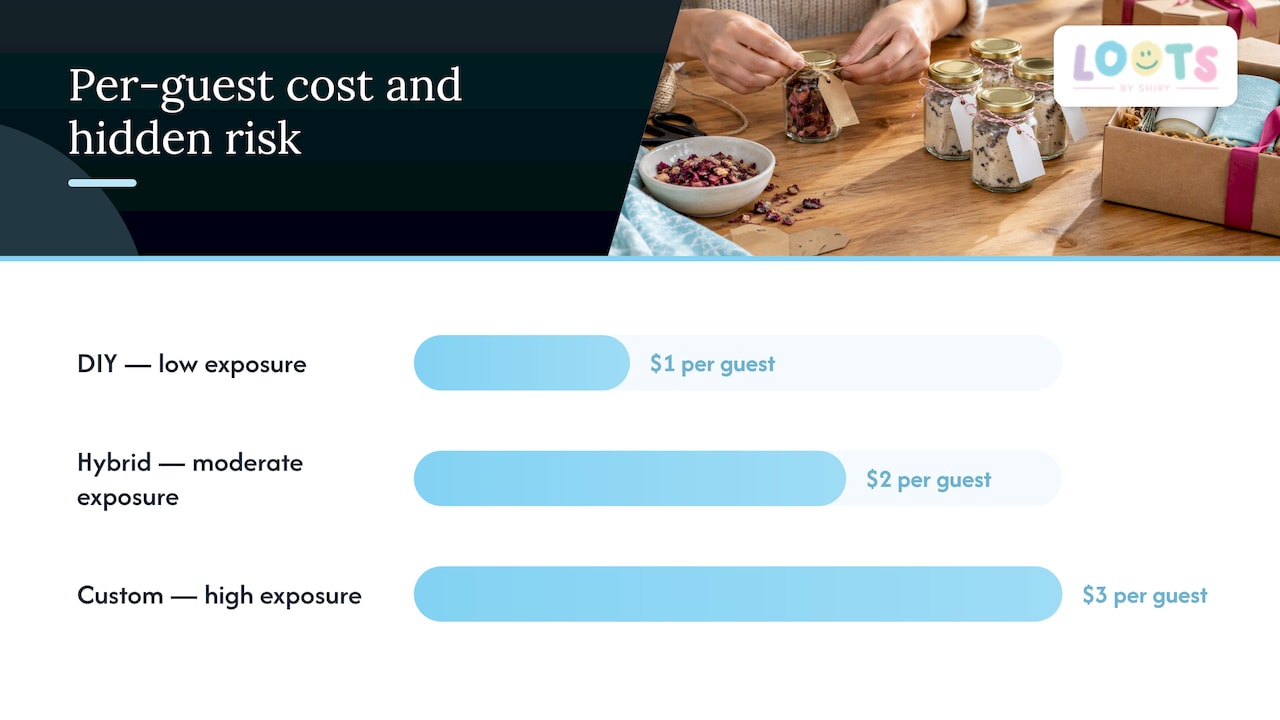
Practitioners found that for roughly 100 guests, complex DIY assembly can take 12 or more hours, a figure worth weighing against your own hourly value before committing to a from-scratch project.
Before you commit to either route, cost out:
- Materials and base items, priced per unit, not per project.
- Tools and one-time equipment, which DIY budgets often skip.
- Labels, tags, and packaging, which add up faster than expected.
- Labour hours, estimated honestly, not optimistically.
- A contingency buffer for reorders, failed batches, or last-minute guest additions.
Hybrid workflows, where you buy a semi-finished base and add your own labels or patches, reduce technical risk (food safety, waterproof printing, adhesive failure) while keeping the personal feel intact.
Sustainability and materials: choosing low-waste favours
Favours generate waste fast, especially single-use packaging that guests toss before they reach the parking lot. Environment and Climate Change Canada recommends prioritizing product quality and source, and favouring reuse, repair, and recycled materials over disposable options.
- Choose reusable items over anything designed for one use.
- Consider seed packets or local edible goods, which double as a gift and avoid packaging waste.
- Skip single-use plastic fillers, which are the first thing a guest discards.
- Look for suppliers using responsible materials and minimal packaging, since custom-made favours aren’t automatically less sustainable than DIY ones.
For hosts specifically shopping for low-waste gift suppliers, Wick of Hope’s eco-friendly candle line is one example of a Canadian maker built around biodegradable packaging and clean-burning materials.
Pro Tip: Ask any favour supplier, DIY or custom, where their packaging ends up after the party. If the honest answer is “the landfill,” look for an alternative.
How to choose: decision checklist and vendor questions
Before you commit to a direction, answer these for yourself:
- What’s your firm guest count? Favours priced per unit multiply fast once the list grows.
- What’s your per-guest budget? Set it before you start browsing, not after.
- How much time is left before the event? Custom orders need lead time; DIY needs assembly time.
- Do you have storage and assembly space for a multi-day DIY project, or packaging for a bulk custom order?
- Do you want the favour to last, or is it meant to be consumed same-day?
- Are there allergy or food-safety constraints among your guests that rule out homemade edibles?
If you’re leaning custom, ask any vendor:
- What’s the lead time from order to delivery?
- Is there a minimum order quantity?
- Can you see a sample before committing to the full run?
- What customization limits exist on names, colours, or patches?
- What are the packaging and wrapping options?
- What’s the policy on reworks or returns if something arrives wrong?
Red flags worth walking away from: no sample policy, vague turnaround estimates, or a supplier who can’t describe their packaging materials when you ask directly.
Hybrid workflows: buy base items, add personal touches
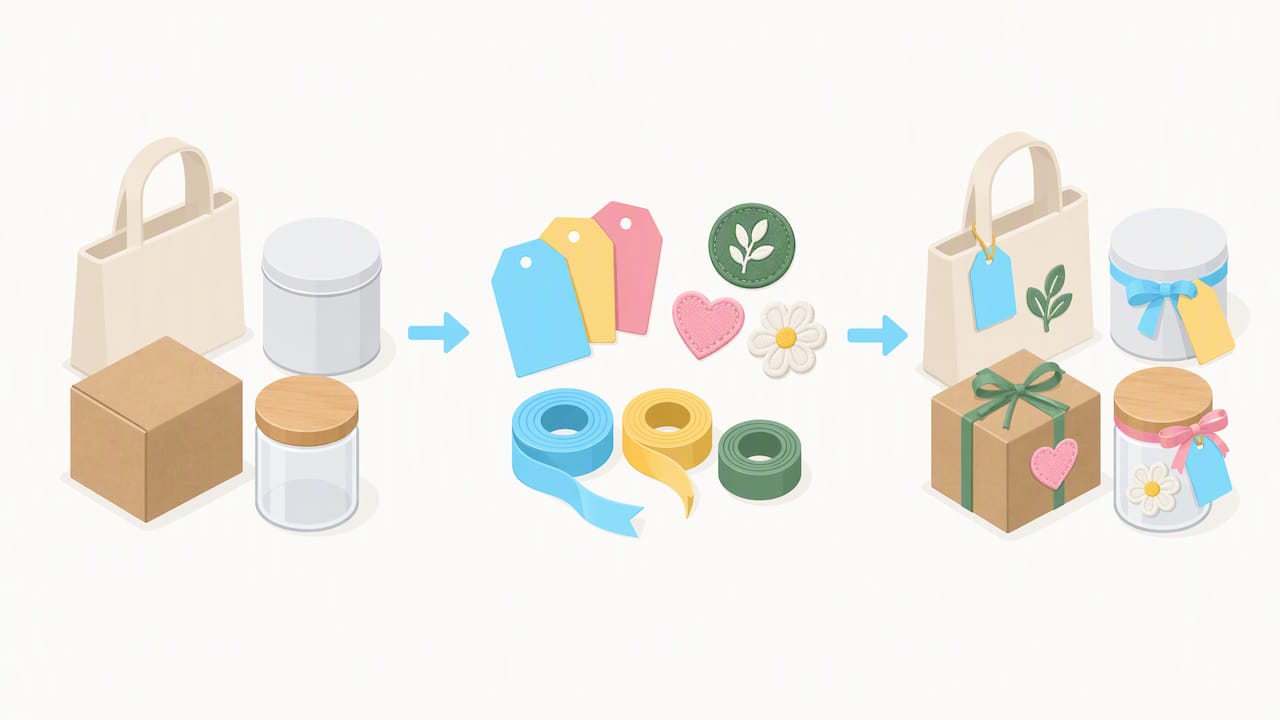
Hybrid favours split the difference: you buy a finished or semi-finished base, then add the layer that makes it feel personal.
- Blank tote bag plus a custom label or patch, which keeps materials cost low while adding a distinct look. Our guide to custom tote bags for events walks through this approach in detail.
- Bulk edible base with a printed insert, which sidesteps the food-safety risk of homemade treats while still feeling personal.
- Premade soap or candle with a personalized tag, which avoids the equipment and curing time that full DIY candle-making requires.
This route costs less labour than full DIY and reads as higher quality than anything off a mass retail shelf, since the base item is already finished and consistent. It’s also the space where our customizable loot bags sit naturally: you pick the names, patches, and colours, and the assembly and packaging happen on our end.
Pro Tip: If you like the idea of hands-on input but not hands-on production, start with a hybrid base before committing to a full custom order.
Practical DIY favour ideas with effort and cost notes
Not every DIY project carries the same risk. Sorting ideas by effort level helps you pick something you’ll actually finish.
- Low effort: seed packets, single-portion local treats, or simple filled bags. These are cheap, store well ahead of the event, and rarely fail halfway through production. Local Canadian shops often sell exactly this kind of favour ready-made, which is worth a look before committing to a full DIY batch.
- Medium effort: labelled coffee or tea bags, infused salts. These need careful labelling for food safety and a dedicated assembly session, but they’re forgiving if a batch runs short.
- High effort: homemade jam, candles. These carry real failure risk (set jam, uneven pours) and, per the 12-plus-hour labour estimate for complex projects at 100 guests, are often the point where a supplier becomes the more sensible choice.
For a few quick, low-effort options you can finish in under 15 minutes per batch, our Easter favour ideas guide covers several that translate well to other events.
Author perspective: why customization matters and practical trade-offs
The appeal of custom favours isn’t the polish alone, it’s the input. Hosts want their names, their colours, their patches on the bag, not a generic template that looks like everyone else’s. That’s the gap we built our process around: letting the person planning the event drive the design instead of picking from a fixed catalogue.
The trade-off most hosts underestimate isn’t cost, it’s coordination. A DIY project means sourcing materials, labels, and packaging from three or four places and hoping they arrive on time together. A single custom order removes that juggling act entirely, which matters more as guest counts grow. If you’d rather see what a custom option looks like before deciding, our shop page is a reasonable next stop.
— Shiry
Loots by Shiry: a direct, low-fuss custom option for event favours
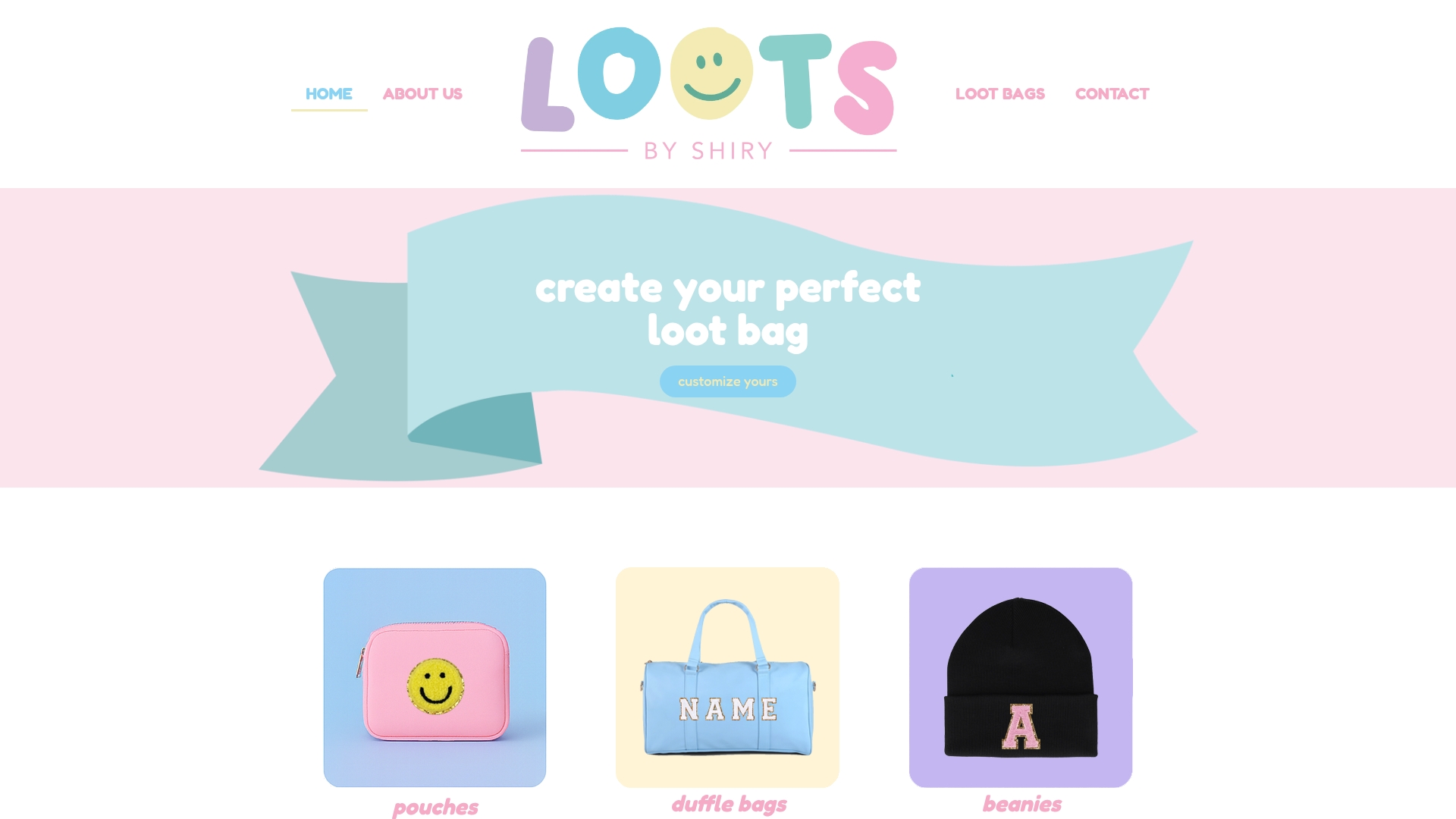
When the maths on DIY stops making sense, we offer a direct way to get personalized favours without managing production yourself. Our line includes customizable loot bags, cotton tote bags, pastel pouches, and colour-changing tumblers, each built around your choice of names, patches, and colours.
What this solves for a host: one design conversation instead of several vendors, consistent quality across the full guest count, and no assembly night at your kitchen table. Wrapping and delivery fees apply, so the full cost is easy to calculate before you order. Lead time matters here too: order early enough to review a sample before your full batch ships.
| Product | Price |
|---|---|
| Cotton Tote Bags | $12.00 |
| Pastel pouches | $12.00 |
| Colour-changing tumblers | $10.00 |
| Wrapping (per bag) | $0.50 |
| Delivery | $10 |
Browse the full shop or go straight to the loot bags page to start building your order.
FAQ
What are some ideas for custom DIY gifts?
Popular hybrid ideas include a blank tote bag with a custom label, a bulk edible treat with a printed insert, or a premade candle with a personalized tag. These combine a finished base item with a personal detail, which keeps labour and risk lower than building a favour entirely from scratch.
Do people enjoy giving homemade gifts?
Homemade gifts carry a personal signature that store-bought items don’t, which many hosts find rewarding to give. That said, practitioner labour estimates show complex DIY projects can take 12 or more hours for around 100 guests, so enjoyment often depends on keeping the project simple enough to finish without burnout.
What are some good custom gift ideas?
Strong custom favour ideas include personalized loot bags, custom tote bags, and colour-changing tumblers, each lets the host choose names, colours, or patches without producing the item themselves. Loots by Shiry offers all three as ready-to-order product lines.
What are some ideas for custom-made gifts?
Custom-made gift options typically include personalized bags, pouches, and drinkware, where the supplier handles production and the host selects the design details. This approach suits hosts with large guest lists or short timelines who want a consistent, professional result without assembly work.
Sources
- How much do wedding favors cost in Canada?
- Rethink your consumer habits – Protect nature challenge
- 7 DIY wedding favour ideas for Canadian couples (with real cost estimates)
- Unique wedding favours from Canadian shops